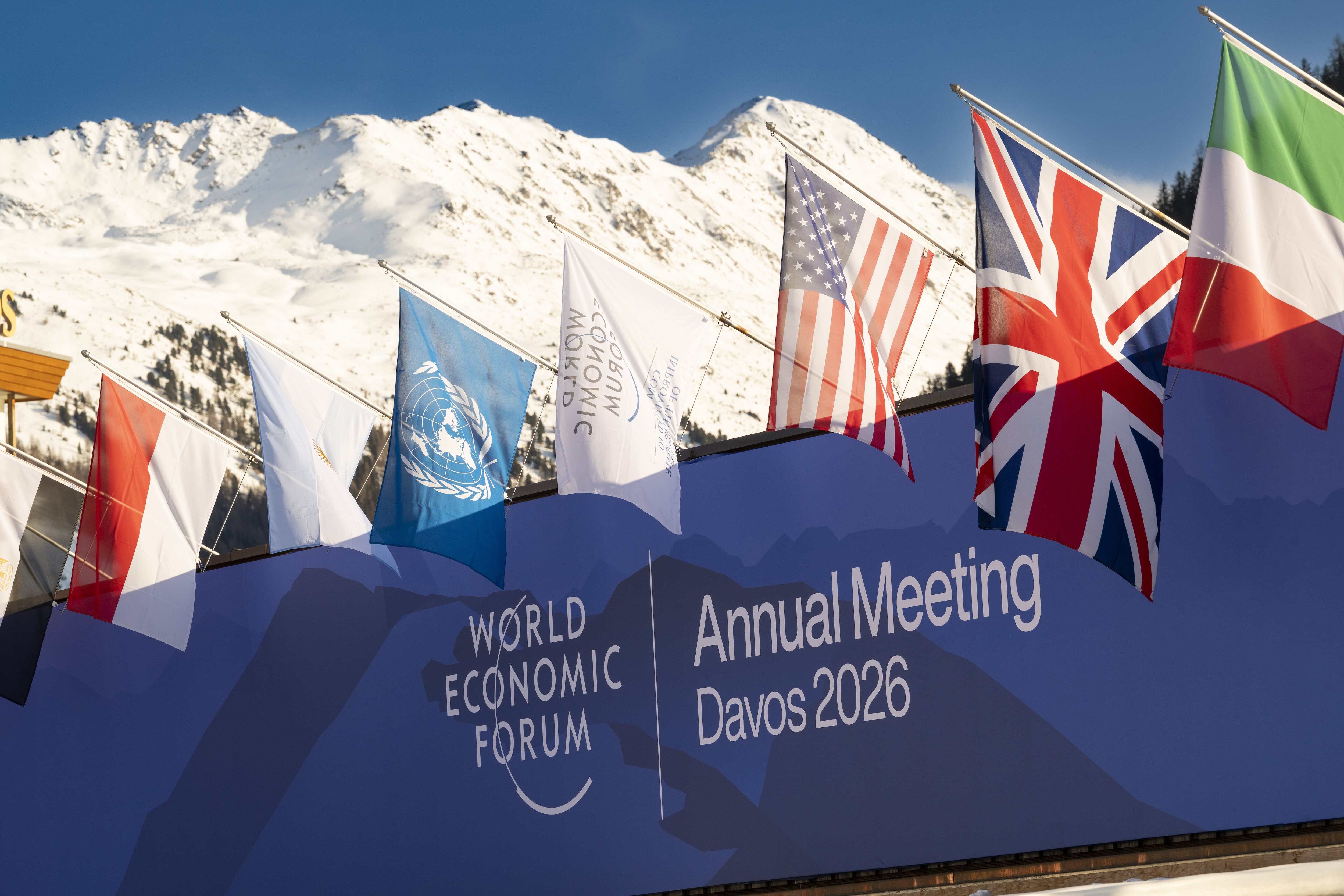
Live from Davos 2026: What to know on Day 2
On Day 2 of the Annual Meeting 2026, the World Economic Forum's live-blog team brings you the highlights, analysis & inside track from the heart of Davos.
Robin Pomeroy is in charge of the World Economic Forum's audio content and hosts the Forum's weekly flagship podcast Radio Davos. Before joining the Forum, Robin spent more than two decades at the global news agency Reuters, as a correspondent in Brussels, Rome and Tehran, and as a senior desk editor in London. He helped found the London-based media literacy charity The Charlotte Project, and taught journalism to Masters students at City, University of London. Robin is a fellow of the Knight Wallace Fellowship of journalists.
On Day 2 of the Annual Meeting 2026, the World Economic Forum's live-blog team brings you the highlights, analysis & inside track from the heart of Davos.
La exploradora, que ahora tiene 90 años, ha estado en el fondo del océano y nos trajo un mensaje de esperanza: tenemos el poder de salvar la naturaleza y la humanidad.
Explorer Sylvia Earle, now 90, has been to the bottom of the ocean and brought us back a message of hope: we have the power to save nature and humanity.
Google Chief Economist Fabien Curto Millet has a ring-side seat to AI's accelerating developments. He tells Radio Davos about the impact he sees.
Portrait photographer Platon has photographed many of the most famous people of the last half-century. He shares the lessons he has learned about leadership.
《焦虑的一代》的作者乔纳森·海特认为,学生学习成绩下降和心理健康问题增加与智能手机和社交媒体的使用有关。他认为,成年人每周应抽出一天时间远离科技产品,而儿童则需要一个无手机的校园环境。
書籍『The Anxious Generation(不安の世代)』の著者であるジョナサン・ハイト氏によると、スマートフォンやソーシャルメディアの利用が学業成績の低下や精神的な問題の増加と関連しています。大人は毎週1日、テクノロジーから離れ、子どもたちにはスマートフォンのない学校が必要だと述べています。
Adults need a day off from tech every week while children need phone-free schools, Jonathan Haidt, author of The Anxious Generation, tells Radio Davos
El periodista Andrew Edgecliffe-Johnson, el columnista Walter Mead y el empresario David Rubenstein explican a Radio Davos cómo entender mejor el país de Donald Trump en 2025.
El economista de Harvard habla con Radio Davos sobre el impacto de la "hiperglobalización", los aranceles comerciales, la democracia – y por qué el aislacionismo no es la respuesta.
Journalist Andrew Edgecliffe-Johnson, columnist Walter Mead and businessman David Rubenstein tell Radio Davos how to better understand the US in 2025.
Al Gore tells Radio Davos why momentum on climate action still isn't slowing, despite Donald Trump's notice to withdraw the US from the Paris Agreement.
Harvard economist Dani Rodrik talks to Radio Davos about the impact of 'hyper globalization', trade tariffs, democracy and why isolationism isn't the answer.
World Trade Organization chief economist Ralph Ossa discusses the outlook for the global economy in 2025 on the World Economic Forum's Radio Davos podcast.
The biggest risk in 2025 is state-based armed conflict, says the World Economic Forum’s Global Risks Report 2025. Experts join the Forum's Radio Davos podcast.