

Artificial Intelligence
人工智能如何重构前瞻战略与全球权力格局?
人工智能正成为衡量全球权力和外交影响力的主要标志。算法带来的速度提升,可能压缩人类意见分歧与认知不适,而这两点对严谨的战略前瞻至关重要。混合智能模式必须始终将人类判断置于优先位置,以避免战略想象空间不断收窄。
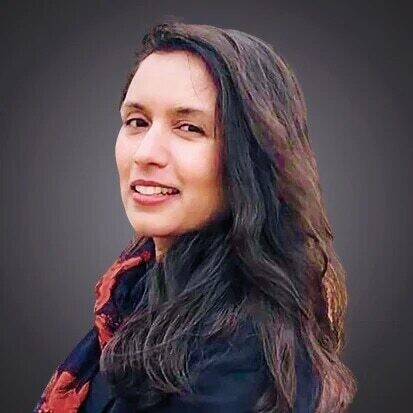
Dr Maha Hosain Aziz has created a portfolio career in global risk and future trends, spanning academia, advisory work, thought leadership and creativity. All of her work aims to help others make sense of a world of heightened global risk in an era of shock events, so they can make better decisions. She is a professor at NYU's MA IR Program, leading the annual NYU-Wikistrat crowdsourced prediction project and also creating data-driven risk indices with AI tools; a risk & foresight expert advising the World Economic Forum; a senior advisor (geopolitics) at global boutique firm Enlighten Advisory; and a co-chair in tech policy at think tank The Digital Economist where she leads The Digital Economist-NYU AI policy paper series. She is a former BusinessWeek columnist and HuffPost WorldPost blogger who continues to write on global affairs in outlets like Newsweek, World Economic Forum and the Financial Times.
Dr Aziz is a frequent keynote speaker and panelist on global affairs to government, think tank and corporate audiences, both at global public forums and private events. She is also author of a trilogy of books on our evolving international system: seven-time award-winning bestseller Future World Order (2019 & 2025) and its sequels A Global Spring (2026) and 10 Shock Events By 2030 (2026). She created 10-time award-winning VR/AR political comic book The Global Kid (2021) for tweens, based on the seven-time award-winning original (2016) which she drew; and she is working on her first political comic book for adults on global extremism called Evolution (2027).
Previously, she was a visiting fellow at the Institute of Global Affairs at the LSE, a senior fellow at the World Policy Institute, a senior teaching fellow in the Politics and International Studies Department at the University of London's SOAS and C&J Modi/Narayanan Fellow at the LSE where she also taught British politics and democratic theory, winning three teaching awards. She is a Jordanian-born global citizen with Pakistani roots, who grew up in the Middle East (Jordan, Saudi Arabia), Southeast Asia (Singapore, Malaysia), Europe (UK, Greece) & the US. And she is a social scientist trained at Brown (BA), Columbia (MA) & the London School of Economics (MSc, PhD).
www.futureworldorder.org www.theglobalkid.org
https://www.linkedin.com/in/drmahahosainaziz/
https://www.instagram.com/the_global_kid/
https://twitter.com/DrMahaAziz
人工智能正成为衡量全球权力和外交影响力的主要标志。算法带来的速度提升,可能压缩人类意见分歧与认知不适,而这两点对严谨的战略前瞻至关重要。混合智能模式必须始终将人类判断置于优先位置,以避免战略想象空间不断收窄。
AI is transforming global power and strategic foresight. Discover why the currency of compute requires a hybrid model of human-led intelligence.
通往2030年的道路,很可能呈现出一个更加多中心化的世界秩序,这将使全球治理与危机管理变得更加复杂。
El camino hacia 2030 está marcado por desafíos económicos, políticos y tecnológicos. Estos son los riesgos globales más críticos identificados por una nueva investigación de NYU.
The path to 2030 is paved with economic, political, technological, and societal challenges. Here are the most important global risks identified by NYU research.

随着人工智能的崛起,数百万人可能面临失去目标、身份和社会归属感的风险。如果我们希望人工智能被人们铭记为人类繁荣的工具,而非导致人类大规模的异化,我们就必须不仅仅为AI将创造的工作岗位和就业机会而规划,更要应对它可能带来的不稳定因素。

El precariado de la IA no solo estará desempleado o subempleado. También podría perder su identidad y sentido, con consecuencias reales para la salud mental.

The AI precariat will not just be unemployed or underemployed. They may lose their identity and meaning too, with real consequences for mental health.

后疫情时代正受到全球风险加剧和难以预测的冲击事件的影响。后超级大国时代,权力正在分散,世界各国政府都在努力应对反复出现的政治合法性危机。气候和人工智能加剧了挥之不去的疫情性心理健康危机。

La era pospandémica está marcada por un aumento de los riesgos globales y acontecimientos de choque impredecibles, mientras los gobiernos se enfrentan a una crisis de legitimidad.

The post-pandemic era is shaped by heightened global risks and unpredictable shock events while governments struggle with a recurrent legitimacy crisis.


