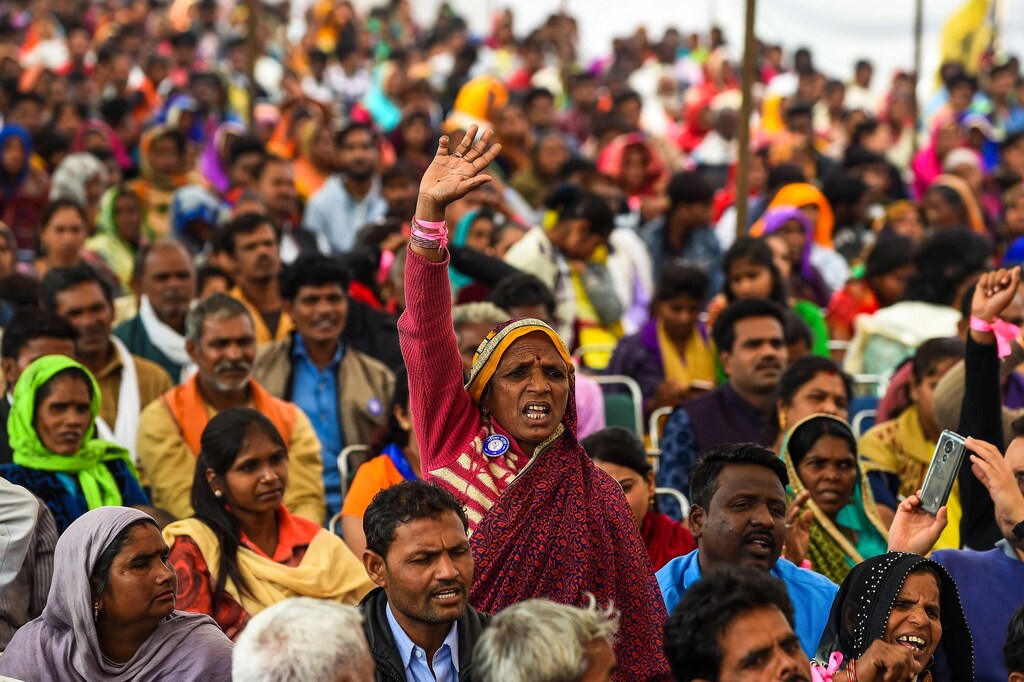
From building hospitals in rural India, empowering Black communities in Brazil, providing financial resources to last-mile communities in Ghana and harnessing new technologies to promote equity in education in South Africa, social innovators are making an impact around the world. Through values-based and innovative approaches, focusing on inclusivity, collaboration and sustainability, the Schwab Foundation for Social Entrepreneurship has impacted over 100 million people around the world from 2019 to 2022. The impact of this community of social entrepreneurs, corporate social intrapreneurs, public social intrapreneurs and social innovation is collected in the Schwab Foundation’s latest impact report.
Introduction
Since its foundation in 1998, the Schwab Foundation has acknowledged social innovators as a new breed of leaders – values-driven, inclusive, entrepreneurial individuals who develop sustainable new models across businesses, social development, and environmental initiatives.
In 2019, Schwab Foundation expanded its remit to recognize intrapreneurs in the public and private sectors and thought leaders. The foundation has grown, and now includes a community of over 400 of the world’s leading social innovators operating in over 190 countries.
The annual Schwab Foundation Social Innovator of the Year Award recognizes outstanding work in the following categories:
“The Schwab Foundation Social Innovators stand for trust, truth and service. They truly devote their lives through innovativeactions to improve livelihoods.”
—Hilde Schwab, Co-Founder and Chairperson of the Schwab Foundation for Social Entrepreneurship
Methodology
This study was undertaken by an external evaluation partner, Wasafiri, with two aims:
1. Understanding and estimating the cumulative impact of the Schwab Foundation’s community of social innovators since introducing the new award categories in 2019 as well as the new emerging insights across public, private, social, and academic sectors.
2. Building on the previous Two Decades of Impact report to understand how social innovators across sectors drive systemic change and reflect on the progress of the community through a pandemic.
Collective Impact
The Schwab Foundation for Social Entrepreneurship has impacted over 100 million people around the world from 2019 to 2022. The impact of this community includes:
41M
20M
15.3M
3.6M
2.2M
Since its foundation, a total of 722 million lives have been directly improved by the work of this community of leading social innovators.
Transforming through Trust: Social innovators have improved the lives of 722 million people
Looking ahead
The COVID-19 pandemic, which has been particularly challenging for the social innovation community, has underlined the need for collaboration.
Hence, in April 2020, the Schwab Foundation and the World Economic Forum together with Ashoka, Catalyst 2030, Echoing Green, GHR Foundation, Skoll Foundation, and Yunus Social Business launched the COVID Response Alliance for Social Entrepreneurs. The Alliance has grown to become the largest multistakeholder collaboration in the social enterprise sector, with 90+ members jointly representing over 100,000 social entrepreneurs and touching the lives of an estimated 2 billion people.
Further, the Schwab Foundation is also launching a new category of social innovation awards in its next award cycle, a Collective Social Innovation Award, seeking to recognise people across organizations working innovatively together towards shared system-level changes.
