Most bacteria are harmless. Even those, like Salmonella, that are dangerous place limits on their own virulence to ensure the host survives long enough to spread the infection.
Now, Yale University researchers have discovered that within host cells Salmonella actually produce cellulose — a key component of biofilms, which are not generally thought to be made during infection.
Researchers in the lab of Yale microbiologist Eduardo Groisman also found that when they interfered with the pathogen’s ability to make cellulose, it actually increased the virulence of Salmonella.
“Surprisingly, it appears that cellulose is an important moderator of virulence, which in turn helps Salmonella to survive longer by offering some protection to the host,” he said.
The study appears in the journal Proceedings of the National Academy of Sciences of the USA.
This article is published in collaboration with YaleNews. Publication does not imply endorsement of views by the World Economic Forum.
To keep up with the Agenda subscribe to our weekly newsletter.
Author: Bill Hathaway is a contributing writer for YaleNews.
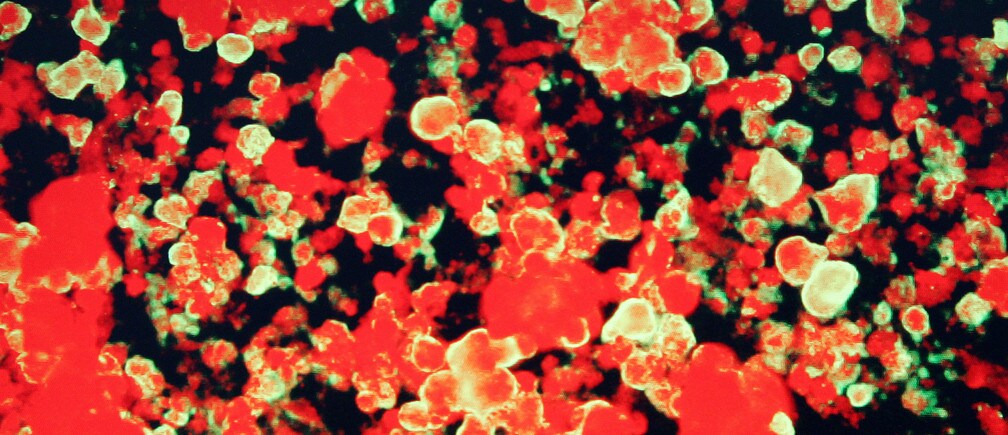
Image: Influenza virus cells, high-lighted through a florescent microscope, are identified during tests at the World Health Organization (WHO) National Influenza Center in Bangkok on October 21, 2005. REUTERS/Adrees Latif.