Artificial intelligence (AI) and other technologies are transforming healthcare in ways that erode its foundations built on bedside diagnosis.
AI for image analysis and disease prediction is invaluable, but patient history, traditionally gathered by clinicians, can help diagnose up to 80% of clinical encounters.
In the future, medicine should combine clinical judgment with the power of AI.
For centuries, bedside diagnosis has been considered the cornerstone of medical practice. Physicians long relied on careful history taking (the gathering of personal and medical information by clinicians), as well as meticulous physical examination, keen observation and clinical reasoning to identify disease before laboratory investigations and imaging studies were available.
Now, healthcare in the 21st century is witnessing a profound transformation. New technologies such as artificial intelligence (AI), machine learning, electronic health records, wearable technologies, digital biomarkers and advanced imaging systems are rapidly changing how diseases are detected and managed.
The healthcare AI market is expected to reach $427.5 billion in size by 2032, with India and China dominating the Asia Pacific region due to strategic government support for technological advancement.
However, the decline of bedside diagnosis and teaching is significant. In the 1960s, up to three-fourths of clinical teaching happened at the patient's side. Now, some studies estimate that the median time spent at the bedside per day is just two-and-a-half minutes.
While technology has undoubtedly improved diagnostic accuracy in many specializations, it has also unintentionally contributed to the gradual decline of bedside medicine, and has led to the erosion of the doctor-patient relationship.
Increasing dependence on technology has shifted physicians' attention from patients to computer screens, laboratory reports, and predictive algorithms, while also requiring them to juggle mobile phones.
AI is relegating bedside diagnosis to a secondary role
Research has consistently demonstrated that patient history alone contributes to the diagnosis in approximately 70% to 80% of clinical encounters, while physical examination adds another 10% to 20%, leaving only a minority of diagnoses dependent primarily on laboratory or imaging investigations.
Bedside diagnosis has traditionally been influenced by maximum exploitation of wisdom and craft, focused on curing the sick, reassuring those struggling with mental health, and treating physical afflictions as much as possible.
That means doctors have had civic responsibilities intertwined with their professional performance, bringing a status and honour to the medical community and strengthening doctor-patient relationships built on faith.
This has undergone a massive change due to technology. Today, AI can analyse millions of medical images within seconds, detect subtle abnormalities invisible to the human eye, predict disease progression and identify high-risk patients through precision diagnosis long before symptoms emerge.
These innovations have enormous clinical value. However, as diagnostic confidence shifts from physician judgment to algorithmic recommendations, bedside examination often becomes secondary.
The incoming tide of technology is phasing out the human connection, and reducing health systems to robotic environments populated by white-coated physicians. However, patients are emotional beings who require the empathy, reassurance, compassion and communication that AI cannot provide.
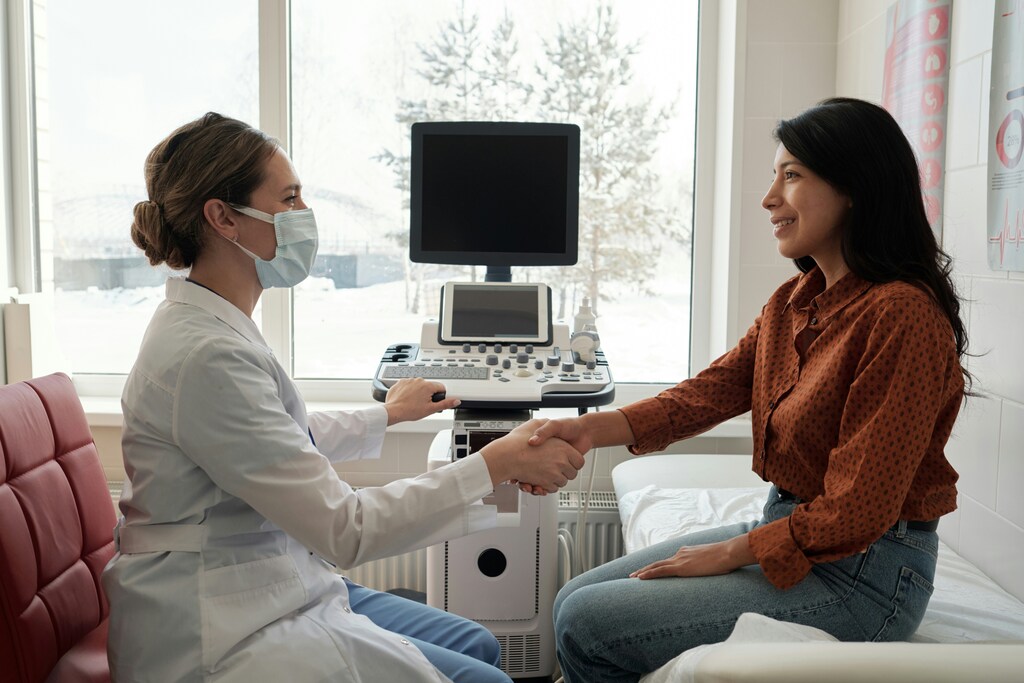
AI cannot comfort an anxious patient, understand family dynamics, recognize emotional distress and hold a patient’s hand during difficult conversations. The doctor-patient relationship has been built on trust rather than technology, and any change to this requires attention.

Practitioners must not over-rely on AI to avoid missing clinical signs
Pain points that need to be addressed include excessive screen time during consultations and reduced eye contact, and a lack of active listening and empathetic communication that potentially affect patient satisfaction and adherence.
The bedside is gradually being reduced to a workstation where the risk of missing clinical signs is high.
Failure to perform proper bedside examination may delay diagnosis or result in unnecessary investigations. In addition, AI is not free from error and is plagued by algorithmic bias, poor generalizability, false positives, incomplete datasets and the need for strong clinical judgement; it must augment clinical skills, not replace bedside teaching.
It should be acknowledged that AI represents one of the greatest advances in modern medicine, and has improved diagnostic precision, accelerated disease detection, and expanded opportunities for personalized care.
Nevertheless, its rapid integration into healthcare has coincided with a gradual decline in bedside diagnosis, driven by technological dependence, time pressures, defensive medicine and changing educational priorities.
The concern is not that AI exists, but that clinicians may increasingly substitute algorithms for observation, listening, and hands-on examination. Bedside diagnosis remains more than a diagnostic method; it is the foundation of compassionate, patient-centred care.
The physician who carefully listens, observes, examines, and then thoughtfully incorporates AI into clinical decision-making will continue to provide care that is both scientifically rigorous and deeply human.
Preserving bedside skills while embracing technological innovation will ensure that medicine remains both a science of precision and an art of healing.