More efficient but also cheaper public transportation networks will be vital in the shift towards sustainability.
Ensuring rural areas have access to affordable public transportation is important to cut household reliance on cars, but many countries in Europe are falling behind.
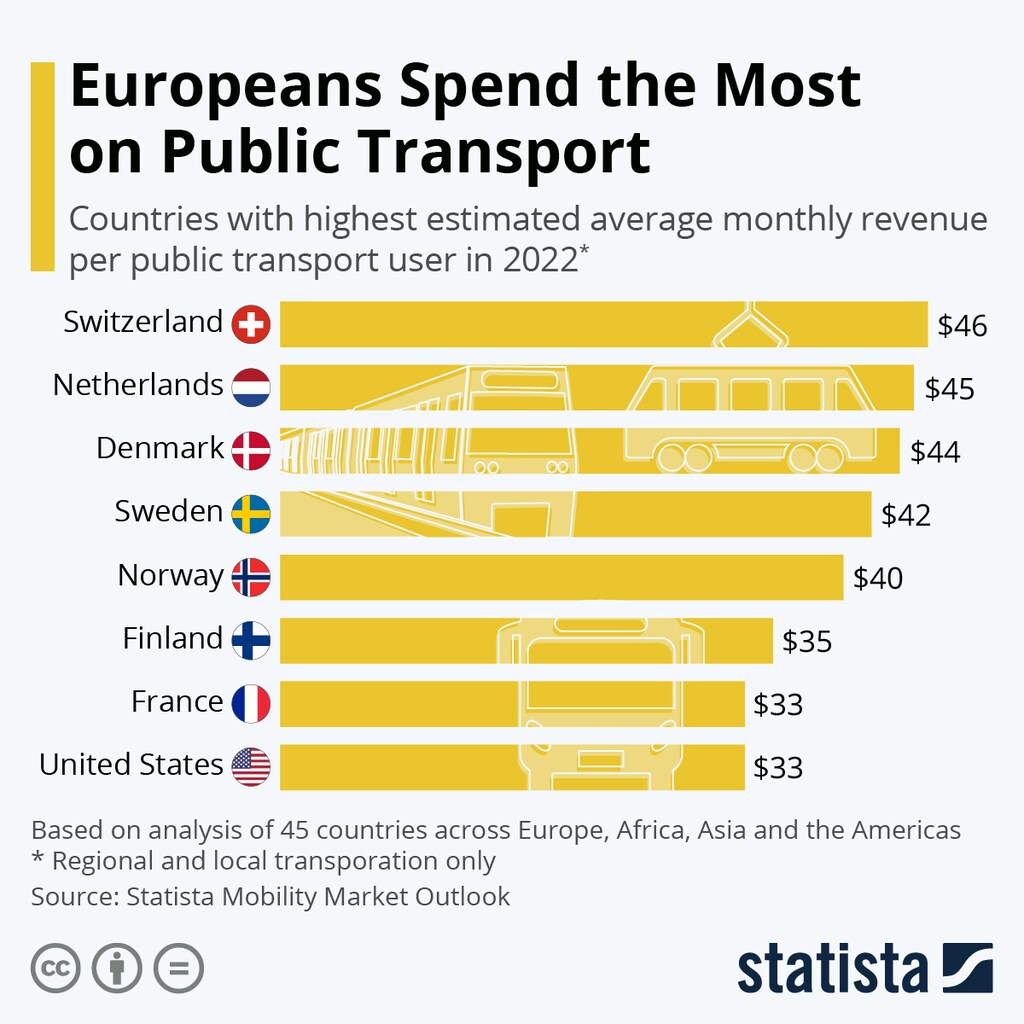
Swiss public transport users pay an estimated $46 for local and regional connections via train or bus per month – far more than in many other countries.
Creating and maintaining reliable, efficient and cheap public transportation networks is one of the key pillars of the transition towards a more sustainable mobility sector. This is especially true for rural environments since bigger cities around the world usually already have a solid public transport infrastructure in place and smaller towns and villages often have to rely on households owning cars to stay connected. When it comes to affordability, even the most advanced countries in Europe still have a long way to go.
Global public transport costs
As our chart based on data from our Statista Mobility Market Outlook shows, Swiss public transport users on average pay an estimated $46 for local and regional connections via train or bus per month. Four of the remaining seven spots in the top 8 are taken up by Nordic countries, with Denmark and Sweden leading this group with average monthly user revenues of roughly $44 and $42, respectively. On the other end of the spectrum are Asian and African countries. In Pakistan, Nigeria, Kenya and India, for example, the average monthly revenue per user is approximately $1, while Chinese and Thai public transportation companies earn about $3 per month and user. Japan and South Korea ranked 17th and 21st out of 45 analyzed countries, with average monthly per-user revenues of $21 and $17.
Overall, the public transportation sector will generate an estimated $261 billion worldwide in 2022, an increase of 21 percent after the pandemic-induced slump of 2021. Compared to the automobile industry, the public transportation industry's revenues are minuscule. In 2022, car makers are estimated to earn roughly $2 trillion worldwide, selling around 73.4 million passenger cars, among them 20 million small SUVs and 14 million medium cars, around the globe.
What is the World Economic Forum doing to promote sustainable urban development?
Cities are responsible for 75% of global greenhouse gas emissions and are home to over half of the world’s population—a number that will grow to two-thirds by 2050. By prioritizing cleaner energy, cities could contribute more than half of the emissions cuts needed to keep global warming to less than 2°c, which would be in line with the Paris Agreement.

To achieve net-zero and nature-positive cities and communities by 2050, the World Economic Forum is partnering with public and private sector stakeholders on initiatives that drive global ambition through local action. Here are just a few:
Davos Baukultur Alliance: Advancing high-quality planning, construction and management of buildings, infrastructure, and public spaces using principles based on climate resilience, sustainability and circularity in the built environment. Learn more.
Global New Mobility Coalition: Exploring new solutions to reduce congestion and emissions, enhance EV infrastructure and transform urban mobility and deliveries. Learn more.
Alliance for Urban Innovation: Connecting innovators and entrepreneurs to new markets and opportunities that reimagine and reshape quality of life and local economies. Learn more.
G20 Global Smart Cities Alliance: Accelerating intelligent, practical solutions to build climate resilience, enhance public well-being and tackle the most pressing challenges facing cities and local communities. Learn more.
Future of Travel and Tourism: Driving inclusive and sustainable economic growth while preserving cultural heritage and protecting natural ecosystems. Learn more..
Discover how you can be a part of our efforts to create more sustainable and livable cities and communities. Contact us here.