People living in purpose-built urban flats recycle less than residents of houses, studies find.
But a new study found that average recycling rates of London flat-dwellers increased by 152% after key changes in the buildings were implemented.
Two-thirds of the global population could live in urban areas by 2050, making recycling an important part of sustainable living.
People living in apartments tend to recycle less than people living in houses. But why? And what can be done about it?
A recent study by ReLondon shows that making small physical and behavioural changes aimed at maximizing recycling among flat-dwellers can produce big results: average recycling rates of study participants increased by 152% after changes were implemented.
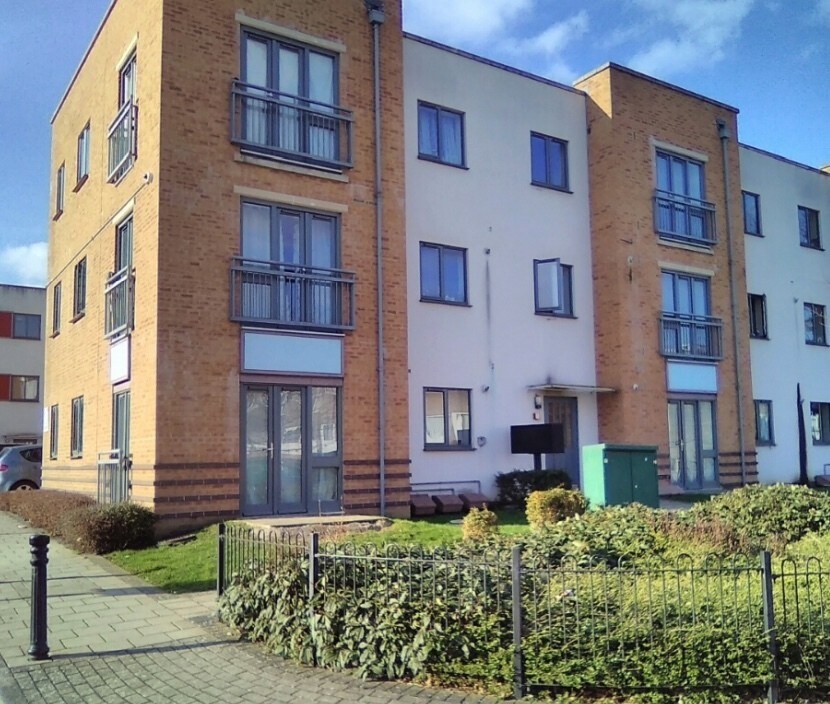
Called Making recycling work for people in flats 2.0, the study builds on previous research into the waste habits of people living in purpose-built London flats (purpose build flats are buildings constructed as individual flats rather than those converted later).
The earlier analysis highlighted a number of factors that contribute to lower recycling rates for these buildings, including the communal nature of collections, inconsistent or poor collection infrastructure and a lack of knowledge, ownership and engagement from residents.
Changing recycling habits
The new study’s researchers set about applying these lessons to improve recycling rates of people currently living in four apartment blocks in the London borough of Lambeth.
Bins and bin areas were clean and well maintained, with bins large enough to accept bigger recycling bags. Regular collections of the six main recyclable materials helped to prevent overflowing.
Clear and visible signage was installed, directing residents to conveniently located recycling areas within each block of flats. Information leaflets were sent to residents annually, and posters reinforcing recycling messaging were displayed in communal areas.
Residents were issued with pedal bins and compost caddies to eliminate the ‘yuk’ factor of dealing with muck and food waste.
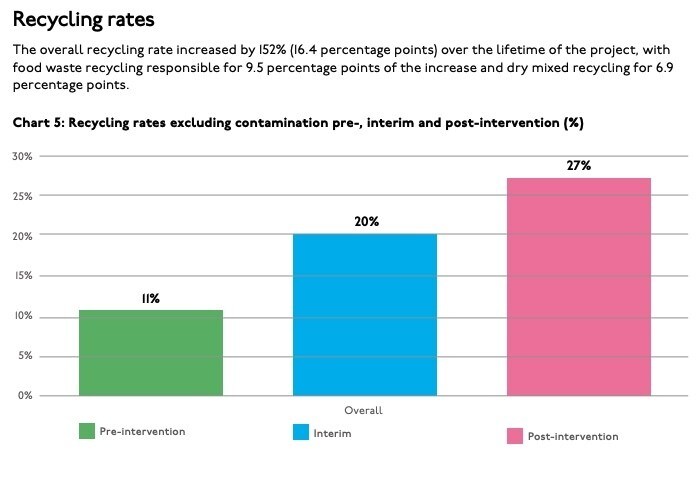
Following the changes, average recycling rates across the four Lambeth estates increased from 11% to 27%.
This increase was mostly driven by high food waste capture, but capture of other dry materials also increased.
Awareness programmes and improved infrastructure and collections increased the estates’ maximum possible recycling rate from 29% to 60%.
An increasingly urban future
The results of this project can be significant to helping to tackle waste. Currently, flats make up around a third of London’s housing stock, but constitute around 90% of new planned housing over the coming decade.
Urban recycling will be a vital part of efforts to reach the Mayor of London’s goals of recycling half of the city’s local authority-collected waste by 2025, and half of household waste by 2030.
Looking further afield, an increasing number of people are migrating to cities and towns, with two-thirds of the global population projected to live in urban areas by 2050, according to United Nations data.

Boosting urban recycling will become increasingly important to make the cities of the future more sustainable places to live. This includes finding new solutions to tackling global challenges like single-use plastics.
The World Economic Forum’s Consumers Beyond Waste initiative works with partners to develop responsible consumption models, with one focus concerned with finding ways of scaling reuse models to help eliminate plastic waste.
Making cities and urban areas more sustainable requires a multi-pronged approach, which includes creating a policy framework that encourages environmental initiatives, raising awareness of the need to “go green” and facilitating a rethink of the how, what, where, when and why of our consumption patterns.
What is the World Economic Forum doing to promote sustainable urban development?
Cities are responsible for 75% of global greenhouse gas emissions and are home to over half of the world’s population—a number that will grow to two-thirds by 2050. By prioritizing cleaner energy, cities could contribute more than half of the emissions cuts needed to keep global warming to less than 2°c, which would be in line with the Paris Agreement.

To achieve net-zero and nature-positive cities and communities by 2050, the World Economic Forum is partnering with public and private sector stakeholders on initiatives that drive global ambition through local action. Here are just a few:
Davos Baukultur Alliance: Advancing high-quality planning, construction and management of buildings, infrastructure, and public spaces using principles based on climate resilience, sustainability and circularity in the built environment. Learn more.
Global New Mobility Coalition: Exploring new solutions to reduce congestion and emissions, enhance EV infrastructure and transform urban mobility and deliveries. Learn more.
Alliance for Urban Innovation: Connecting innovators and entrepreneurs to new markets and opportunities that reimagine and reshape quality of life and local economies. Learn more.
G20 Global Smart Cities Alliance: Accelerating intelligent, practical solutions to build climate resilience, enhance public well-being and tackle the most pressing challenges facing cities and local communities. Learn more.
Future of Travel and Tourism: Driving inclusive and sustainable economic growth while preserving cultural heritage and protecting natural ecosystems. Learn more..
Discover how you can be a part of our efforts to create more sustainable and livable cities and communities. Contact us here.