The planet is under unprecedented pressure from the climate crisis, pollution and biodiversity loss, threatening economic growth and human wellbeing. None of these issues can be solved in isolation; they require cross-sector, systems-level thinking and cooperation.
This is part of a series of Connecting the Dots articles from the World Economic Forum, exploring how the defining challenges of our era are deeply and practically interconnected.
What happens when a region doesn’t have enough water? Picture a smallholder farmer struggling to irrigate their crops.
Drought and extreme heat have cut grain yields, leaving the household with less food, less income to repay debts or reinvest in the farm and less money for essentials such as children’s education.
When these losses are widespread, the effects can extend beyond individual farms. Reduced harvests can disrupt food supplies and raise prices, while lower farm incomes can reduce spending in local businesses and demand for labour. Over time, repeated shocks can weaken rural economies and push some people to leave to seek work elsewhere.
Water is just one example of how pressure on the natural world can translate into economic and social stress. The same pattern plays out when soils degrade, forests disappear, ecosystems lose biodiversity or pollution damages the air or water people and economies depend on.
These pressures are interconnected. Climate change, biodiversity loss and pollution, driven by human activity, are putting more pressure on nature than it can handle, leading to us crossing the Planetary Boundaries – or the scientific ‘safety limits’ for Earth’s life-support systems. Breaching these thresholds raises the risk of fundamentally destabilizing these vital systems and, in the long term, creating far-reaching environmental damage.
Today, seven of the nine boundaries have been crossed – putting the conditions that have enabled human development and wellbeing as we know it at risk.
The boundaries are not separate problems to be solved in isolation. Climate change is a clear example: it reflects pressure on Earth’s systems and intensifies risks across food, health and biodiversity.
What will enable the energy transition across the economy?
Fossil fuel combustion and industrial emissions are two of the biggest drivers of climate change and cutting them remains central to building prosperity for the future. Yet global energy demand is growing while the clean systems needed to meet that demand are not being deployed fast enough.
Electricity – where the clean transition is furthest advanced – accounts for only a fifth (21%) of total final energy consumption worldwide.
The harder task lies in the remaining four-fifths: heat, heavy industry and long-distance transport, where energy demand is growing but low-carbon alternatives remain costly, immature or hard to scale. Steel, cement, chemicals, aviation, shipping and trucking are among the sectors where electrification and clean energy alone will not suffice.
These sectors’ transition will require a broader technology mix, including electrification and clean power but also efficiency improvements, carbon capture and hydrogen infrastructure, sustainable fuels and the redesigning of core production processes.
The constraint is not simply technological, however. Deployment depends on investment, supply chains and shared infrastructure – from grids, storage and charging networks to hydrogen production and CO2 transport – alongside policies that create durable demand, lower risk and mobilize private capital. Grid investment in particular is lagging behind generation investment, creating a bottleneck for both decarbonization and reliable supply.
This makes the transition a question of growth and competitiveness as much as climate. Countries that build clean energy capacity, resilient infrastructure and industrial capability can increase energy security by reducing exposure to volatile fuel imports, especially amid geopolitical uncertainty, while lowering bills, supporting new jobs and strengthening their economic position.
But decarbonization alone will not restore a safe operating space for humanity. A sustainable transition must also protect and rebuild the ecosystems that regulate the climate, supply food and water and underpin economic activity.
How can economic decisions support nature?
This means treating nature as essential economic infrastructure.
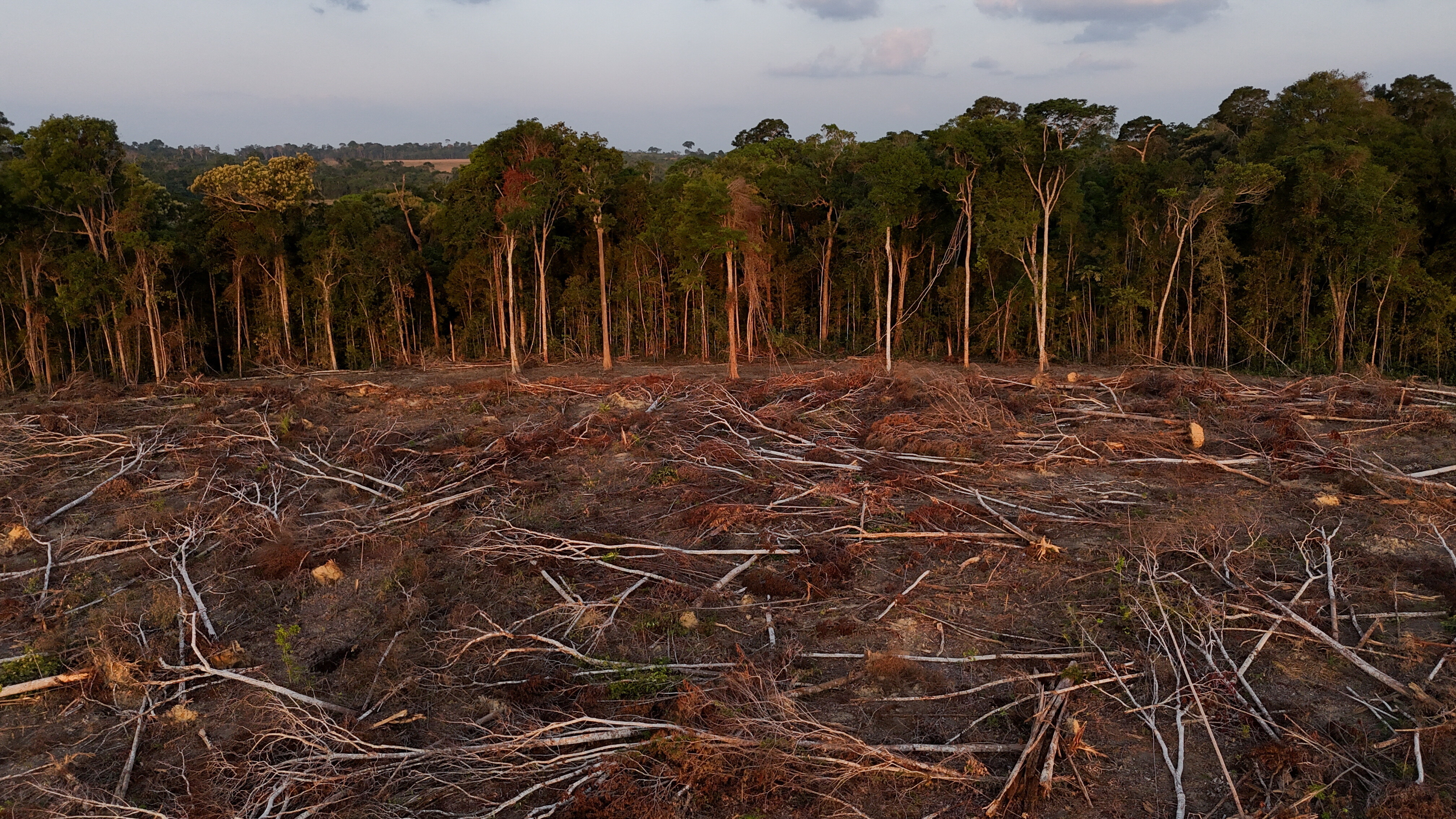
The land and ocean absorb large amounts of greenhouse gas emissions (GHGs). Yet deforestation is turning some vital ecosystems, such as parts of the Amazon rainforest, from carbon sinks to carbon sources. Large swathes of emissions-absorbing wetlands, including salt marshes and mangrove swamps, have disappeared. About 1 million species are threatened with extinction largely due to human activities, including over-extraction of natural resources and pollution of soils and waterways, for example, through toxic chemicals and heavy metals.
The world depends on biodiversity not only for a stable climate, but also for food, water, and medicine: from pharmaceuticals, 40% of whose formulations derived from nature to yields of nutrient-rich foods that depend on pollinators like bees and butterflies.
A large part of the solution lies in tying nature more closely to economic systems. Today, for every $1 invested in protecting nature, $30 is spent on destroying it through environmentally harmful activities. Investment in nature-based solutions must grow 2.5 times to $571 billion annually by 2030, according to the United Nations Environment Programme. This amount represents only about 0.5% of global GDP.
At the same time, nearly half of the global economy depends significantly on nature, underscoring the need to scale investment in protecting natural systems while redirecting investment and subsidies away from activities that drive deforestation, pollution, habitat destruction and over-extraction of resources.
The relationship between economies and nature is especially visible in the food system, where agriculture depends on healthy soils, stable water supply and functioning ecosystems — but also puts major pressure on these systems.
How can food systems become more resilient?
Food production is the main driver of land-use change and significantly contributes to climate and water pressures, responsible for about a third of GHGs and 70% of global freshwater withdrawals.
At the same time, the food supply chain is also increasingly exposed to climate change, land degradation and other forms of ecosystem stress, from extreme heat and drought affecting crop yields to degraded soils that can reduce nutrient retention and increase reliance on artificial fertilizers.
Acidification, overfishing and pollution are threatening blue foods – fish, shellfish, algae and aquatic plants – that provide more than 3 billion people with at least 20% of their animal protein intake.
These environmental risks are amplified by geopolitical disruption. Conflict such as the Russia-Ukraine war has disrupted grain and fertilizer markets. Geopolitical tensions around maritime chokepoints such as the Strait of Hormuz, meanwhile, have revealed how tightly interconnected energy, fertilizer and food markets have become. Around a quarter of all food produced is traded internationally, leaving many import-dependent countries exposed to both climate and geopolitical risks.
As populations grow and diets, incomes and consumption patterns change, food production and consumption will need to become more resilient, nutritious and environmentally sustainable.
That will require action across sectors, from deploying tools such as precision agriculture and AI-optimized supply chains to improving soil and water stewardship, reducing food loss and waste and cutting the food system’s dependence on fossil fuels.
It’s estimated that about $1.1 trillion in annual investment is required to enable this transformation, which needs to happen in a way that protects the planet while raising incomes and improving health and nutrition for everyone.
But the ability to make these changes is not evenly distributed. The communities and countries most exposed to climate, food and nature risks often have the least access to the finance, technology and infrastructure needed to respond.
How can more countries and communities take part in the transition?
The result is a double inequity. The people least responsible for environmental breakdown often bear the brunt of its effects and are least able to finance the transition.
The world’s least developed countries, which are home to about 1.1 billion people yet contribute less than 4% of global emissions, face some of the most severe climate impacts. Local food producers, coastal communities and Indigenous peoples – who steward significant areas of land and ecosystems – can face the greatest disruption to livelihoods, food security and cultural heritage.
Identifying a solution does not mean every country or community can implement it. Whether clean power, resilient agriculture, ecosystem restoration or low-carbon industry can be deployed at scale depends on access to finance, technology, effective policy, institutional capacity and local skills. The Intergovernmental Panel on Climate Change notes that feasibility differs across regions, depending on their capacities and the speed and scale of implementation.
The challenge is particularly acute where the ecosystems with great global value are located in developing economies. Governments may be asked to protect forests, oceans and land that benefit the entire planet while still meeting urgent needs for jobs, energy access and economic development.
Energy investment is growing, with around $2.2 trillion going collectively to renewables, nuclear, grids, storage, low-emissions fuels, efficiency and electrification. But it is currently unevenly distributed, with about three-quarters of clean energy investment concentrated in a small number of markets, according to the World Economic Forum’s Energy Transition Index 2026.
Making the transition fairer requires coordinated action from governments, businesses, investors, and local communities. This means more affordable long-term finance that doesn’t add to debt pressures, investment in power grids, local jobs and skills and transition plans designed around the priorities of the communities most affected.
Closing these gaps cannot be left to individual countries, companies, or communities – progress in one area increasingly depends on coordinated action in others.
What turns shared ambitions into practical progress?
History shows what cooperation can achieve. The multilateral response to ozone depletion aligned science, policy, industry action and international support to phase out nearly 99% of ozone-depleting substances. The ozone layer is now heading for recovery, with ozone depletion one of the two Planetary Boundaries within safe levels, demonstrating that shared challenges can be addressed when countries agree and follow through on common rules.
The same principle applies today but delivery will depend on policy, finance, infrastructure and accountability working together. National targets need credible implementation plans, clear responsibilities and investment strategies that direct capital towards the technologies, skills and systems needed on the ground.
Shared transparency rules and monitoring can help governments, businesses, and communities track progress, identify gaps, and ensure commitments deliver measurable outcomes. Analysis from the Organisation for Economic Co-operation and Development (OECD) suggests that climate plans are most effective when integrated with wider development priorities and backed by robust governance and financing arrangements.
There is an economic case for doing so. OECD modelling finds that enhanced Nationally Determined Contributions – countries’ climate plans that are more ambitious than previous targets – could leave global GDP 0.2% higher by 2040 than under current policies. That’s before accounting for avoided climate damages, poverty reduction, improved energy security and better health outcomes.
The World Economic Forum’s Alliance of CEO Climate Leaders offers one example of cooperation in practice. Its members work to align corporate strategies with science-based targets, strengthen policy and public-private collaboration, and accelerate the transition to net zero. Between 2019 and 2023, companies participating in the alliance reported cutting aggregate emissions by 12% while increasing revenues by 20%.
Meanwhile, WEF’s Global Future Council on the Regenerative Blue Economy is showing how convening experts from across private and public sectors, civil society and academia can drive progress. It has produced a new operational framework to help move the ocean economy from sustainability to regeneration, identifying actionable levers across governance, finance, human capacity and technology.
The task may be daunting, but the opportunity is clear. By combining international cooperation with practical domestic delivery, the world can protect the natural systems on which livelihoods depend while creating more resilient, inclusive and durable prosperity.
No single institution, sector or country can solve these challenges alone – because they do not exist alone. The economic, technological, social and planetary forces shaping our future are deeply interconnected, and so too must be the responses. At the World Economic Forum, we bring together the leaders, ideas and partnerships needed to turn shared understanding into collective action. Because moving the world forward starts with seeing the whole picture.