The accommodation industry will need to spend €768 billion ($820 billion) over the next two decades to reach net zero, according to a new report.
The industry currently accounts for about 10% of the tourism sector's total annual emissions.
But it has the potential to reduce emissions by 15-20%.
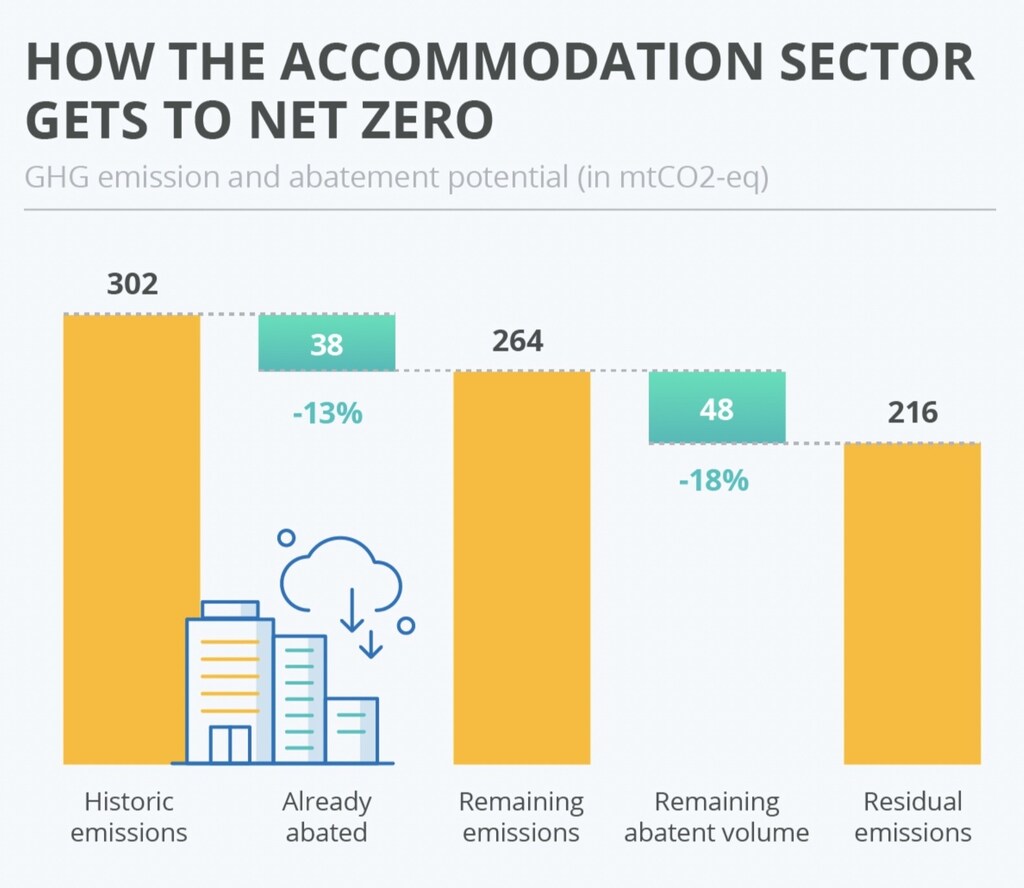
An EY Parthenon, OC&C strategy consultants, and Booking.com report aiming to plot a path for the accommodation sector to hit net zero emissions by 2050 reveals that accommodations will need to devote 768 billion euros over the course of the coming two decades. The accommodation industry is responsible for 264 million metric tons (Mt) of CO₂-equivalent direct and controllable emissions, which account for approximately 10% of the tourism sector’s entire annual emissions. Based upon current levels of implementation, the study reveals that the accommodation industry can reduce current emissions by 15-20%, corresponding to an annual abatement opportunity of 48Mt CO₂-equivalent.

How is the World Economic Forum driving the energy transition?
The Centre for Energy and Materials connects leaders to make sense of the complex transitions reshaping energy, materials and industrial systems. It provides a platform to explore how energy security, affordability and sustainability intersect.
Through collaboration across value chains and regions, the Centre enables shared pathways that help partners align around practical solutions for a secure, low-carbon and equitable transition.