Like most city-dwellers, Scots travel in polluting vehicles, use fossil fuels to heat their homes and work in an economy that produces greenhouse gases. But Scotland's two biggest towns are racing to become the first city in Britain with net-zero emissions.
Long-time rivals Glasgow and Edinburgh both have plans to decarbonise their economies, moving faster than the rest of Britain towards net-zero carbon status.
How is the World Economic Forum facilitating the transition to clean energy?
The Centre for Energy and Materials connects leaders to make sense of the complex transitions reshaping energy, materials and industrial systems. It provides a platform to explore how energy security, affordability and sustainability intersect.
Through collaboration across value chains and regions, the Centre enables shared pathways that help partners align around practical solutions for a secure, low-carbon and equitable transition.
Both have set targets which go beyond the Scottish government’s 2045 net-zero target and that set by the UK government’s Committee on Climate Change of 2050. Achieving net-zero status involves more than reducing emissions – it also involves offsetting greenhouse gases released with initiatives such as planting trees.
Winds of change
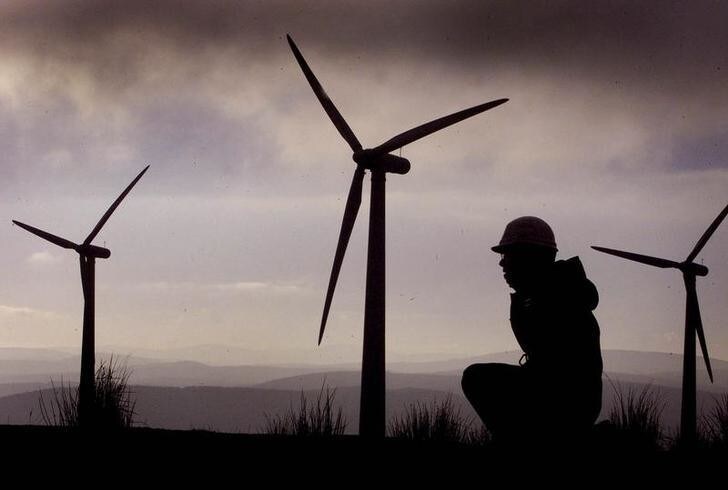
Glasgow City Council is working with Scottish Power, the energy provider in charge of the UK’s largest onshore wind farm, located on Glasgow’s outskirts.
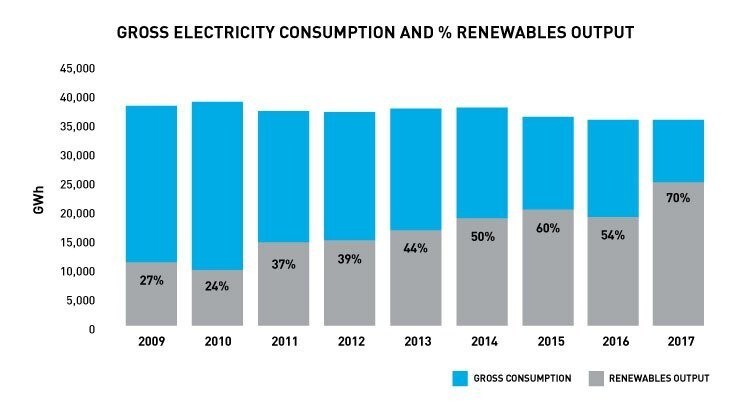
Glasgow’s energy sector is dominated by wind power, and continued investment in the electricity grid has allowed the city to focus on other parts of the economy such as transport and heating.
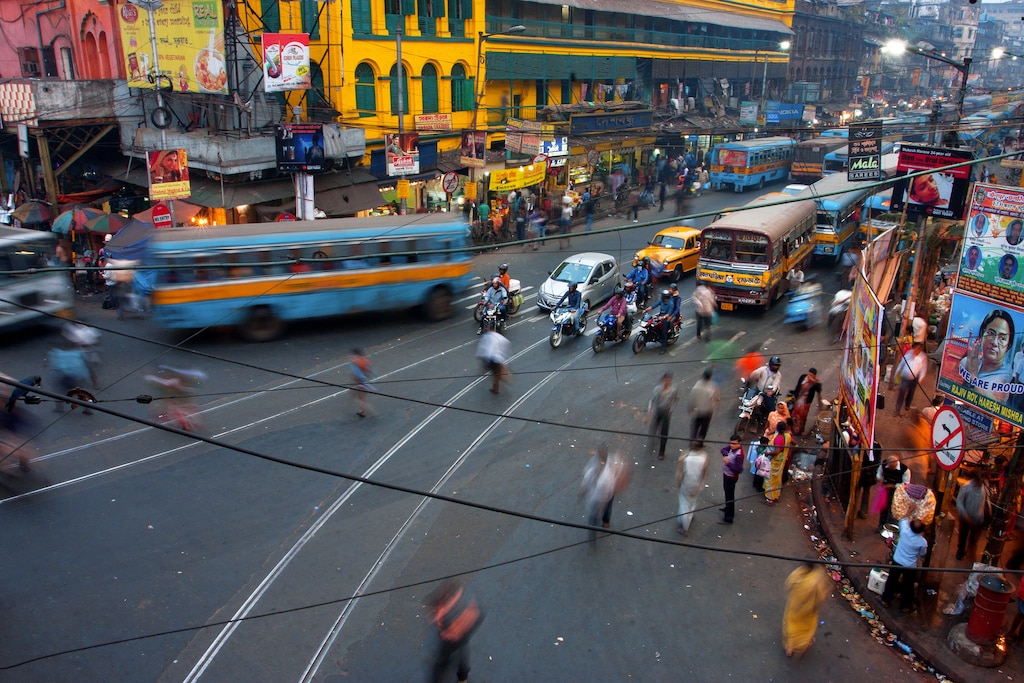
More than 70% of Glasgow residents live in buildings without private off-street parking which are unable to install electric vehicle (EV) charging facilities. The city aims to create a network of charging stations to encourage the takeup of EVs. Electric buses are also being planned to service the city’s main routes.
Race to net zero
Edinburgh’s carbon emissions have fallen by about a third since 2005. The council aims to continue that momentum by boosting renewable energy, making the city centre a low-emissions zone, and encouraging low-carbon design for construction projects.
The city aims to prioritize local production, with schemes in place to reduce waste and increase recycling.
Cyclists, pedestrians and public transport will have better access to the city centre, which will be off-limits to most cars. Freight hubs are planned for Edinburgh’s periphery with low-carbon transfers of goods into the city.
The prize for the city that eliminates its emissions first? Cleaner air, an improved environment, better health, and the kudos of winning the race to zero.
The United Nations Intergovernmental Panel on Climate Change calls for urgent action to keep global temperatures no more than 1.5°C above pre-industrial levels. Failure to mitigate the extreme effects of climate change could kill off many species and pose an existential threat to humans.
In April, Nicola Sturgeon, First Minister of Scotland, said Scotland would “lead by example” on what she termed a global climate emergency.