AI is helping to detect and reduce methane emissions – here's how
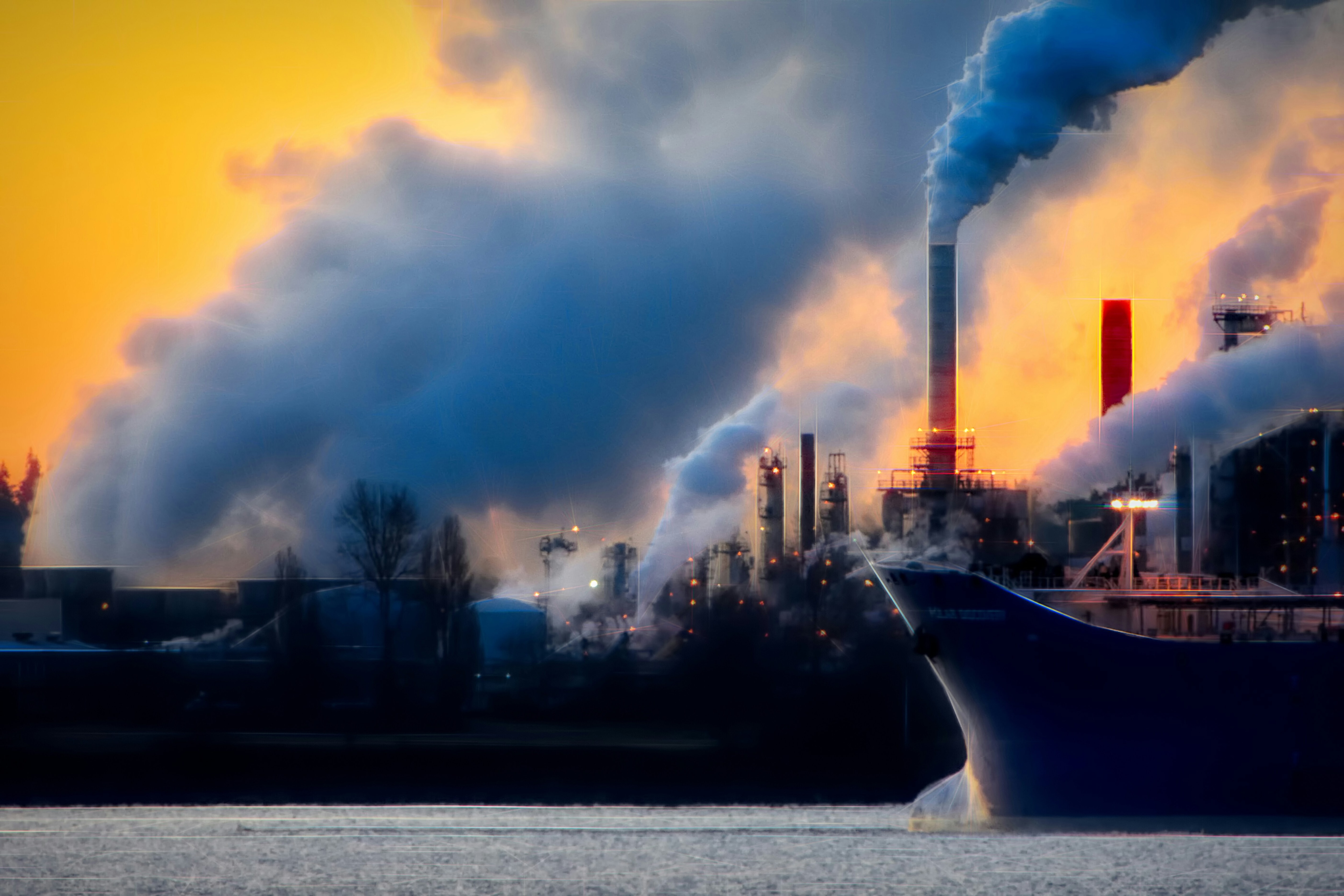
AI and satellite observation is helping to reduce methane emissions. Image: Unsplash/Chris LeBoutillier
- AI-powered satellite monitoring has helped cut methane emissions, according to a new report from UNEP.
- The UN's Methane Alert and Response System now uses AI to process 12-15 times more satellite data, contributing to mitigation actions across the globe.
- The World Economic Forum's Earth Observation initiative estimates satellite data like this could unlock over $700 billion in economic value.
Artificial intelligence (AI) is delivering one of the clearest wins yet in the fight against climate change – in real time, from space. A new United Nations report shows that AI-powered satellite monitoring has helped cut methane emissions in the oil and gas sector, which equate to taking 24 million petrol-powered cars off the road for a year.
That's the headline finding from Spotlighting Opportunity: How Artificial Intelligence is Accelerating Methane Action, published by the UN Environment Programme (UNEP) in July. It shows how the technology is proving to be a powerful tool for cutting greenhouse gas at speed.
From satellite noise to actionable alerts
Methane is responsible for roughly a third of the warming the planet has experienced since the Industrial Revolution, and its Global Warming Potential is around 80 times stronger than carbon dioxide over a 20-year period. More than 30 satellites now track methane plumes from space, generating a flood of data that, until recently, teams of scientists had to sift through manually.
That's where AI comes in. Through UNEP's International Methane Emissions Observatory (IMEO), AI-assisted workflows now identify 80-85% of confirmed methane detections before human experts even review them, allowing analysts to process 12 to 15 times more satellite data without sacrificing scientific rigour.
The system behind this, the Methane Alert and Response System (MARS), notifies governments and companies directly when a major leak is spotted, cutting the time between detection and action.
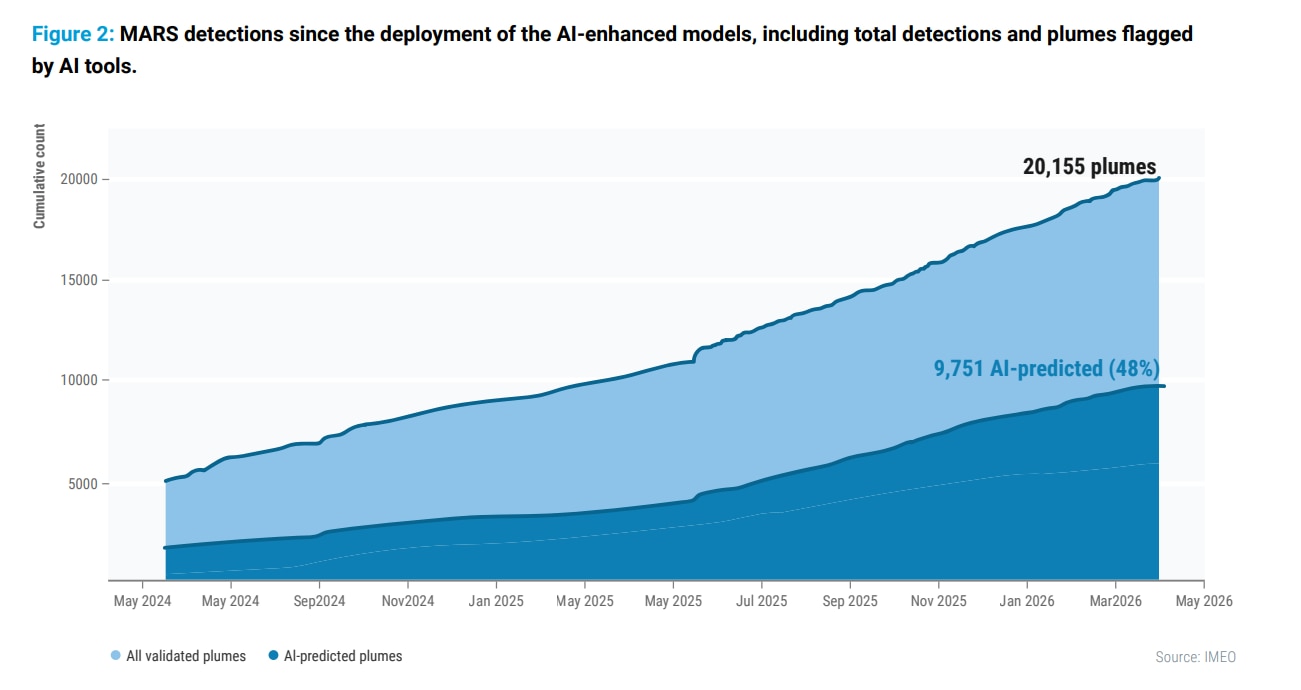
The results are tangible. Since MARS became fully operational, it has contributed to more than 40 mitigation actions across the globe, addressing leaks estimated to have emitted 1.2 million tonnes of methane.
"Methane is only the beginning," said Martin Krause, Director of UNEP's Climate Change Division. "The real lesson from this work is that AI can help convert the explosion of environmental data into practical action. By combining scientific expertise with lightweight and energy-efficient AI tools, we can respond faster not only to methane emissions, but to a wide range of environmental challenges."
The UN's call for faster action on methane
The UN Secretary-General António Guterres launched a global Call to Action on Methane in June. Speaking at London Climate Action Week, he said: "The world phased out leaded gasoline. We eliminated ozone-depleting chemicals. Methane pollution must be next."
In 2024, atmospheric methane concentrations reached about 1,942 parts per billion – around 266% above pre‑industrial levels and the highest in at least 800,000 years, according to the World Meteorological Organization's State of the Global Climate 2025 report.
But Guterres says urgent action on methane is one of the "fastest and most effective levers available to slow near‑term warming".
The report sets out nine priority actions across high-emitting fossil fuel, agriculture and waste sectors for governments, industry and investors to implement by 2030. Guterres called for governments to increase their response rate to satellite alerts to 80% by 2030 – up from just 12% in 2025.
"The world can now see methane emissions as they happen," he said. "Continued inaction is no longer a matter of uncertainty or lack of information – it is a
deliberate choice."
A bigger opportunity for business and climate
The World Economic Forum has been building the case that this kind of Earth Observation (EO) technology is not just an environmental tool but an economic one.
Forum analysis estimates Earth Observation data could contribute more than $700 billion to the global economy by the early 2030s, with $263 billion of that value still unrealized.
At the same time, EO interventions could help reduce greenhouse gas emissions by more than two gigatonnes each year.
A separate Forum report singles out methane tracking as one of the most promising "dual-value" applications of satellite data – delivering climate benefits and commercial returns at once. In the US alone, methane leaks cost the oil and gas sector an estimated $2 billion in lost revenue.
AI has effectively solved the detection problem. The next challenge is making sure governments and companies act on what the satellites find – something UNEP and the Forum's EO initiatives are now working to accelerate.
With the technology proven and the economic case building, methane may be the fastest, cheapest climate win still on the table.
License and Republishing
World Economic Forum articles may be republished in accordance with the Creative Commons Attribution-NonCommercial-NoDerivatives 4.0 International Public License, and in accordance with our Terms of Use.
The views expressed in this article are those of the author alone and not the World Economic Forum.

Forum Stories newsletter
Bringing you weekly curated insights and analysis on the global issues that matter.
More on Climate Action and Waste Reduction See all

Madeleine North
September 10, 2026


