Disclosing whether creative content is AI-generated is not enough. Online trust depends on a deeper definition of authenticity.
Generative AI is rapidly changing how creative work is made, distributed and experienced. For brands, creators and consumers, this brings new possibilities and new responsibilities.
AI has the potential to mark a significant expansion of human creative possibility, lowering barriers to who can create and how. It can help turn ideas into images, video, music, stories and experiences, while giving established creators new ways to experiment.
That opportunity comes with a responsibility: Expanding creative possibilities while preserving what makes creativity authentic, with people staying true to their values, ideas and vision, whether AI is part of the process or not.
The creator economy offers a useful lens for understanding what this looks like in practice. Built on human creativity, participation and trust, it offers lessons for platforms, policy-makers, businesses, creators and AI developers alike.
Authenticity is not about the absence of AI
Authenticity in the AI era is not simply about whether technology was used. It is about whether the work remains true to the people, ideas and standards behind it, with enough context provided by platforms for audiences to understand what they encounter.
A creator might responsibly use AI for translation, ideation, editing or artistic expression, while content created without generative AI can still mislead. The same standards should ultimately apply regardless of the tools used.
The more useful question is therefore not simply, "Was AI involved?", it is:
Could the content mislead people about something consequential?
Would more context materially improve their understanding?
Can people make informed choices or report concerns?
This is why standards for misleading or harmful content should apply regardless of the technology used to create it. TikTok's Community Guidelines, for example, require creators to label AI-generated or significantly edited content, while certain misleading or harmful content remains prohibited even when disclosed. Disclosure is part of providing context; it does not make harmful content permissible.
The creator economy as an early test for the AI economy
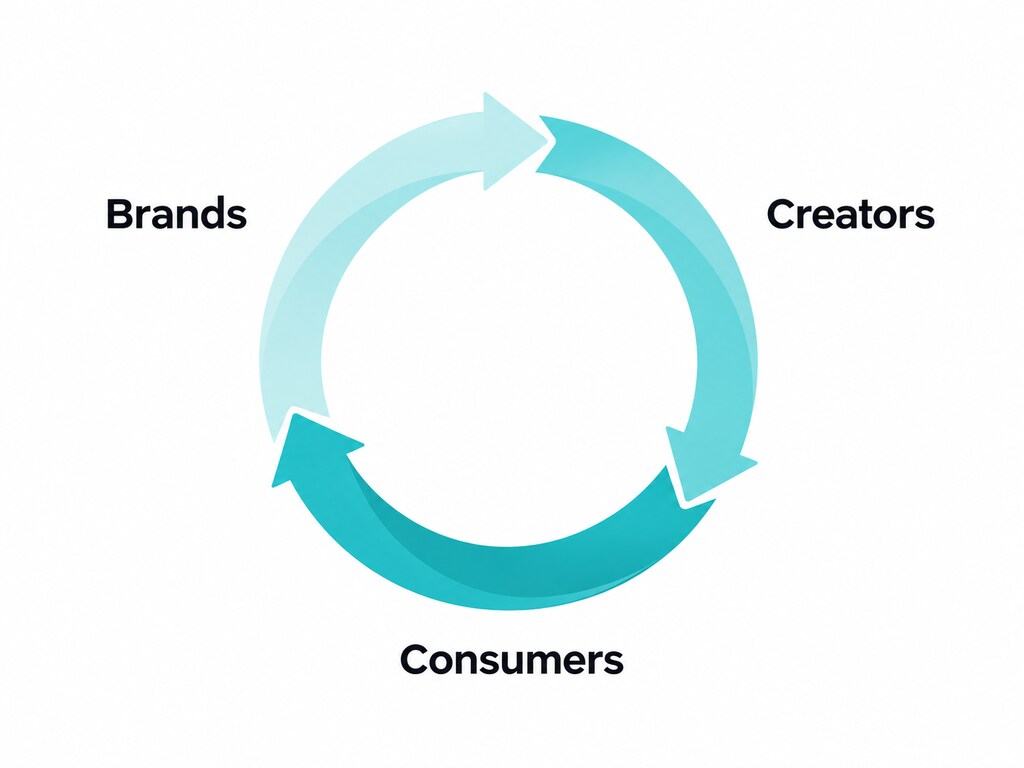
The creator economy offers an unusually immediate test of these questions because AI enters a live feedback loop among creators, brands and consumers. People encounter it not as an abstract technology but as the videos, images, recommendations or commercial messages it produces, judged in context and against expectations of the person sharing it. On platforms built around participation, shifts in trust can become visible quickly in what people watch, share, follow and engage with.
This offers three early lessons for the wider AI economy:
First, people need context, not simply more information. A transparency signal is useful when it helps someone interpret what they are seeing. Applied without clear purpose or consistency, additional signals can become noise.
Second, different uses of AI create different considerations. Using AI to correct colour or translate text is not equivalent to replicating a real person's voice or creating a realistic event that never occurred. Responsible approaches should account for the role AI played and the likelihood of confusion or harm.
Third, trust cannot depend on one actor. Creators, platforms, AI developers, businesses, policy-makers and standards bodies each influence how synthetic content is created, distributed, understood and governed.
How the Forum helps leaders make sense of AI and collaborate on responsible innovation
Industry evidence reinforces these lessons. IAB reported in 2025 that 86% of digital video buyers were using or planning to use generative AI for video creative, with buyers expecting it to touch about 40% of video ads by the end of 2026. Meltwater and YouGov found that 86% of consumers consider AI disclosure important, 59% say non-disclosure reduces trust, and 49% say replacing human creators entirely would reduce trust. WFA and ICAS likewise argue that labeling alone does not make marketing responsible: Content must first be legal, honest, truthful and not misleading.
A multi-layered approach to responsible AI
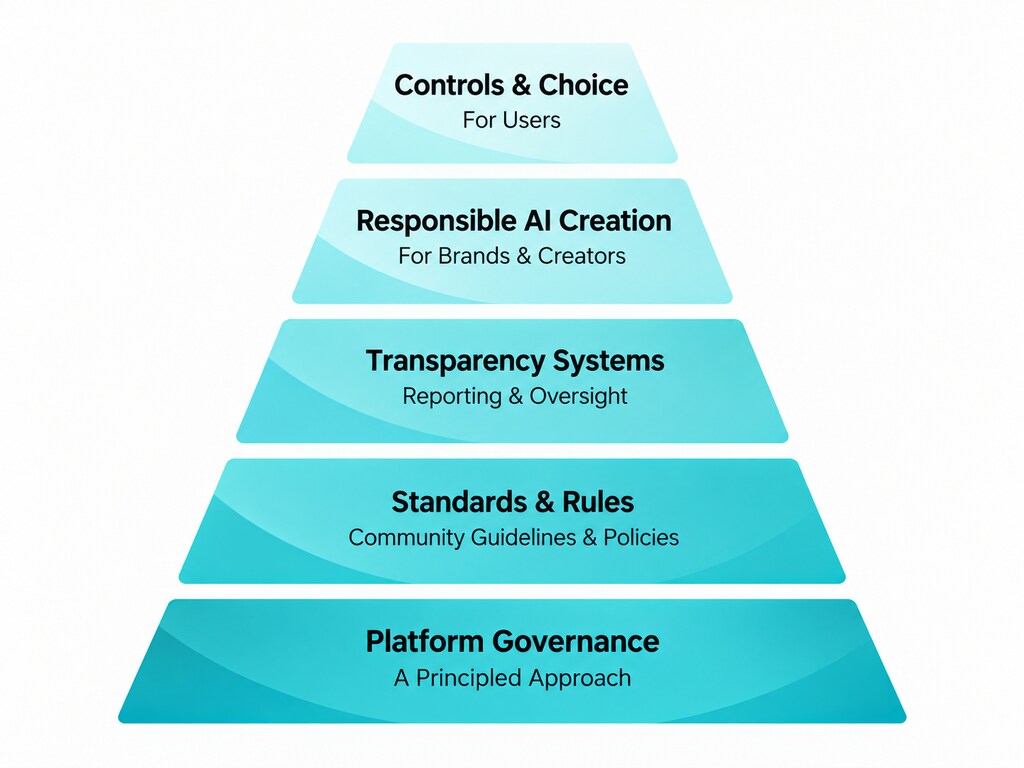
At TikTok, this thinking is reflected in a five-layer Responsible AI Framework spanning platform governance, standards and rules, transparency systems, responsible creation, and controls and choice. The point is that no single layer can build trust on its own. Safeguards need to work together, from how AI systems are designed through how content is created, labeled, distributed and understood.
Clear standards are one part of that approach. They should apply whether content is human-made, AI-assisted or AI-generated. On TikTok, for example, significantly edited AI-generated content must be disclosed, while certain harmful or misleading content remains prohibited regardless of labelling.
Technical approaches such as content credentials, which embed information about a piece of content's origins and how it was created or modified, and invisible watermarking can help platforms identify AI-generated content. Together, these technologies can support greater transparency across the vast volume of content created, shared and distributed online every day.
Human accountability is another part. People and organizations deploying AI are still responsible for the claims they make and the effects their content may have. And transparency is most useful when people can act on it, through reporting tools, user controls and media-literacy resources that help them interpret synthetic content.
Together, these layers reinforce one another rather than operate in isolation.
From platform responsibility to industry collaboration
Responsible AI is an ecosystem challenge. AI developers shape what systems can produce; creators and businesses decide how they are used; platforms influence distribution and context; policy-makers set legal expectations; and civil society, researchers and standards bodies contribute expertise and scrutiny.
No organization has a complete view of this system, making shared infrastructure and industry collaboration essential. Interoperable approaches such as Content Credentials can help information about how content was created or altered travel with it across platforms. These standards are still developing and are not complete verification mechanisms, but they illustrate the value of shared infrastructure over platform-specific solutions.
TikTok has consulted external experts and its Safety Advisory Councils on AI-generated content labels, and committed to shared synthetic-media practices through the Partnership on AI.
Leadership is less about claiming to have solved responsible AI than contributing practical experience, investing in shared solutions and improving approaches as technology and evidence evolve.
Safeguarding authenticity together
The future of AI will also be shaped by whether people trust what they see, understand how it was made, and recognize the people and ideas behind it.
For the creator economy, that means preserving authenticity as AI expands the creative toolkit, giving people useful context when AI meaningfully shapes what they see, and building safeguards that extend beyond disclosure alone.
Done well, AI can expand human creativity without replacing what makes it human. The promise of AI is not simply more content. It is more human creativity, with the authenticity and trust to make it matter.
For deeper insights into creativity in the age of AI, read AI Safety Essentials.