El antes y el después de Lehman Brothers para los bancos de Europa

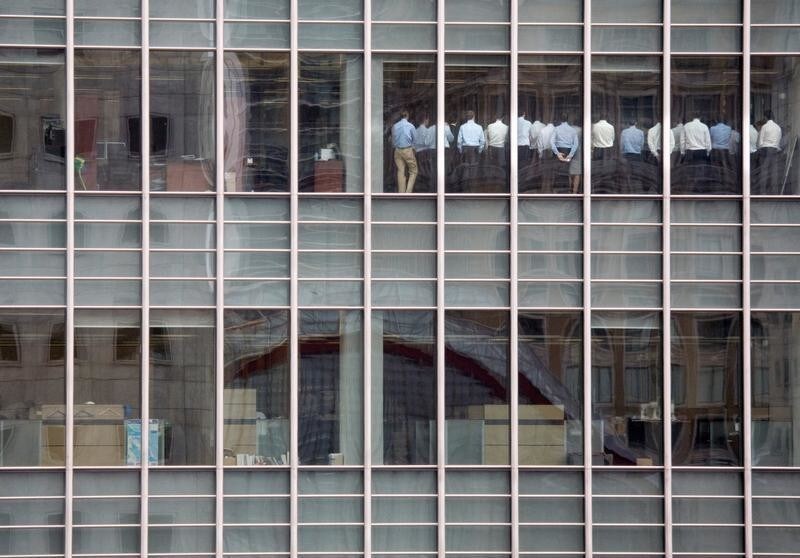
Bankers attend an emergency meeting at the London office of Lehman Brothers, in the financial district of Canary Wharf in London, Britain, September 11, 2008. The photograph caught the moment when Gwion Moore, one of those pictured in the photograph, and his colleagues were being told by bosses that things were going to be OK, despite the plummeting Lehman Brothers share price. "Senior management thought they needed to get the workforce focused again," Moore said. "The phrase was stop 'goofing around and get back to work'. I don't think anyone took the message very seriously because we went back to doing what we had been doing beforehand. No one was going to trade with us."
Image: REUTERS/Kevin Coombs/File photo

Este sábado 15 de septiembre se cumplen diez años desde que Lehman Brothers, el que fue el cuarto banco de inversiones más grande de Estados Unidos, se declaró en bancarrota. Aparte del agujero financiero que supuso el cierre de la entidad, la imagen de los trabajadores de Lehman abandonando la sede en Nueva York con cajas de cartón representa para muchos el comienzo de la crisis financiera de 2008.

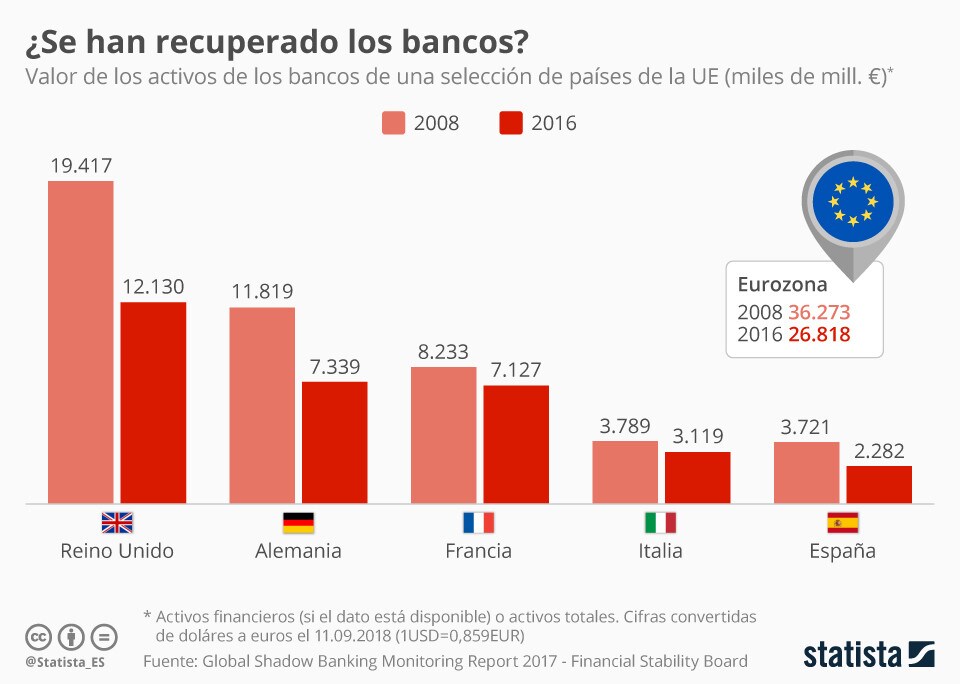
Una década más tarde es un buen momento para preguntarse hasta qué punto la recesión global, de la cual la quiebra de Lehman Brothers fue uno de los principales puntos de arranque, todavía sigue presente. Tal y como muestra este gráfico de Statista, según los últimos datos disponibles, los bancos europeos, protagonistas de la crisisa este lado del Atlántico, todavía no parecen haberse recuperado del 'shock'. Así, según datos del organismo internacional Foro de Estabilidad Financiera, sus activos financieros ascendían en 2016 a 26.818 miles de millones de euros, todavía muy por debajo de su valor en 2008 (este de casi 36.300 miles de millones de euros).

License and Republishing
World Economic Forum articles may be republished in accordance with the Creative Commons Attribution-NonCommercial-NoDerivatives 4.0 International Public License, and in accordance with our Terms of Use. The views expressed in this article are those of the author alone and not the World Economic Forum.