As climate risks grow, they will create opportunities for affordable, profitable goods and services in a climate-impacted world.
Cooling, construction and farming systems are all climate-adapted sectors showing dramatic growth.
Governments should create an enabling policy environment to capture these emerging industries and ensure that they thrive.
The economics of climate adaptation for businesses, investors and policy-makers are increasingly about innovation and opportunity as well as risk. This is not because climate risks are declining. Far from it – it is because many businesses can now provide goods and services needed in a climate-impacted world that are affordable, scalable, profitable and investable.
Tomorrow’s successful businesses, cities, nations, regions, and indeed households, will depend on their ability to manage the risks and realities of a warmer world by deploying affordable goods, services and solutions. Most of these will be provided by businesses. Cooling is a case in point. Sales for cooling appliances across Europe spiked drastically in the summer of 2026, with one retailer reporting fan sales surging nearly 3,000% and portable air conditioning demand rising over 300% year-on-year.
Such growth presents immediate challenges as well as business opportunities. The International Energy Agency (IEA) estimates that global electricity demand for cooling has grown by 50% in the last decade, largely due to servicing global AC unit sales that are 25% higher than five years ago, with 200 million units shipped in 2024. Meeting this energy-for-cooling challenge has catalysed a market in combined solar-powered cooling units, a market predicted to grow to over $11 billion a year by 2030.
Climate-resilient construction materials show a similar trajectory. This market is estimated at $220-260 billion today, growing 6-8% annually to reach $330-370 billion by 2030 – covering structural, façade, insulation and waterproofing materials engineered to withstand heat, wind, flood and fire.
What is true for businesses and markets is also true for entire economies, and this opportunity creates the need for policy action. Just as clean energy and tech have evolved into a $2 trillion a year global investment market, there is significant economic value to be gained in capturing part of tomorrow’s adaptation industries.
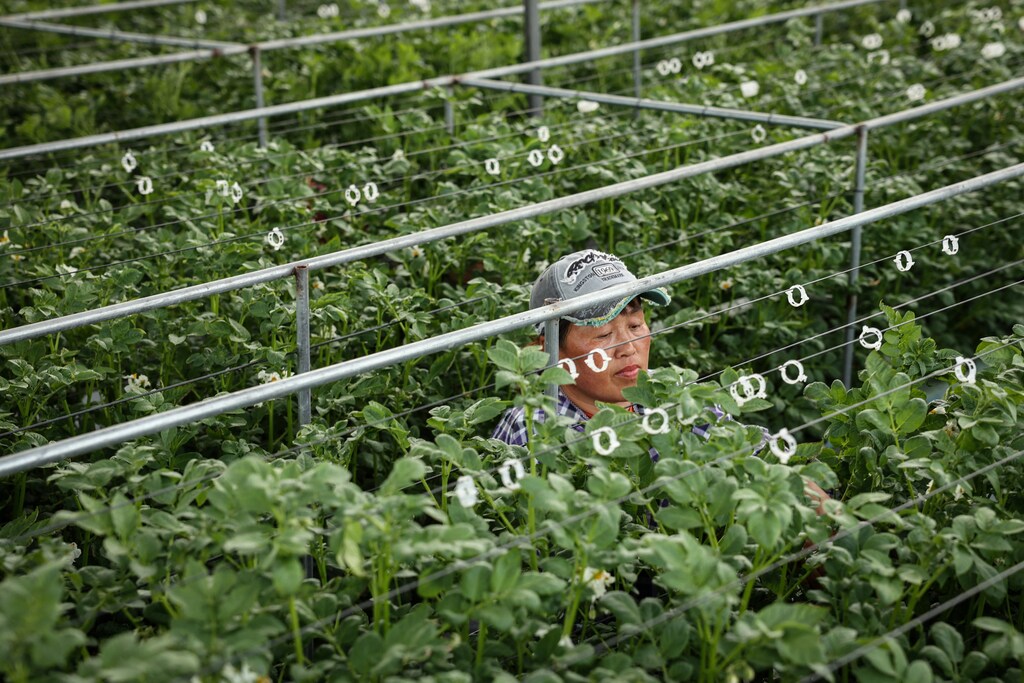
China, for example, is providing considerable policy support for the next generation of intensive, climate‑resilient farming systems. Its domestic vertical‑farming market already encompasses around 250 active sites, is growing at more than 20% a year and is expected to exceed $2 billion by 2033, supported by low‑cost LED lighting and highly efficient manufacturing value chains. A similar trend is emerging in precision fermentation, where some estimates put annual market growth rates at more than 50%, albeit from a relatively low level.
Measures are emerging of the breadth of market opportunities in the new adaptation economy. Singapore’s Sovereign Wealth Fund GIC has predicted that annual sales worldwide across adaptation-relevant market segments will quadruple to $4 trillion by 2050, with $2 trillion driven directly by incremental global warming. Temasek and BCG, likewise, estimate that global climate adaptation financing needs will rise to between $0.5 trillion and $1.3 trillion per year by 2030, presenting a massive, trillion-dollar investment opportunity for private equity.
Realizing these opportunities requires governments and other public institutions to create the right enabling economic conditions. Now, for the first time, there is a tool to measure the progress nations are making in setting up their economies to support the deployment of urgently needed adaptation solutions.
Morphosis’s Adaptation Economy Index focuses on countries’ capacities to develop adaptation markets that can attract private capital at scale in the face of increasingly constrained government finances worldwide. It measures seven dimensions, from the extent to which climate risk has been internalized into markets and investment decisions, through to entrepreneurship and technology capacities.
The two purposes are to support policy-makers in building and managing economic roadmaps to improve the prospects for adaptation-focused businesses, and to inform the growing number of investors exploring adaptation-related opportunities of the investability of countries and specific assets.
Effective climate adaptation will be among the top drivers of future value globally – for every asset and business, as well as every household, sector and economy. The policy environment will anchor our response to these changes, including the “first line” of adaptation: rapidly reduced emissions. It will determine how we mobilize and develop capabilities, and whether we can establish the basis for inclusive prosperity in a severely climate-impacted future.