As workplace technology evolves and required skills change, the importance of developing talent to prepare for future jobs is increasing. Companies have a role to play in supporting people not only to adapt to change but also to capitalize on the new opportunities that arise.
Skill development delivers its greatest value by clearly defining the path from learning to employment and connecting it to actual work.
Young people need a clearer picture of the careers that will grow in the future, the skills required for those jobs, and the paths to get there.
Helping people find fulfilling work is an important investment in the future.
Work fosters self-confidence, creates opportunities, and strengthens communities. Furthermore, as industries evolve and new technologies transform the world, it helps people develop the ability to adapt to new environments.
Adaptability is becoming increasingly important. AI is changing the way we work, creating new possibilities for increased productivity and growth. At the same time, there is a growing demand for talent with new skills and abilities in high-growth sectors such as advanced manufacturing, semiconductors, and energy infrastructure.
The important thing is not simply to help people keep up with change, but to help them acquire the confidence, experience, and skills they need to seize the opportunities that change creates.
While the number of workers who use AI on a daily basis is increasing, many people lack confidence in their ability to use it effectively. Companies have a significant role to play in bridging this gap. They can help people confidently utilize new technologies while also contributing to the development of specific skills required by industries.
Turning rising recruitment needs into opportunities for talent development
Latest"ManpowerGroup Employment Forecast Survey According to the report, companies continue to prioritize growth. 43% of companies plan to increase their workforce in the fourth quarter of 2026, and hiring intentions have improved compared to the previous quarter and the same period last year. Furthermore, a wide range of industries reported increased hiring of entry-level talent compared to 2025.
Meanwhile, companies still cite a shortage of talent with the right skills and a mismatch between candidates' experience and job requirements as challenges. For companies that are reducing entry-level hiring, a major factor in the decline in hiring is the need for experienced personnel who can hit the ground running, rather than relying on AI-driven automation.
These results also highlight the existence of new opportunities. Companies need skilled talent, and workers seek careers that allow them to continue learning and growing. By more directly linking learning with employment, people can gain work-related experience, and industries can cultivate the necessary skills for their work.
It is essential for workers to have a clear understanding of how their jobs are changing and how new skills will enhance their employability.
Skill development only has value when it leads to future work opportunities.
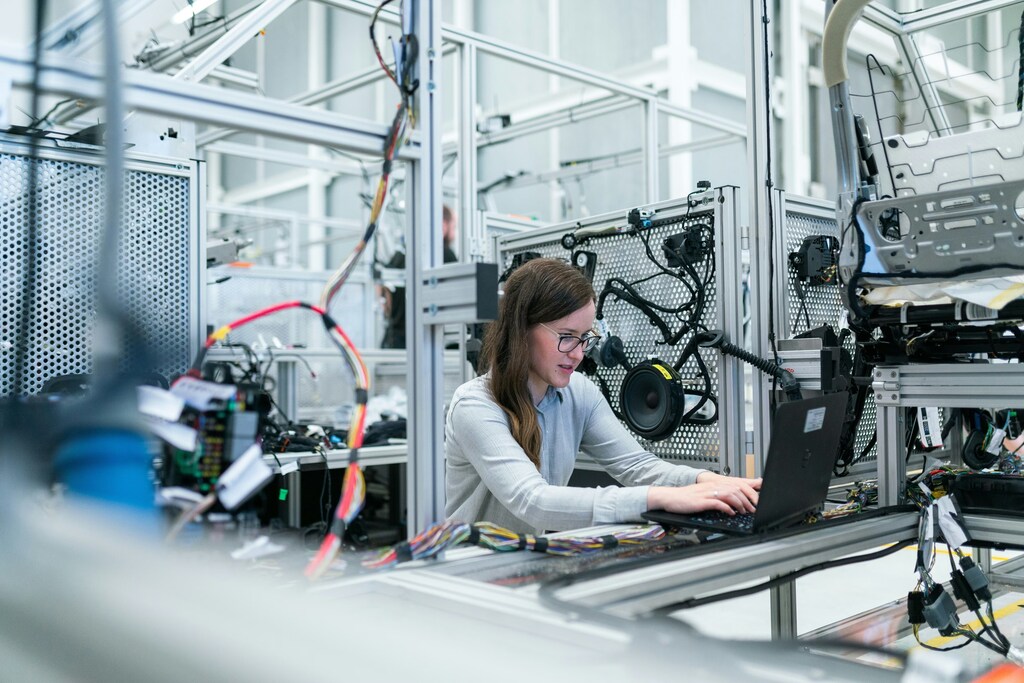
Effective skills development starts with the needs of the actual labor market. In advanced manufacturing, this means developing personnel who can handle robotics and automation technologies in line with changes in the production environment.
One example of this is the need for technical talent across a wide range of fields, including manufacturing, engineering, field services, software, and operations, for the growth of the semiconductor industry. The expansion of energy infrastructure and data centers is also creating demand for personnel with specialized skills.
ManpowerGroup's Global Manufacturing Outlook According to "Global Manufacturing Outlook," 72% of manufacturing companies are struggling to secure skilled personnel as robotics and smart manufacturing change the required workforce. At the same time, 45% of people working in manufacturing are concerned that their jobs may be replaced by AI and automation within the next two years.
Developing skills and confidence within a company
Workers need a clear understanding of how their jobs are changing and how new skills will enhance their employability. Companies can communicate the changes happening in the labor market, support practical learning, and provide a clear path from training to employment.
Manpower's "MyPath" is one example of putting these connections into practice. This program utilizes data and insights on the labor market to understand changes in the workplace, reflects new talent needs in specific training programs, and helps workers understand changes in employment opportunities.
To date, more than 332,000 people worldwide have participated in and completed MyPath programs. As of the second quarter of 2026, 40.4% of participants had completed their training, with 67% of their professional skills training focused on specific industry sectors.
Behind these figures are people who have actually taken a step in their careers. For example, one graduate who studied electrical engineering used this training to strengthen the skills necessary to work as a test and verification engineer at Stellantis. This example shows that connecting learning to actual work, company needs, and future careers leads to the development of future-oriented talent.
Career preparation should begin early.
Young people need opportunities to learn about new opportunities emerging in different fields and what kinds of jobs are available in those fields. Furthermore, they need to understand the paths they can take to get those jobs.
World Economic Forum's SmartStart The initiative aims to prepare one million young people for future-oriented jobs in manufacturing and supply chains by 2035. It connects industry, educational institutions, and talent development organizations to cultivate the practical skills needed for jobs related to technology, digital, and sustainability.
At SmartStart, we connect classroom learning with practical experience, industry-recognized certifications, and mentorship, while also working to make technical careers more accessible to students and their families.
In the manufacturing industry, the use of AI, robotics, automation, and data analysis is becoming increasingly widespread.
Understanding how these technologies are used in real-world work and what skills companies are looking for will enable students to make more informed choices about education and qualifications. They will also be able to more clearly visualize how those choices will connect to their future careers.
The growth of the semiconductor industry requires the development of human resources that meet its needs.
Because the required skills vary from industry to industry, skill development needs to be linked to the actual job roles and abilities that are in demand. The semiconductor industry is an example of how this approach can work.
Semiconductors not only support AI and cloud infrastructure, but are also essential for electric vehicles, data centers, hospitals, and advanced manufacturing. For this industry to continue growing, skilled personnel are needed across the entire value chain.
SEMI offers the "K-12 Initiative" and "Junior Achievement" programs for students from kindergarten through high school. Through these initiatives, students can learn about semiconductor-related jobs from an early age and acquire the necessary technical skills. They can also learn about multiple paths to the semiconductor industry, including routes that do not require a four-year university degree.
Even those already employed need opportunities to transition into growth sectors. Intel's semiconductor talent development initiative, Quick Start, has helped hundreds of people through training, career transitions, and skill development.
These initiatives require the cooperation of various stakeholders. Companies provide information on the skills needed, and educational institutions reflect those needs in practical learning. Industry and community partners broaden career awareness and opportunities, and talent support organizations play a role in connecting training with employment.
By driving innovation responsibly and placing people at its center, more people will be able to participate in the industries that shape the future.
Preparing for the future expands opportunities.
In industries where the traditional labor supply system cannot keep pace with the growing demand for talent, it is becoming increasingly important to "develop" the necessary personnel, as well as "find" them.
The specific approach varies by country and industry. Therefore, it's crucial to understand how the skills you acquire connect to a fulfilling career. Companies and educational institutions play a role in collaborating with talent support organizations to clarify these connections.
MyPath shows what "preparing for the future" means for those who have already built a career. SmartStart starts this preparation earlier, before young people have to make important choices about education and work. And the semiconductor sector initiative demonstrates how learning can be tailored to the talent needs of a specific industry.
By driving innovation responsibly and placing people at its center, more people will be able to participate in the industries that shape the future. Furthermore, this will help secure the talent necessary for those industries to grow.