Biofuel use is on the increase – will this make a global food crisis more or less likely?
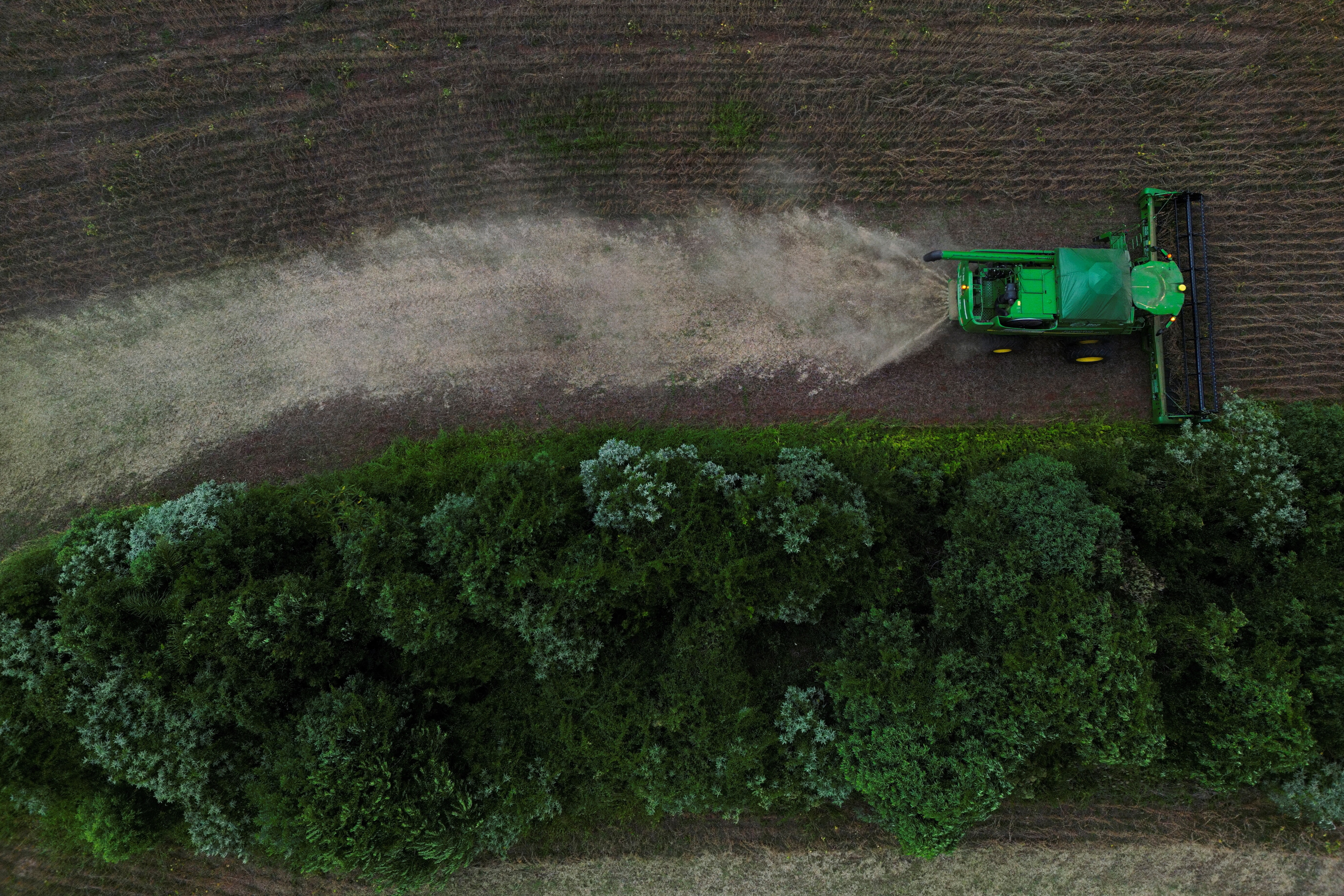
Meeting just 20% of the world's energy demands with biofuel would require agricultural land the size of South Africa, T&E estimates. Image: REUTERS/Diego Vara
- Rising oil prices are accelerating demand for biofuels, increasing pressure on food systems and fertilizer supplies as production expands.
- The World Economic Forum's Fuelling the Future report argues that clean fuels can strengthen energy security while protecting food systems, if supported by the right policies.
- As hundreds of millions of people face hunger, the expansion of biofuel production underscores the need to balance energy security with food security amid ongoing geopolitical disruptions.
Demand for biofuel has climbed steeply amid soaring oil prices resulting from the Middle East conflict. Countries want to shore up their energy supplies with sources other than fossil fuels, but this risks placing more strain on food systems and restricting the availability of already-in-demand fertilizer.
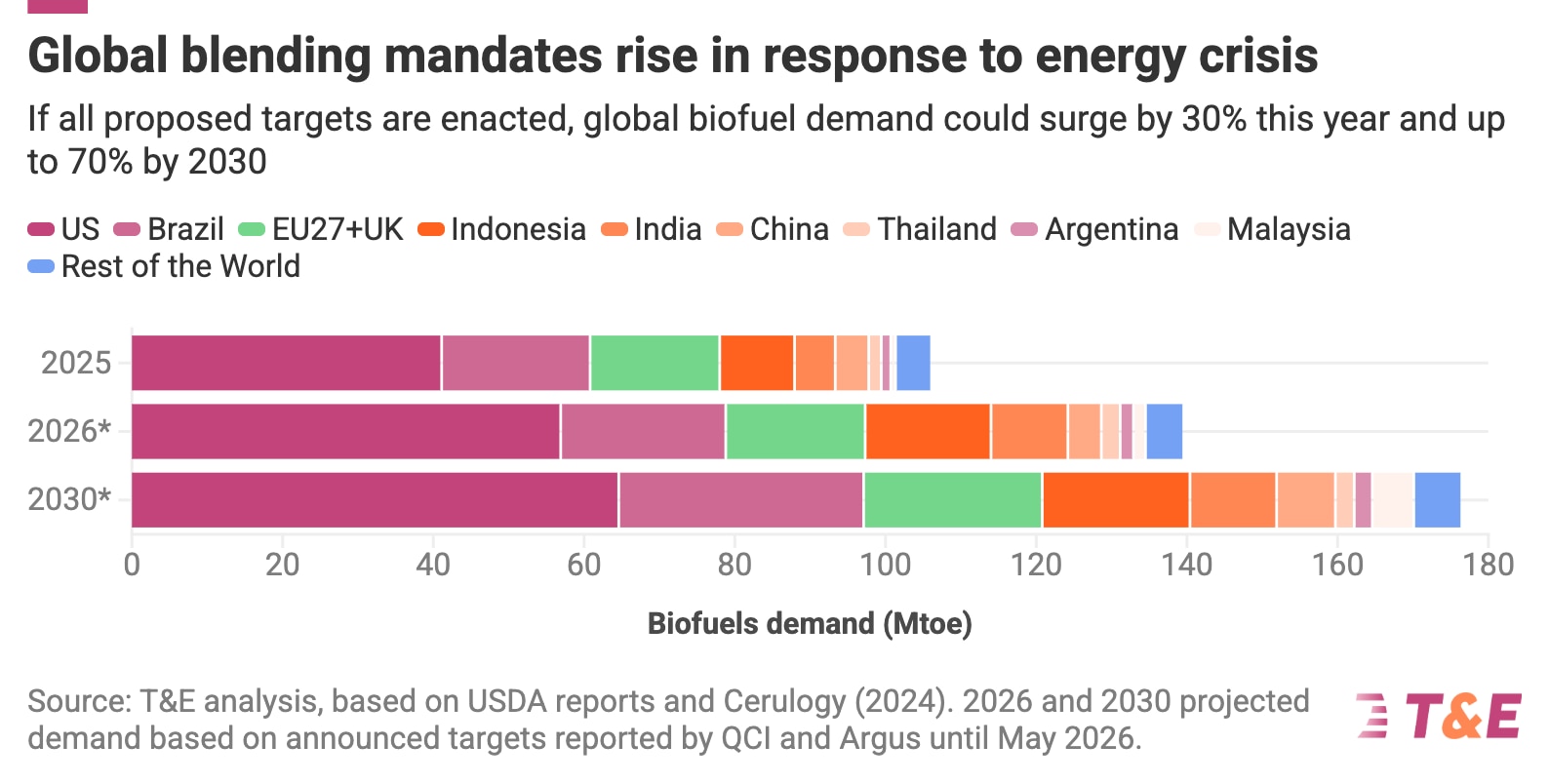
The closure of the Strait of Hormuz, triggered by the US-Israel war with Iran, has led many countries to look to alternative sources of fuel as oil prices surged over $100 a barrel. The US, Brazil, Indonesia and India, among others, have all raised targets for biofuel production as they look to increase energy security and insulate themselves from the current market. And if all the proposed biofuel targets are enacted, demand could surge by 30% this year and 70% by 2030, European clean transport and energy think tank T&E predicts.
However, biofuels can be produced from biomass – recently living organic material, often including sugar and starch crops such as beet, corn and wheat, or oilseed crops such as soybeans. This creates a real tension between energy security and food security, as key feedstocks are diverted from food production at a time of growing concern about hunger.
Biofuels eat into crucial fertilizer supplies
Added to this, global stocks of fertilizer and its core ingredients are in high demand as geopolitical tensions around the world have made access increasingly difficult. Russia accounts for about 20% of the global fertilizer market and is the world's biggest exporter, while significant volumes pass through the Strait of Hormuz.
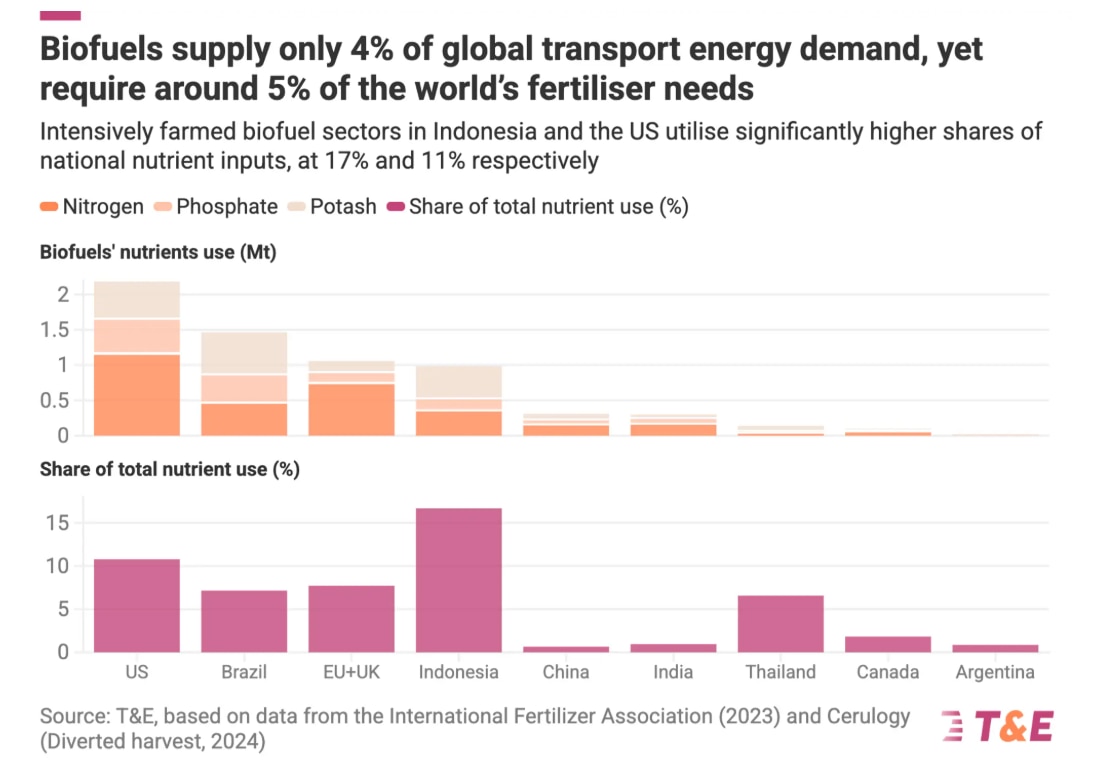
Already, Indonesia directs nearly one-fifth of its fertilizer supplies to biofuel rather than food production, while in the US the figure is one-tenth, according to T&E analysis. Higher biofuel targets are likely to push these shares even further, driving up fertilizer prices.
"If the biofuel mandates are abolished, the biofuel feedstock market collapses as does the demand for fertilizer, leading to a price decline in fertilizer," the OECD noted, acknowledging the challenge over a decade ago.
In a similar vein, a recent study modelling different scenarios to meet India's ethanol-blending target found a significant difference in land, water and fertilizer demands when ethanol is produced from molasses rather than sugar cane juice, illustrating the impact different feedstocks can have. The authors caution the need for careful management of feedstock portfolios in order to avoid trade-offs with climate, food security and resource sustainability goals.
Although many of the largest biofuel-producing countries are not themselves facing food scarcity, many of the world's poorest countries – least able to absorb shocks – are particularly exposed, the UN and other international bodies have warned.
Competition for land
Growing all of these crops also takes land.
Competition for agricultural land is exacerbated when increasingly frequent and severe climate crises, such as drought and flooding, are already having an impact on crop yields. Malnutrition and hunger are global issues, with 645 million people facing hunger in 2025, and healthy, varied and nutritious diets unaffordable for 2.7 billion people.
However, converting other land, such as forests and wetlands, into crop-producing land can result in increased greenhouse gas emissions by removing natural carbon storage systems such as plants and trees. This can significantly offset any emissions benefits seen from biofuel use.
The issue is further complicated by the fact that feedstock production supports a large number of rural jobs. Around 3.6 million jobs were linked to bioenergy feedstock, the International Renewable Energy Agency estimated in 2020.
Biofuels as a clean energy source
Liquid biofuels are primarily used for transport, whereas power and heating rely predominantly on solid biomass and biogas. Given their lower emissions intensity relative to fossil fuels, liquid biofuels offer a key path to decarbonizing hard-to-abate sectors such as aviation and shipping.
In fact, biofuel production has allowed some countries to reduce dependence on fossil fuel imports by 5-15%, as the Forum's report Fuelling the Future: How Business, Finance and Policy can Accelerate the Clean Fuels Market, highlights.
Because they are compatible with standard internal combustion engines, biofuels also offer an immediate path to cutting emissions for existing fleets while the adoption of electric vehicles grows.
Most of the current biofuel uptake is policy-driven, the Forum's report notes. In Brazil, for example, where biofuels supply 30% of energy use, demand has been supported by a series of policies introduced in response to oil shocks in the 1970s.
Diversifying feedstocks and scaling mature technologies will be equally critical to lowering costs.
To ensure biofuel expansion remains sustainable and supports energy resilience, experts recommend policies that prioritize food security by ring-fencing essential crops and agricultural inputs.
License and Republishing
World Economic Forum articles may be republished in accordance with the Creative Commons Attribution-NonCommercial-NoDerivatives 4.0 International Public License, and in accordance with our Terms of Use.
The views expressed in this article are those of the author alone and not the World Economic Forum.

Forum Stories newsletter
Bringing you weekly curated insights and analysis on the global issues that matter.
More on Energy TransitionSee all

Liz Dennett
September 14, 2026


