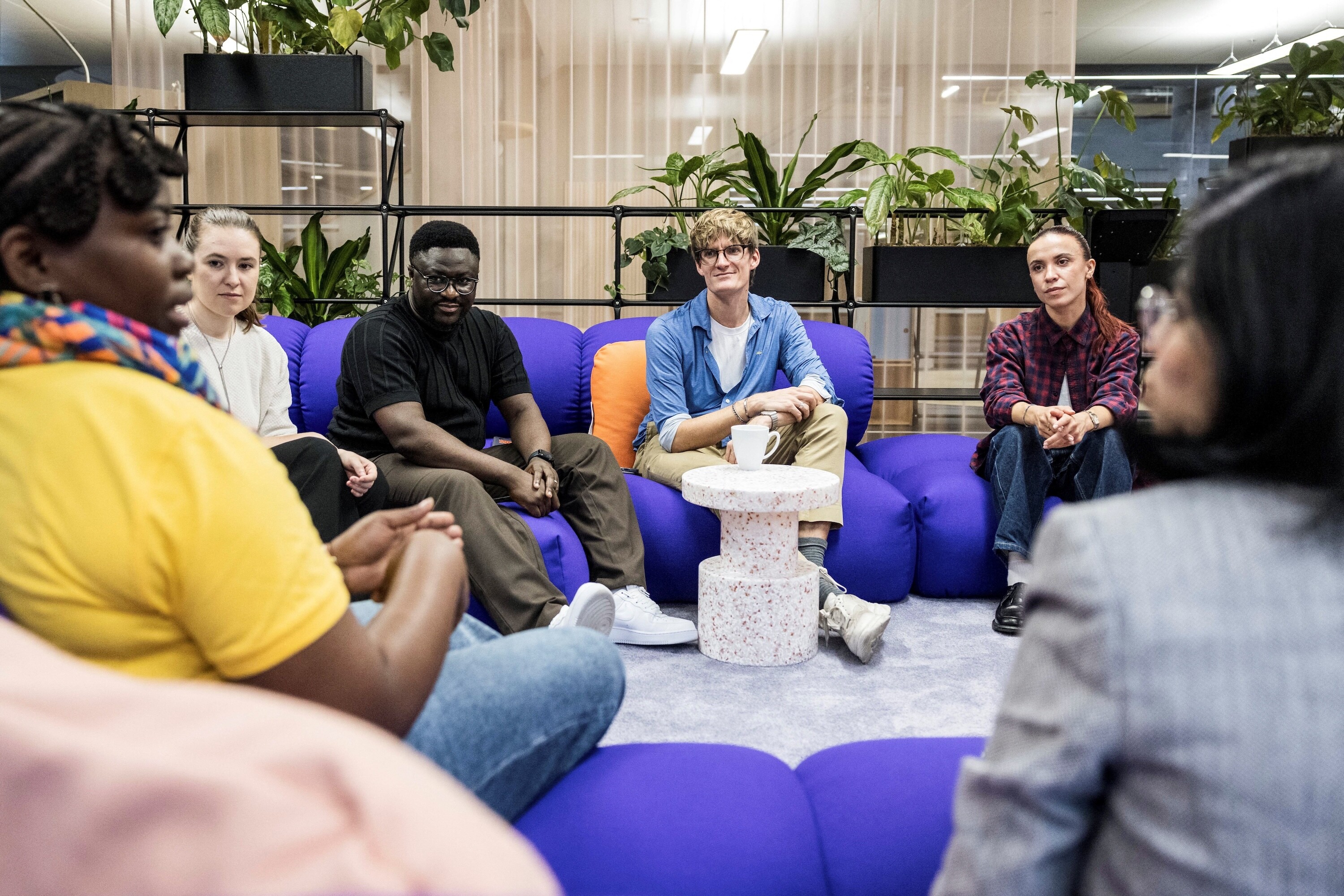
New book 'Shared Sisterhood: How to Take Collective Action for Racial and Gender Equity at Work', which explores how racism, sexism, and xenophobia hold back women and minorities at work.
Authors Tina Opie and Beth Livingston offer three action steps for people to move themselves and their organizations towards greater equity in the workplace.
These are to dig deeper to challenge assumptions, bridge the gap between women of different backgrounds, and advance women across the organization.
Tina Opie was wary of Beth Livingston when they first met more than a decade ago.
As a Black woman in academia, Opie, who is a management professor at Babson College, had been burned enough times by white female colleagues that she learned to stay guarded. And Livingston, a management and entrepreneurship professor at the University of Iowa’s Tippie College of Business, seemed so similar to those colleagues that it set off Opie’s alarms.
“I had to unpack the fact that I had been stabbed in the back by so many white women in the workplace that when I saw this white woman, Beth, practically skipping up to me, I was distrustful,” Opie said.
After reaching out to a mutual friend who attested to Livingston’s trustworthiness, Opie challenged her own assumptions and began doing the real work of getting to know Livingston. Their professional relationship blossomed into a friendship, and they have written a new book on how to tear down the barriers that prevent women and marginalized groups from thriving in business.
Shared Sisterhood: How to Take Collective Action for Racial and Gender Equity at Work draws from social science, organizational psychology, management research, anecdotal evidence, and the authors’ own experiences to explore the myriad ways in which racism, sexism, and xenophobia have persistently held back women and minorities at work. More importantly, the professors offer three action steps that people can take to change themselves and move their organizations toward greater equity:
1. Dig into your own assumptions about racioethnicity, gender, and power.
2. Bridge the divide among women of different racioethnic groups through authentic relationships.
3. Act to advance all women throughout the organization and beyond.
“Everyone can do something,” Livingston said. “You may feel like you’re powerless to make change, but everyone can make change within their own sphere of influence. Focusing on action, and accountability for those actions, is something we care a lot about.”
Livingston and Opie joined Wharton management professor Stephanie Creary for her Leading Diversity at Work podcast series to discuss the book’s themes and what they mean by the title of “Shared Sisterhood.” (Listen to the podcast above. Find more episodes here.)
The three professors agreed that issues of diversity, equity, and inclusion have been pushed to the forefront in recent years, spurred largely by the Black Lives Matter movement. Business leaders can no longer dismiss racial and social injustice as problems outside of the workplace, yet so many well-intentioned employees and managers don’t know how to address them.
That’s where the sisterhood comes in, Opie and Livingston said. They believe it takes commitment and action from every individual to achieve the kind of results that benefit the entire system. Even the word “sisterhood” was chosen intentionally because it challenges the masculine stereotype of professionalism and success, they noted.
“I feel like it’s a radically optimistic book,” Livingston said. “We are not just going to detail what the problems are around racial exclusion at work and racism at work and the history of mistrust between Black and white women in the United States. We’re going to tell you some things you can do about it. And that, to me, is radically optimistic.”
‘This is a crisis moment’
Opie hopes readers will follow the three steps prescribed in the book because she feels a particular urgency for change right now. Too many minority women are metaphorically “dying” in workplaces that don’t let them succeed.
“The thing that I would want to leave people with is that action is what we need. It’s too old to say, ‘I really want to get involved, but I don’t know how.’ There are so many resources out there,” she said. “At the end of the day, I’m saying let’s have some urgency. My children are depending upon you as a CEO being equitable and just. So please, move forward.”
Livingston agreed, saying equity is so long overdue that it’s not practical to wait for another 10 years of data analysis to formulate solutions.
“We should be trying all the things we can to improve equity because this is a crisis moment, and it requires all hands on deck,” she said.
In their conversation, Creary underscored the book’s call for collective action and the notion of sisterhood because people in a competitive setting such as business often fail to understand that what is beneficial for one person is beneficial for all. She said that she emphasizes that point when she is teaching her undergraduate and MBA students at Wharton, especially for the ones who hope to become managers and executives.
“It’s such a hard thing for so many people to embrace, but our scholarship has said this,” Creary said about research on diversity, equity, and inclusion.
Opie and Livingston know that their guidance — dig deeper to challenge assumptions, bridge the gap between women of different backgrounds, and advance women across the organization — is easier said than done. But they are also living proof that it can be done.
“You know, I share stories about how I have stereotyped other people and groups that I’m not a member of, and we like to lie to ourselves that we don’t have these biases,” Opie said. “But I say they’re like birds. They will fly through your mind. Just don’t let them nest there or crap on you.”
How is the World Economic Forum promoting equity in the workplace?
The Future of Jobs Report 2023 found that 75% of companies surveyed expect to adopt AI, big data and cloud technologies in the next five years.
The Centre for the New Economy and Society provides a platform for leaders to share insights on the adoption and efficacy of new technologies, and the readiness of the workforce to use them. Our work includes developing insights and dialogue on growth, jobs, skills, equity and risks.
Learn more about our impact:
Gender parity: Since 2006, we have annually measured the state and evolution of gender parity in 101 economies, supporting decision-makers to identify the most effective policies to close gender gaps. In Chile, we helped establish gender parity accelerators and benefitted 728,000 women – reducing the gender gap by 37% in the participating companies.
Reskilling Revolution: With our partners, we are helping the global workforce future-proof their careers, working with over 350 organizations to provide 1 billion people with better education, skills and economic opportunities by 2030.
Disability inclusion: Working with the Valuable500, we are collaborating with the largest global network of CEOs committed to closing the disability inclusion gap. Members are making progress by increasing the adoption of digital accessibility best practices and including disability in diversity, equity and inclusion strategies.
Racial justice: We are collaborating with a global coalition of 55 organizations in 13 industries who are committed to building equitable and just workplaces for professionals from under-represented racial and ethnic identities.
Want to know more about our centre’s impact or get involved? Contact us.