
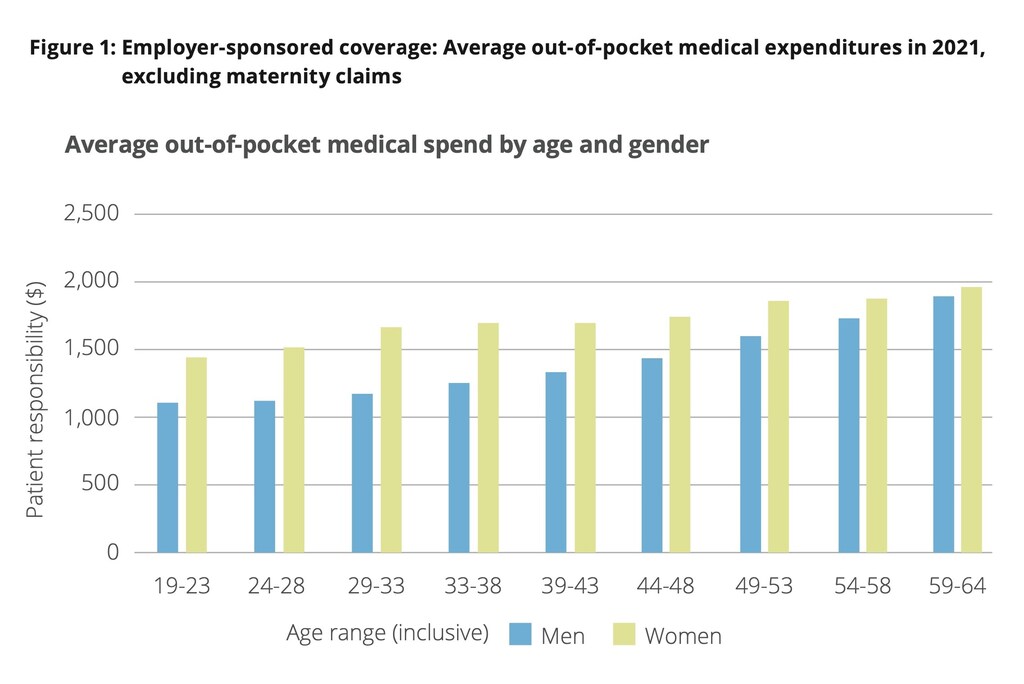
The average working woman in the US spends 18% more on healthcare costs than a man.
Women visit healthcare professionals more often than men and the services they receive more often surpass the deductibles.
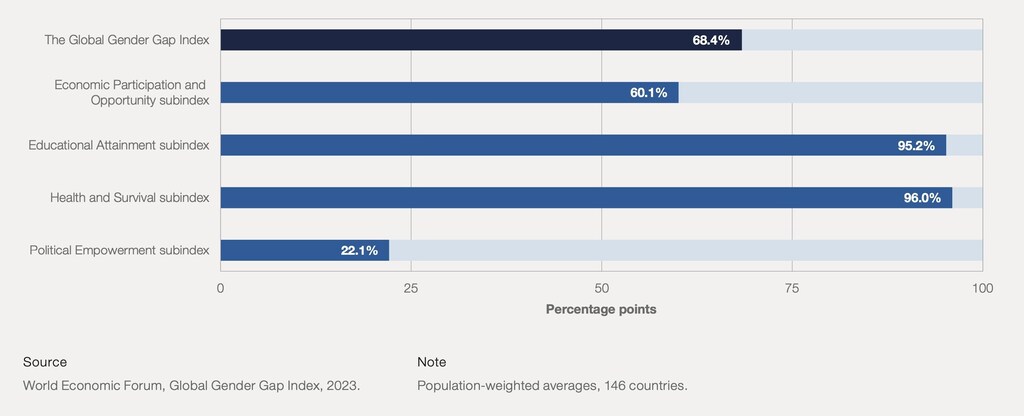
The World Economic Forum’s Global Gender Gap Report shows that progress on gender parity has stalled, but health and survival is one of the smallest gaps remaining.
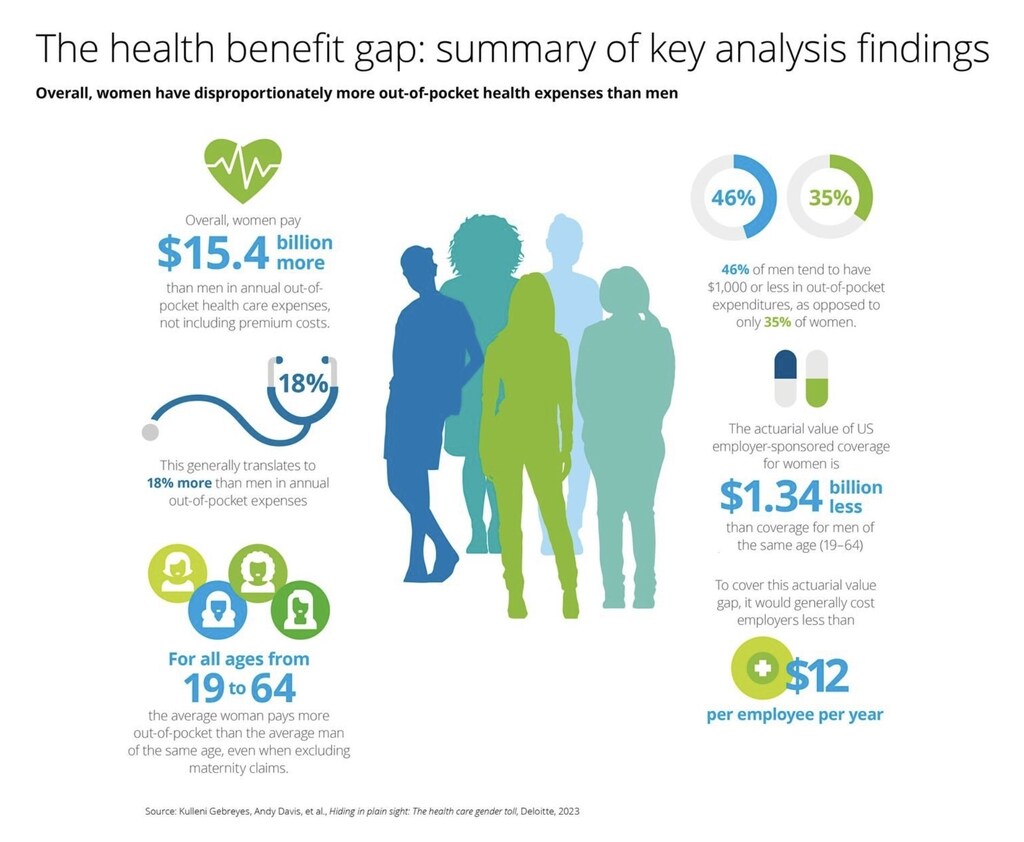
Working women in the States are estimated to pay $15 billion more each year on healthcare costs than working men. This gender-divided financial burden persists even when maternity-related services are excluded, according to new research by Deloitte.
This works out as an average employed woman on single coverage having approximately $266 – or 18% – more out-of-pocket spending on healthcare per year than a man, excluding pregnancy-related expenses.
Employers in the US are required to provide healthcare insurance premiums at an equal cost to women and men. But this does not reflect the actual cost as premiums are only part of the financial story, Deloitte says – further exacerbating the gender pay gap.
What is the World Economic Forum doing to improve healthcare systems?
The Centre for Health and Healthcare connects leaders to make sense of challenges facing health systems worldwide, including access, equity, resilience and preparedness.
Through trusted dialogue and public-private collaboration, the Centre enables partners to align around shared priorities and advance collective action to improve health outcomes.
A disproportionate cost to women
Deloitte’s findings are based on a sample of more than 16 million people in the US with employer-sponsored healthcare.
The analysis shows that men are far more likely to wait more than two years between visits to see a healthcare professional. And when they do visit, they are likely to have fewer services than women – 46% of men have less than $1,000 in claims annually compared to just 35% of women. The medical services women access generally surpass the typical deductible, resulting in higher costs.
On top of this, analysis suggests that the actuarial value of the coverage offered to women – the percentage of average costs that a plan will cover – was less than to men. Or put otherwise, women consistently get less value from their insurance premiums than men do.
Closing the gender gap
“[The] combination of higher health care expenditures and the gender wage gap can negatively impact the financial and health status for employed women, potentially creating a choice between the care women need and the care they can afford,” the report says.
This theme is reflected in the World Economic Forum’s Global Gender Gap Report 2023, which finds that efforts to close the gender gap are stalling and will take an additional 131 years to reach parity. The gap explicitly relating to health and survival is 96% closed.
The Forum’s Global Health and Healthcare Strategic Outlook sets out a vision for 2035 on how healthcare systems can be transformed to become more resilient, sustainable and equitable.