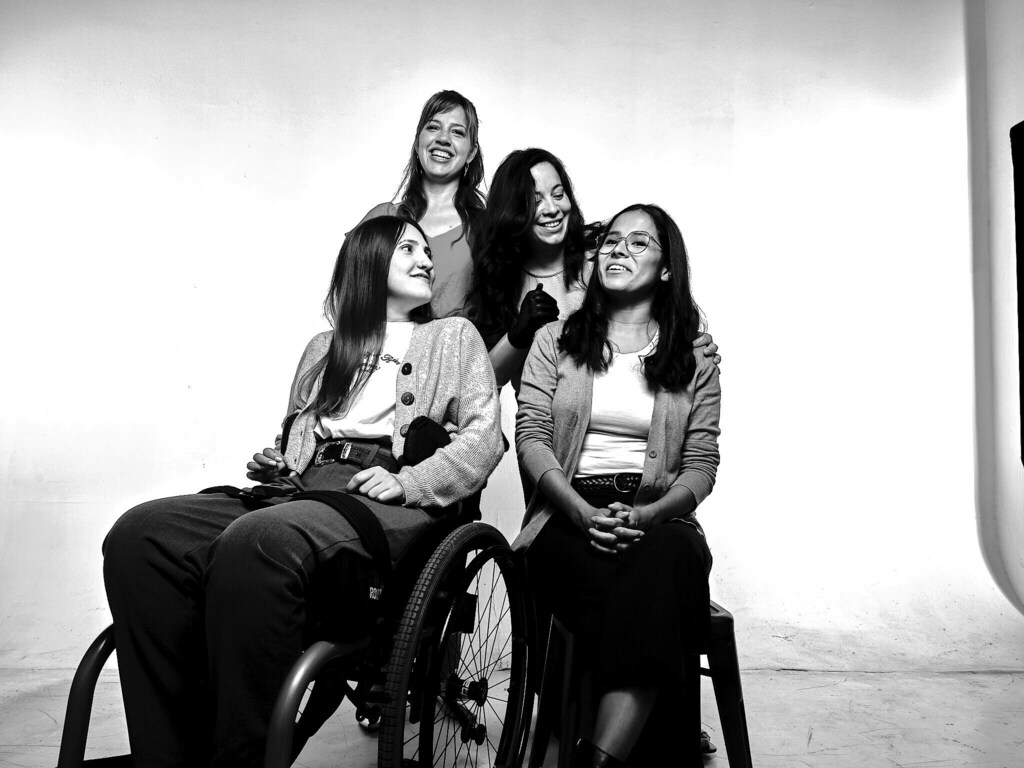
In 2020, there were more than 280 million international migrants around the world.
Entry into destination job markets is a central issue for many of them.
Migrants with disabilities face additional hurdles, including obtaining official recognition of their disability in their host countries and lack of accessible workplaces.
Entry into the job market is a central issue when it comes to migrant trajectories. In 2020, there were more than 280 million international migrants around the world who had left their homes in search of better opportunities. However, different populations face a variety of obstacles when trying to enter destination job markets.
Much attention has been paid to how inclusion intersects with gender, race, nationality, age and educational levels, among other factors. However, less is known about the ways that disability impacts the labour market inclusion of migrants.
While 16% of the global population experience significant disability, according to the WHO, there is no reliable worldwide data on the intersection between migration and disability. People who leave their places of origin often face significant economic, legal, cultural and physical challenges. For those living with a disability, these challenges may be amplified. How does disability impact migration and vice versa? Do people with disabilities migrate more or less than people without them? Does migration cause disabilities, further impact them or alleviate them? Once they reach their places of destination, how do migrants with disability integrate into host societies?
The report Disability and Migration: Labor Inclusion Processes of Venezuelan Migrants in Argentina and Chile, authored by Isabel Gil Everaert and commissioned by Incluyeme.com with the support of IDB Lab, the innovation and venture capital arm of the Inter-American Development Bank Group and Canada’s Global Affairs Ministry, aims to gather data on a population that has been invisibilized and to analyze socio-labour inclusion processes from an intersectional perspective. Through in-depth interviews, this report gathers 31 testimonies from Venezuelan migrants with disabilities in Argentina and Chile, shedding light on the complex relationship between disability and migration, which manifests in various ways throughout the migration journey.
While the insights and experiences shared by participants provide valuable qualitative information, the sample size and methodology do not allow for statistical claims to the broader population of Venezuelan migrants with disabilities in these countries or beyond. They aim to shed light on individual experiences and highlight issues that merit further research and attention.
Here are five top findings of the report.
1. Disability as a trigger for migration
Perhaps the most revealing finding of the study is that disability was a key reason for migrating for the majority of those who participated in the study.
This is reflected in the amount of planning involved in their decision-making process. In planning their departure, 87% of those interviewed said they considered both preexisting family and support networks in possible destinations as well as cultural factors and opportunities for social integration. For most, planning involved intensive preparations, such as selling belongings, saving money and gathering necessary documents. About 68% specifically prepared for legal and bureaucratic processes, including apostilles and degree legalization.

2. Migration as an enhancer of disability
For some participants, the hardships of the journey are associated with the exacerbation of previous disabilities. Yolanda, quoted in the report, reflects on how her pain and difficulty to move increased after migrating. This is partly, she says, because of the inability to access medical care due to a lack of “papers” (regular migratory status). Yolanda is not an exception, for 34% of those interviewed reported that the hardships of migration worsened pre-existing disabilities or caused new disabilities due to stress or poor travel conditions.
3. Additional bureaucratic complexities
For most migrants in the world, obtaining regular migratory status, visas, labour and residency permits, among others documents, is a constant struggle. However, for those who live with a disability, there seems to be an additional hurdle in this bureaucratic process: obtaining official recognition of their disability to access necessary medical treatment.
These processes are experienced differently in the two countries in the study. Of the 31 people interviewed, nine out of 10 had achieved regular status in Argentina and been issued a National Identity Document, which enables them to access services and hold formal employment. In Chile, 57% had managed to regularize their status. Additionally, 53% experienced insecurity over their status, affecting their emotional and physical well-being.
4. Labour inclusion for migrants with disabilities
While 84% of those interviewed for the study had professional qualifications and prior experience, 68% struggled to find employment. Migrants with disabilities encountered known obstacles to labour inclusion, such as discrimination, lack of networks and need to demonstrate previous employment experience in their host country. However, workers who live with disabilities also faced additional barriers, such as lack of accessible workplaces (reported by 76%) and a lack of assistive technology (64%) to perform daily tasks.
There is a bittersweet perspective about the laws targeted at fostering the employment of people with disabilities. These proved to be helpful for some of those interviewed, particularly in Chile, who claimed that these policies had facilitated access to formal employment and encouraged changes in businesses and job platforms. For the majority (79%), however, laws and inclusion policies were perceived more as legal obligations that employers seek to fulfill superficially rather than effective workplace practices that translate into substantive changes in hiring and working dynamics.
In this sense, remote work was highlighted as a critical enabler for inclusion, with 85% favouring it due to reduced physical accessibility issues and transportation costs. It also allowed for personalized work environments that better met their needs. Crucially, 68% stated that remote work positively impacted their performance by overcoming traditional workplace barriers.
How is the World Economic Forum promoting equity in the workplace?
The Future of Jobs Report 2023 found that 75% of companies surveyed expect to adopt AI, big data and cloud technologies in the next five years.
The Centre for the New Economy and Society provides a platform for leaders to share insights on the adoption and efficacy of new technologies, and the readiness of the workforce to use them. Our work includes developing insights and dialogue on growth, jobs, skills, equity and risks.
Learn more about our impact:
Gender parity: Since 2006, we have annually measured the state and evolution of gender parity in 101 economies, supporting decision-makers to identify the most effective policies to close gender gaps. In Chile, we helped establish gender parity accelerators and benefitted 728,000 women – reducing the gender gap by 37% in the participating companies.
Reskilling Revolution: With our partners, we are helping the global workforce future-proof their careers, working with over 350 organizations to provide 1 billion people with better education, skills and economic opportunities by 2030.
Disability inclusion: Working with the Valuable500, we are collaborating with the largest global network of CEOs committed to closing the disability inclusion gap. Members are making progress by increasing the adoption of digital accessibility best practices and including disability in diversity, equity and inclusion strategies.
Racial justice: We are collaborating with a global coalition of 55 organizations in 13 industries who are committed to building equitable and just workplaces for professionals from under-represented racial and ethnic identities.
Want to know more about our centre’s impact or get involved? Contact us.
5. Urgent need for better data collection
Nine out of 10 participants stressed the lack of systematic data on migrants with disabilities, which hinders the development of inclusive public policies. The report emphasizes the diversity within this population, including differences in experiences, resources and professional backgrounds and advocates for further research to understand barriers and promote inclusion for a widely diverse group.
The report's findings highlight the complexities faced by migrants with disabilities and emphasize the importance of data and tailored interventions and public policy to improve their socio-labour inclusion. Disability and migration often intersect, compounding challenges such as isolation, loss of support networks, difficulties in finding employment, and other obstacles that prevent individuals from fully pursuing their life projects.