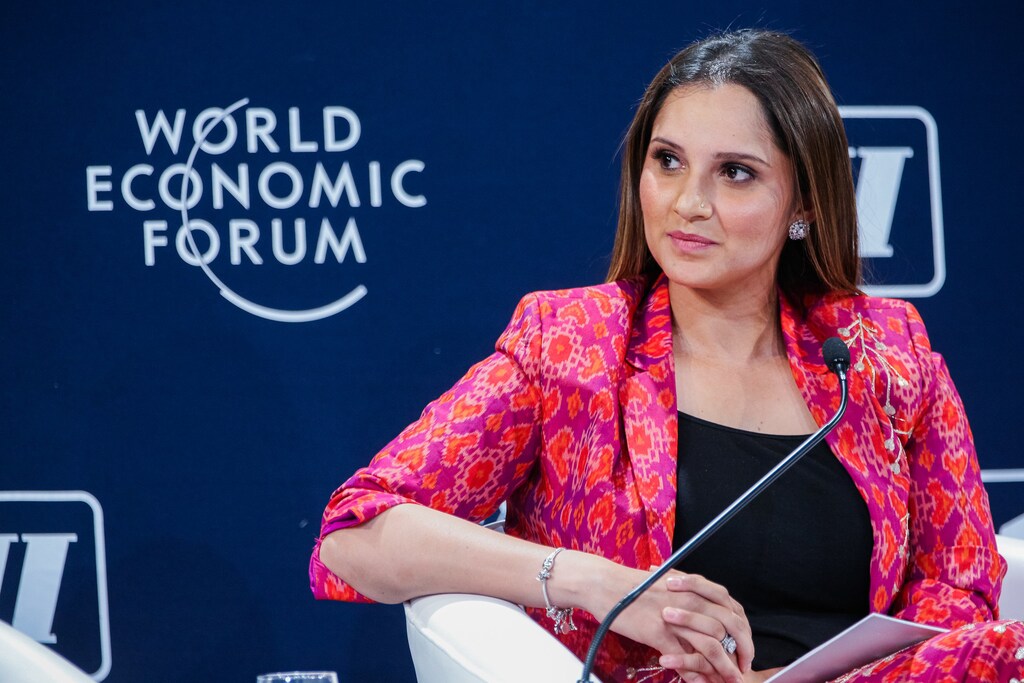
You're one of your country's leading sports stars.
You're at the peak of your career and you've just won one of the biggest tournaments in tennis.
What do you think people would want to know in your post-win press conference? Probably not your parenthood plans.
Tennis champion and UN Women Goodwill Ambassador for South Asia, Sania Mirza, who won the Wimbledon women's doubles with Swiss player Martina Hingis in 2015, explains:
"I was sitting at the press conference, after the Wimbledon victory, with the trophy, and I was asked a question: 'OK, that's great, congratulations, what are your plans for motherhood?'"
The moment was a sign we need to change societal expectations of women, she said during a session on Inspiring LeadHers at the World Economic Forum's India Economic Summit.
It's "as if you're just not complete as a woman, no matter what you do, if you don't become a mother, or you don't become a mother of two," she believes.
Closing the gender gap
The discussion panel, which included India's Minister of Women and Child Development Smriti Zubin Irani, agreed that the time needed to close the gender gap was too long.
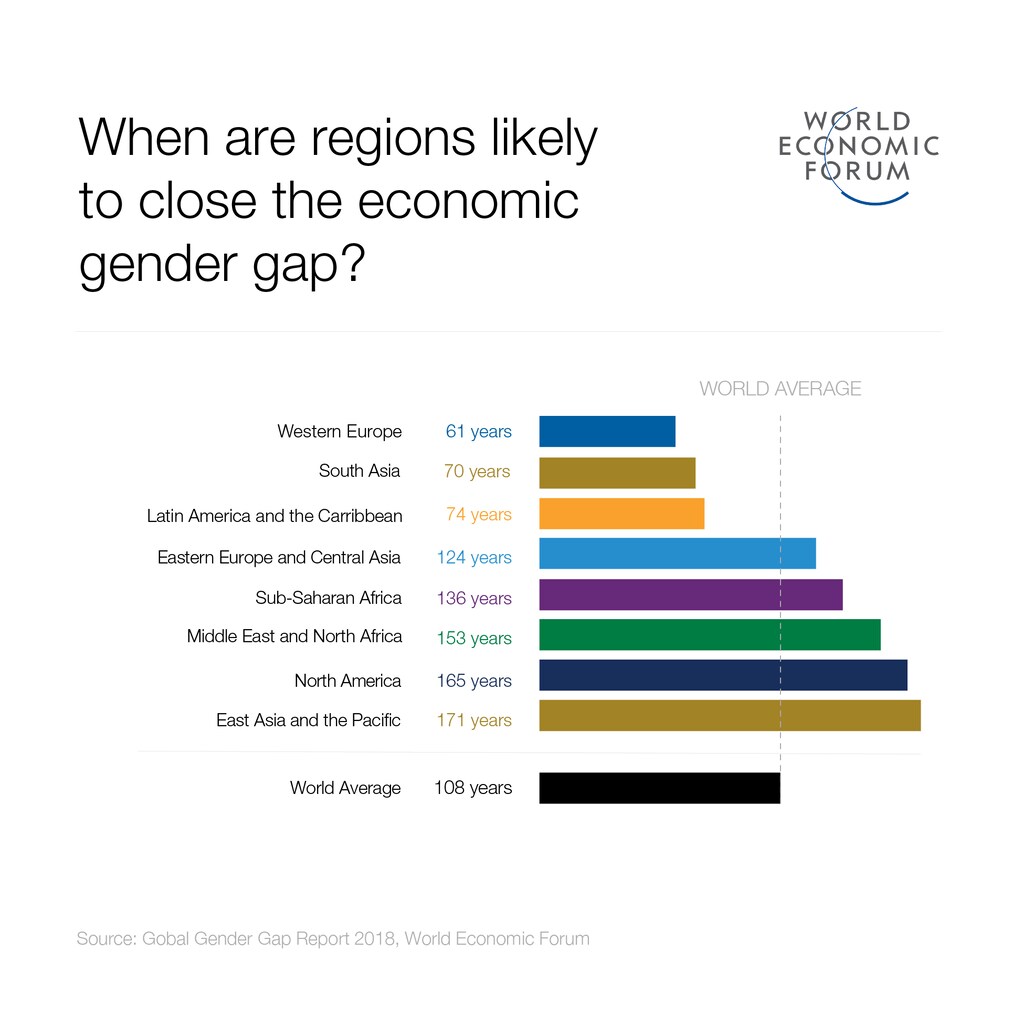
"108 years to ensure gender parity has to be unacceptable to every citizen across the world," Smriti Zubin Irani argued.
There are positive signs, though, the panelists agreed, with progress being made across the region.
This was reflected in the Global Gender Gap Report 2018, with South Asia on course to be the second region to close the gap - in 70 years, after Western Europe.