Agricultural knowledge remains scattered across disconnected systems from labs to farmer mobile apps.
Unifying data infrastructure connects real-time field observations directly back into research.
Industry-wide pre-competitive data sharing is essential to make AI an equalizer for smallholders.
By 2050, the world will need to feed close to 10 billion people on land that is shrinking. Every second, the equivalent of four football fields of soil is lost to degradation. The answer has to be to farm better, which means getting far more out of the agricultural knowledge we already have.
That knowledge exists. The problem is that it is scattered.
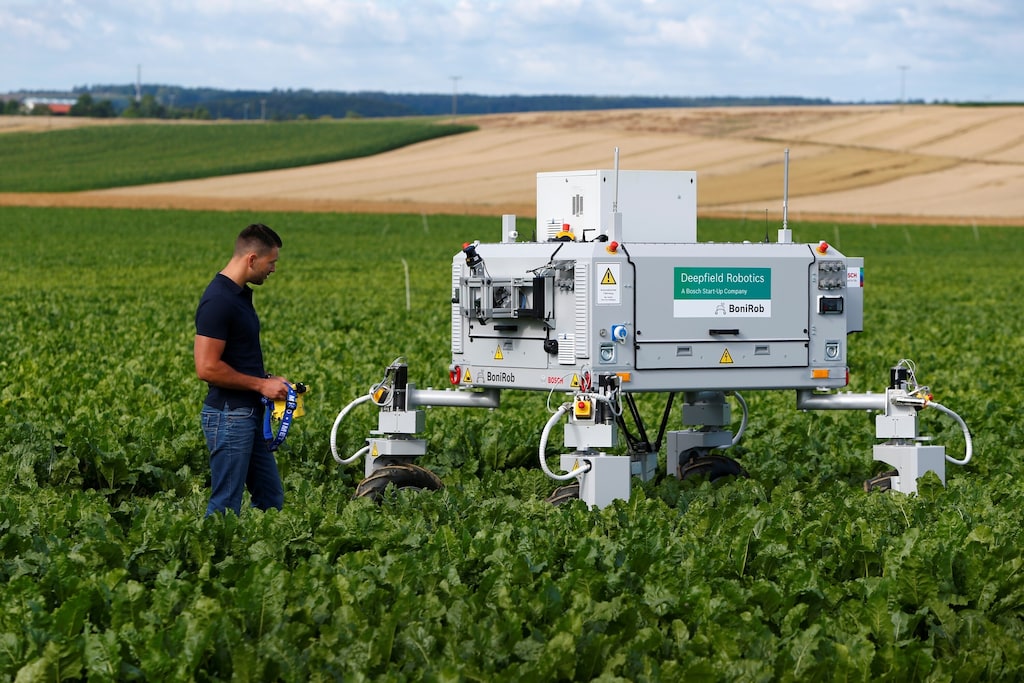
Agriculture generates enormous streams of information: molecular research from laboratories, satellite imagery, factory sensors, weather models and observations from farmer mobile apps spanning every growing region on earth. Each source carries something real and useful. But for most of the industry’s history, these sources have not spoken to each other. This means that a scientist’s breakthrough stays in the lab, a grower’s pest observation stays on a phone, and a supply chain anomaly stays in a logistics system. Consequently, nobody, and no algorithm, sees the full picture, because the full picture has never been assembled.
Breaking the cycle of fragmented data
At Syngenta, the consequences of that fragmentation were clear to see. Accessing the data needed to start a new research project once took up to nine months. This was not because the data did not exist, but because it was spread across hundreds of disconnected systems, some of it still in paper laboratory notebooks. The implications of a nine-month period for mobilizing data translated to lost ground that is difficult to recover. The challenge was even graver for the agricultural industry, already under pressure from climate change, shrinking arable land and accelerating pest resistance.
Our response was to connect whatever data already existed. Consequently, Syngenta built Gaia, a crop protection research data hub that draws together over 75 sources – molecular screening, greenhouse trials, field observations and privacy-protected farm performance data – into a single, continuously updated system. Today, roughly 250 million new records flow through it daily. Data access times that took months now take minutes. The number of researchers using the system doubled in a year and the volume of work they ran through it quadrupled.
The more significant change of this data integration through Gaia is the closing of a feedback loop that had been broken for years. Observations from farms including pest outbreaks, yield anomalies, shifting weather patterns now flow back into research datasets in near real time. As a result, a pattern detected across thousands of fields in Brazil this season can shape what a scientist prioritizes in a Swiss laboratory the following year. Discovery and deployment, which the agriculture industry has long treated as separate processes with years between them, are beginning to function as a single continuous cycle because of better data integration.
That principle is now extending beyond research. The same approach to connected, accessible data is being applied across Syngenta’s commercial, supply chain and regulatory functions – not as a technology rollout, but as a different way of thinking about information: less as something to store, more as something to move.
Bringing precision intelligence to the last mile
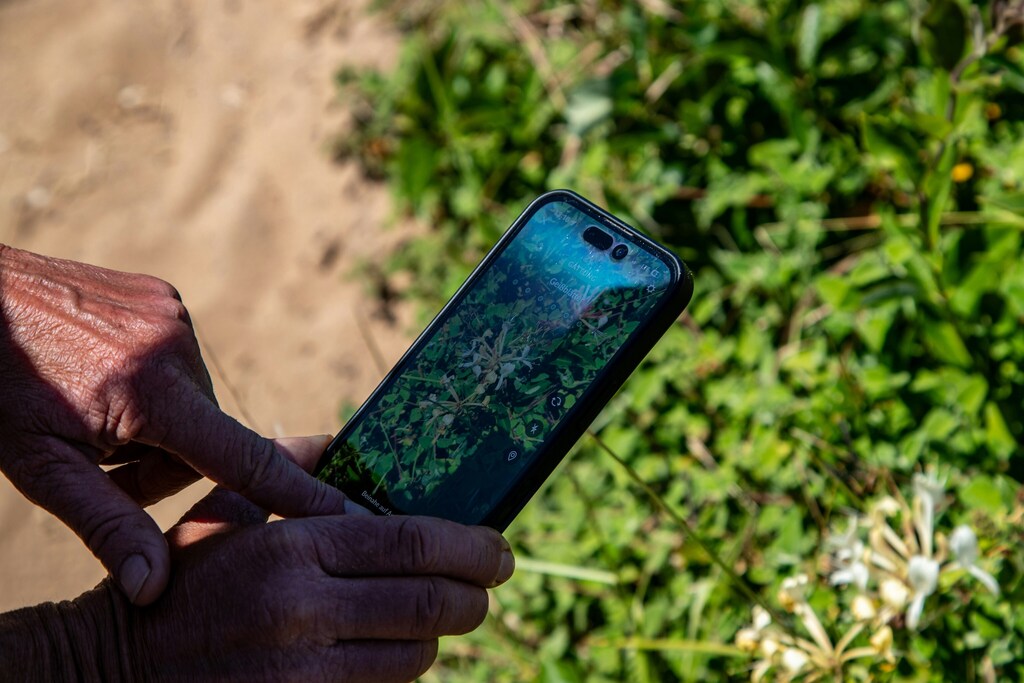
Where that movement ultimately has to reach is the field. Syngenta’s digital agriculture platform, Cropwise, illustrates how integrated data can reach that last mile. Available across six AI-powered applications in 69 countries and covering more than 77 million hectares, Cropwise draws on satellite imagery, soil models, weather data and decades of agronomic research to deliver advice in the farmer’s own language, on their phone, in near real time. Farmers retain ownership of their data, a principle that is foundational, because trust is what drives adoption, and adoption is what makes the intelligence valuable. Syngenta handles data in line with all data privacy and other country-specific requirements to ensure that it is being managed in the right way and only for the purpose of supporting farmers and advancing farming practices.
This matters most for the more than 500 million smallholder farmers who underpin global food security and have historically been left outside the benefits of precision agriculture. When data infrastructure is genuinely unified and accessible, AI can function as an equalizer rather than a tool that widens the gap between large operations and small ones.
Culture and governance over technology
None of this happened through technology alone. The shift required teams to treat their data as something they were responsible for as a product to be maintained and shared, rather than a byproduct of their work that someone else would manage.
Governance, training, and sustained organizational commitment turned out to matter as much as any platform decision. That is the part that tends to get skipped in discussions of AI in agriculture, and it is often where the gap between ambition and execution opens up.
The case for pre-competitive data sharing
The deeper question the industry has not yet fully answered is what happens when this approach scales beyond individual organizations. No single company’s data infrastructure, however well-built, captures the full complexity of global agriculture. The feedback loops that make AI genuinely useful at scale require inputs from across the sector – which means agreeing, as an industry, on shared standards, interoperability, and governance. Pre-competitive data sharing is not an abstract policy idea. It is the next practical step for scaling the meaningful use of AI in agriculture.
The tools to transform agriculture already exist. So does most of the data. What remains is the harder work of connection – across systems, across organizations, and across the distance between a laboratory and a field.