
Opinion is divided about the metaverse and extended reality, finds a new survey by Ipsos for the World Economic Forum.
Emerging countries are far more upbeat about its potential.
But most respondents are expecting apps using the metaverse to change their daily lives over the next decade.
Opinion is split among the global public about the opportunities and promise the metaverse holds for daily life. A new survey conducted by Ipsos for the World Economic Forum finds that half of adults across 29 countries say they are familiar with the metaverse, with a similar number having positive feelings about engaging with extended reality (XR) in their daily lives.
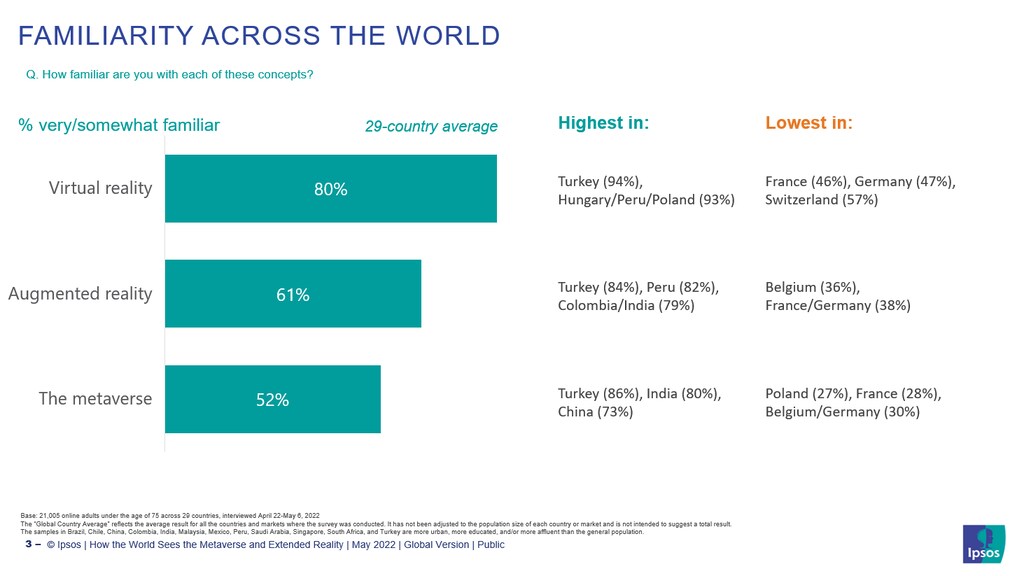
But anticipation about this new era of digital technology is significantly higher in emerging countries than it is in most high-income countries. More than two-thirds of people in China, India, Peru, Saudi Arabia and Colombia say they feel positive about engaging with XR, compared to fewer than a third in Japan, Great Britain, Belgium, Canada, France and Germany.
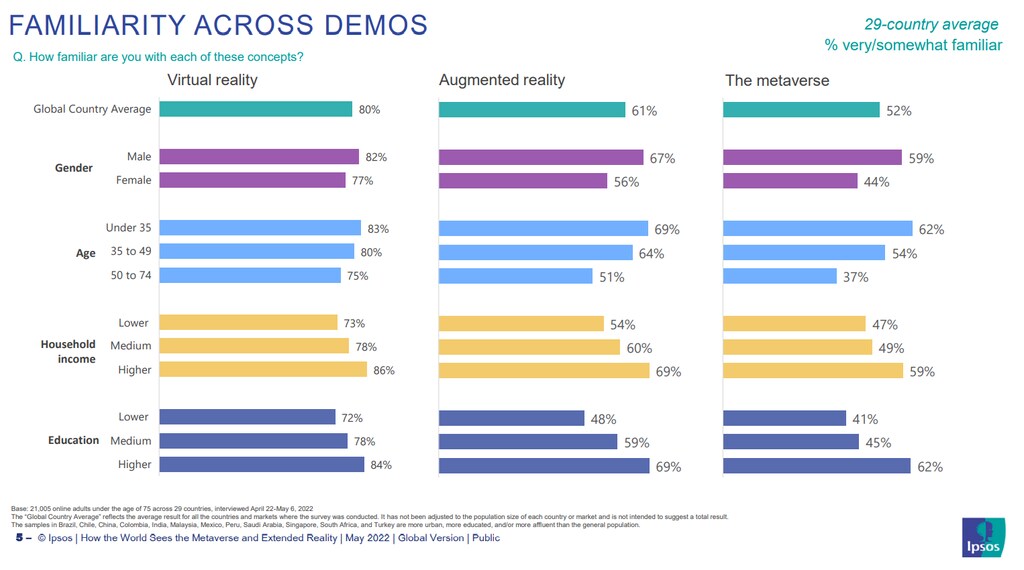
Unsurprisingly, younger adults are the most familiar with - and look the most favourably on - new technologies. Also those with a higher level of education are more positive about the metaverse.
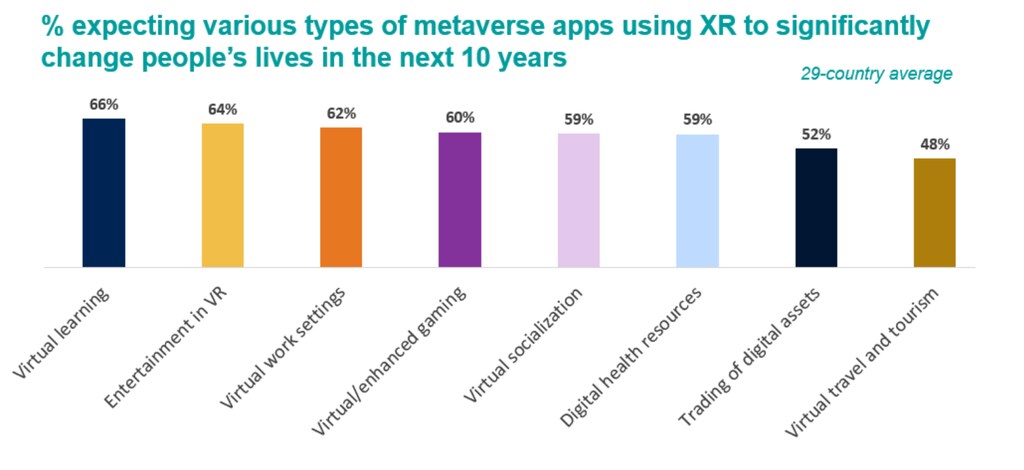
Despite the varying levels of enthusiasm and awareness, respondents are widely expecting apps using the metaverse to increasingly have an impact on people’s daily lives over the coming decade. The biggest changes are likely to be felt in virtual learning, entertainment and virtual work settings, people feel.
Cathy Li, Head, Shaping the Future of Media, Entertainment & Sport at the World Economic Forum said, "The positive sentiments and high expectations around the metaverse’s impact in everyday life, indicate an increasing readiness for its adoption. To meet this opportunity, we need to make sure that the economic potential and corresponding governance frameworks are realized in a fair and equitable manner for all."
The survey was conducted between April and May 2022, and takes into account the views of more than 21,000 adults.