This article was first published in April 2019, updated in June 2022, and updated again in September 2023.
Demand for sand mining for construction materials has tripled in the past two decades, reaching 50 billion tonnes a year.
Urgent action is needed to avoid a "sand crisis", says the United Nations Environment Programme.
A new World Economic Forum report identifies five priority actions for the cement and concrete sector to reduce its impact on nature.
Cities are, quite literally, built on sand. As global urbanization continues apace, the demand for concrete, glass and construction materials that use sand increases.
By 2050, it’s projected that up to 68% of the world’s population will be living in cities.
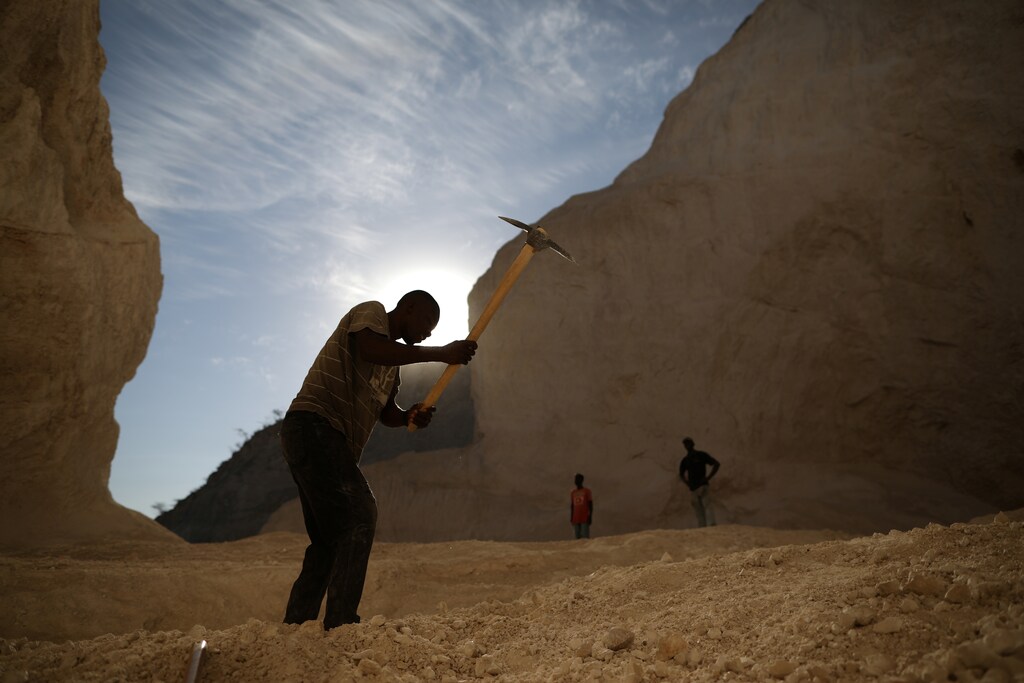
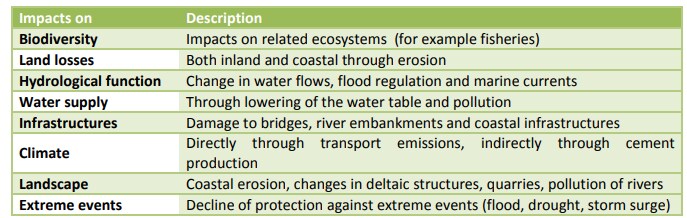
But to house those people, industrial sand mining or aggregate extraction – where sand and gravel are removed from river beds, lakes, the oceans and beaches for use in construction – is happening at a rate faster than the materials can be renewed. This is having a huge impact on the environment.
What is the World Economic Forum doing to promote sustainable urban development?
Cities are responsible for 75% of global greenhouse gas emissions and are home to over half of the world’s population—a number that will grow to two-thirds by 2050. By prioritizing cleaner energy, cities could contribute more than half of the emissions cuts needed to keep global warming to less than 2°c, which would be in line with the Paris Agreement.

To achieve net-zero and nature-positive cities and communities by 2050, the World Economic Forum is partnering with public and private sector stakeholders on initiatives that drive global ambition through local action. Here are just a few:
Davos Baukultur Alliance: Advancing high-quality planning, construction and management of buildings, infrastructure, and public spaces using principles based on climate resilience, sustainability and circularity in the built environment. Learn more.
Global New Mobility Coalition: Exploring new solutions to reduce congestion and emissions, enhance EV infrastructure and transform urban mobility and deliveries. Learn more.
Alliance for Urban Innovation: Connecting innovators and entrepreneurs to new markets and opportunities that reimagine and reshape quality of life and local economies. Learn more.
G20 Global Smart Cities Alliance: Accelerating intelligent, practical solutions to build climate resilience, enhance public well-being and tackle the most pressing challenges facing cities and local communities. Learn more.
Future of Travel and Tourism: Driving inclusive and sustainable economic growth while preserving cultural heritage and protecting natural ecosystems. Learn more..
Discover how you can be a part of our efforts to create more sustainable and livable cities and communities. Contact us here.
It's a challenge addressed in the World Economic Forum's new report, Nature-Positive Industry Sector Transitions, which identifies five priority actions for the cement and concrete sector to reduce its impact on nature.
How much sand is being mined?
Sand is the second-most exploited natural resource in the world after water.
Sand mining has tripled in the past two decades, with demand reaching 50 billion tonnes a year in 2019, according to the United Nations Environment Programme (UNEP). Indeed, the volume of sand and gravel used each year is enough to build a wall around the equator measuring 27 metres high by 27 metres wide.
But extraction, sourcing, use and management of sand is unregulated in many parts of the world, which means we are consuming it faster than it can be replaced by geological processes.
Urgent action – including a ban on beach extraction – is needed to avert a "sand crisis", UNEP's Sand and Sustainability report says. Around 6 billion tonnes of marine sand is also being dug up each year by the marine dredging industry, "significantly impacting biodiversity and coastal communities," UNEP's new data platform, Marine Sand Watch reveals.
The environmental impact of sand mining
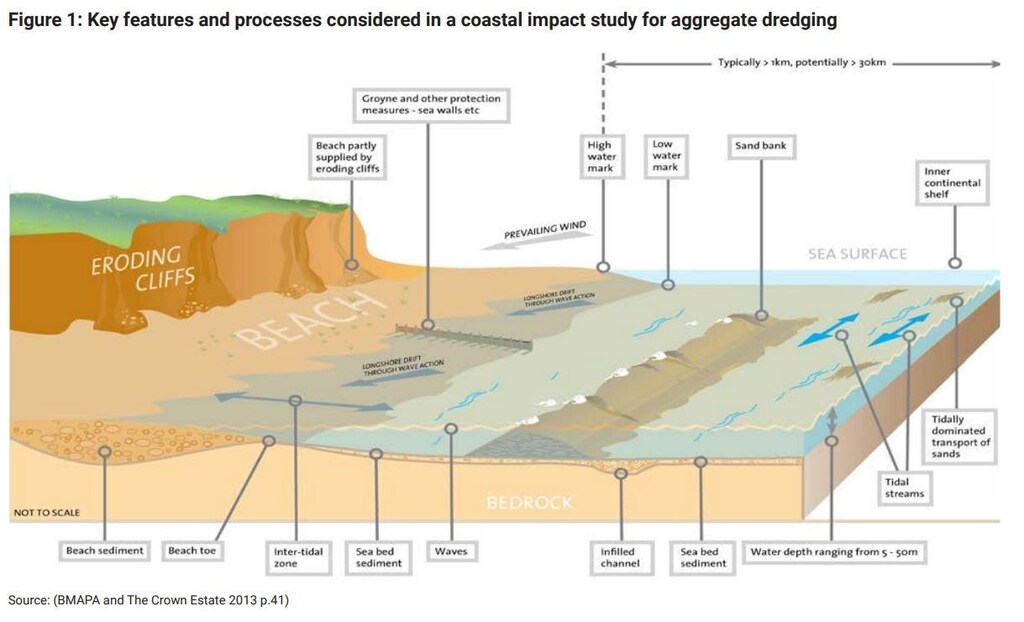
Sand mining from rivers and marine ecosystems "can lead to erosion, salination of aquifers, loss of protection against storm surges and impacts on biodiversity, which pose a threat to livelihoods through, among other things, water supply, food production, fisheries, or to the tourism industry," says UNEP.
In 2018, the World Wildlife Fund (WWF) warned that sand mining of river deltas, such as the Yangtze and Mekong, is increasing the risk of climate-related disasters, because there’s not enough sediment to protect against flooding.
“Keeping sand in the rivers is the best adaptation to climate change,” the WWF’s Marc Goichot told the Thomson Reuters Foundation. “If a river delta receives enough sediment, it builds itself above sea level in a natural reaction.”

What can be done to avoid a sand crisis?
While pressure on governments to regulate sand mining is increasing, more needs to be done to find alternatives for use in construction and for solving the world’s continuing housing crises. In Singapore, for instance, recycled glass waste is being used instead of sand in 3D-printed concrete.
The UNEP report outlines 10 recommendations for averting a sand crisis, which would balance the demands of the construction industry and the protection of the environment:
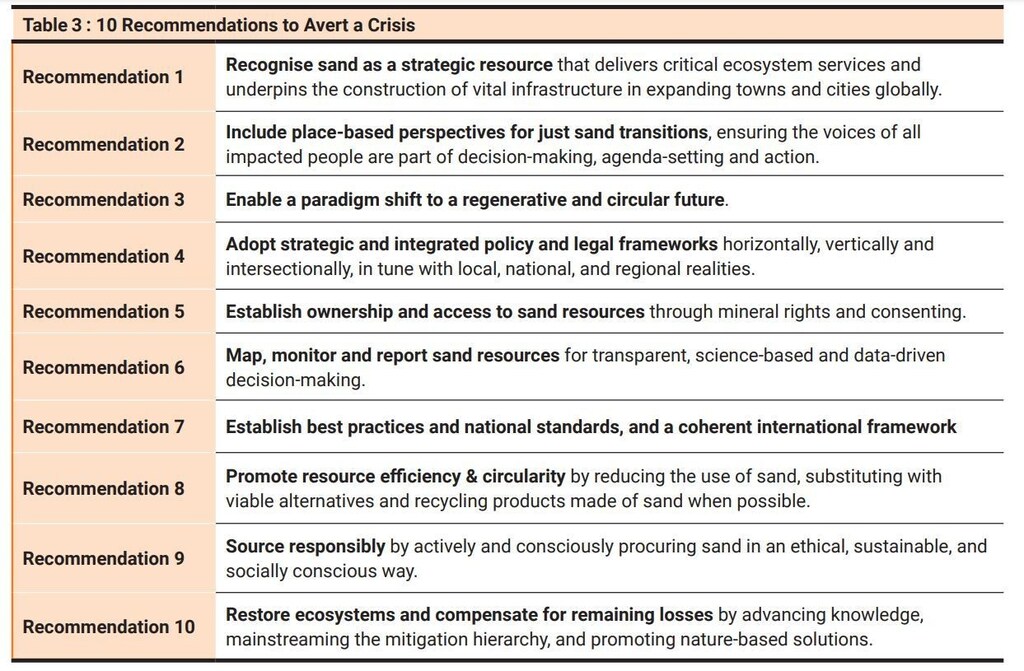
To make sand resource management "just, sustainable, and responsible", UNEP says sand must be formalized as a "strategic resource at all levels of government and society", while ecosystems degraded by sand mining activities must be restored.