The world is facing a tight labor market and an aging workforce.
New frameworks and solutions will be key to retaining older workers and creating options that meet their business, societal and worker needs.
The world is facing a number of changes simultaneously -- including a tight labour market, job churn from technological advancement and a declining population. Meanwhile, people in many countries around the world are living -- and working -- longer. In fact, the World Health Organization estimates that between 2015 and 2050, the proportion of the world's population that is over 60 years old will nearly double.
While more people than ever will likely need to work longer to support themselves, for the first time, workplaces will need to ensure they court and retain these older workers. This group had traditionally been ignored in many sectors but as populations decline, they could be critical to fill key roles. (Currently countries like Singapore have already reached full employment and workers 55 and older there enjoy one of the country's highest employment rates.)
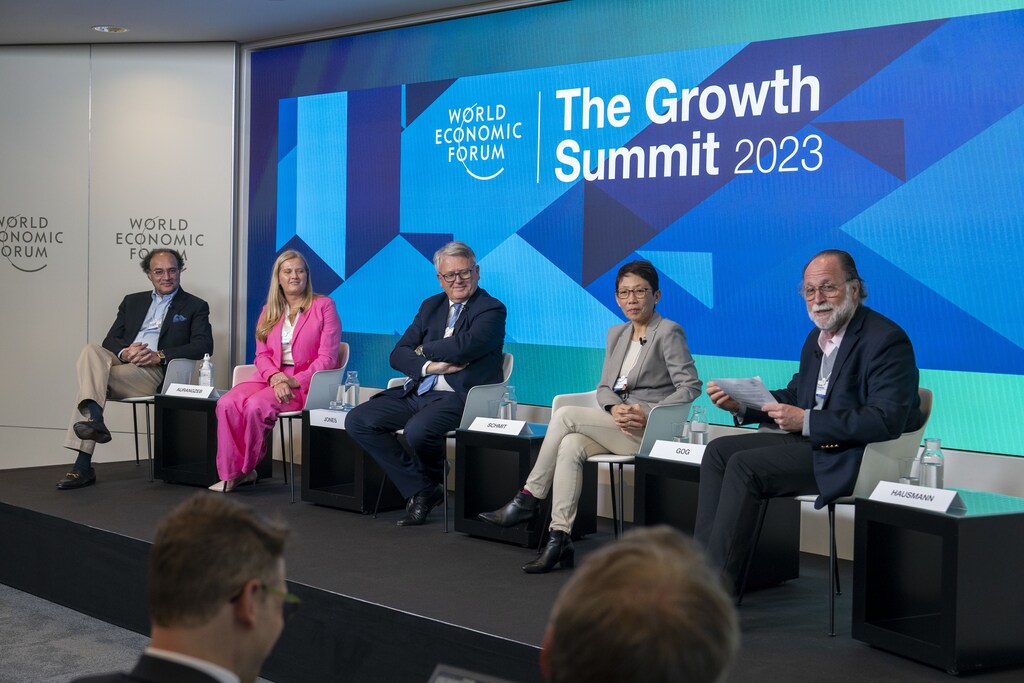
A number of strategies will be needed to meet the needs of this transformed workforce, both for society, workers and business. Experts discussed just this topic at a special World Economic Forum Growth Summit panel discussion this week: Skills for Growth: Creating a Future-Ready Workforce.
Here's what panellists say leaders must do to prepare:
Invest in development. With people living and working longer, a new mindset will be needed to develop skillsets over a longer period of time and through different phases of a person's life to ensure workers can contribute for longer.
As Nicolas Schmit, Commissioner for Jobs and Social Rights at the European Commission says, we're "investing in people during the whole working life."
"This practice to say, "Well this person is 50, why should we still invest in this person, this person will retire." This approach is wrong."
Redesign roles for new needs. Preparing for a reality where labor markets are tight and workforces are aging means companies will need to carefully consider how they retain their experienced workforce. This might require rethinking the type of tasks these workers do and how those tasks are allocated, says Soon-joo Gog, the Chief Skills Officer at SkillsFuture Singapore, noting that some might be financially stable and not require a full-time role.
"The question of the mature worker is an important one," explains Gog. "I think the current and future has to be considered carefully."
How is the World Economic Forum promoting equity in the workplace?
The Future of Jobs Report 2023 found that 75% of companies surveyed expect to adopt AI, big data and cloud technologies in the next five years.
The Centre for the New Economy and Society provides a platform for leaders to share insights on the adoption and efficacy of new technologies, and the readiness of the workforce to use them. Our work includes developing insights and dialogue on growth, jobs, skills, equity and risks.
Learn more about our impact:
Gender parity: Since 2006, we have annually measured the state and evolution of gender parity in 101 economies, supporting decision-makers to identify the most effective policies to close gender gaps. In Chile, we helped establish gender parity accelerators and benefitted 728,000 women – reducing the gender gap by 37% in the participating companies.
Reskilling Revolution: With our partners, we are helping the global workforce future-proof their careers, working with over 350 organizations to provide 1 billion people with better education, skills and economic opportunities by 2030.
Disability inclusion: Working with the Valuable500, we are collaborating with the largest global network of CEOs committed to closing the disability inclusion gap. Members are making progress by increasing the adoption of digital accessibility best practices and including disability in diversity, equity and inclusion strategies.
Racial justice: We are collaborating with a global coalition of 55 organizations in 13 industries who are committed to building equitable and just workplaces for professionals from under-represented racial and ethnic identities.
Want to know more about our centre’s impact or get involved? Contact us.
Healthier workplaces. As companies require workers to work for longer, worker health and wellness becomes more critical than ever, says Nicolas Schmit, Commissioner for Jobs and Social Rights at the European Commission. Working conditions, he adds, will become "more and more important" especially as we enter a period where work itself "becomes rarer."
Says Schmit: "We are in the shortage so we have to invest more in the good shape of work."
Some organizations are already factoring wellness into their planning. Gog noted that when her organization does workforce planning with companies, it focusses on which industry has the highest percentage of older workers, and to what extent it can support a company to redesign jobs not just for retention, but also for social engagement, which can improve longevity.
New models that work across age groups. Creating a smooth transition into retirement could create options that work for a variety of workers at different life stages, points out Deanna Jones, EVP People, Communications & Transformation at Baker Hughes, USA.
"The flexibility that you provide to transition into retirement helps provide a framework by which we can do a better job flexibly at all ages. There is something there around how we work and how we create flexibility in how that allows us to balance the mature workforce, as well as the needs of families and parents through their work as well."
Schmit agrees and point out the need to invest in "the transition from work to pension, I think it should be organised differently, much smoother and in a smooth way."
"This is also a new view we have to keep on working age."