Efforts in the Gulf to bolster trade, digital and economic infrastructure have paid dividends while the Strait of Hormuz closure disrupted the global economic landscape
The US-Iran conflict has sent shockwaves throughout the world, adding to an already uncertain global landscape marked by shifting trade dynamics, technological disruption and economic fragmentation. Much of the coverage has centred on the vulnerability of global trade and energy networks, rising inflationary pressures and slower economic growth.
One piece of good news is the resilience demonstrated by the Gulf Cooperation Council (GCC) in the face of the crisis, both within their own economies and through regional cooperation.
When the conflict first began, the immediate priority in Bahrain was the safety and well-being of citizens and residents. First up was implementing precautionary measures, such as maintaining public services and ensuring access to essential healthcare, food supplies and critical infrastructure. We ensured government services stayed accessible, the private sector continued to operate, and alternative trade routes were activated – helping maintain economic activity and daily life.
This is the result of resilience-building policies and contingency plans that have been constructed over decades and have weathered their greatest stress test to date. Bahrain and its GCC neighbours have invested not only in diversifying their economies, but also in building trusted international partnerships, expanding global trade relationships and creating the institutional agility to adapt to changing conditions. Economic diversification has therefore been as much a resilience strategy as a growth strategy. Non-oil activities now make up around 55% of Saudi Arabia’s GDP and more than 75% of the UAE’s. In Bahrain, where this approach has shaped economic policy since the 1960s, the figure is 85.8%, with no single sector contributing more than 20%.
The rerouting of regional trade
Logistics is crucial to the GCC’s economy. It is also one of the sectors perhaps most affected by the conflict. Through regional coordination and contingency planning, both public infrastructure and private operators adapted rapidly, keeping vital industries running.
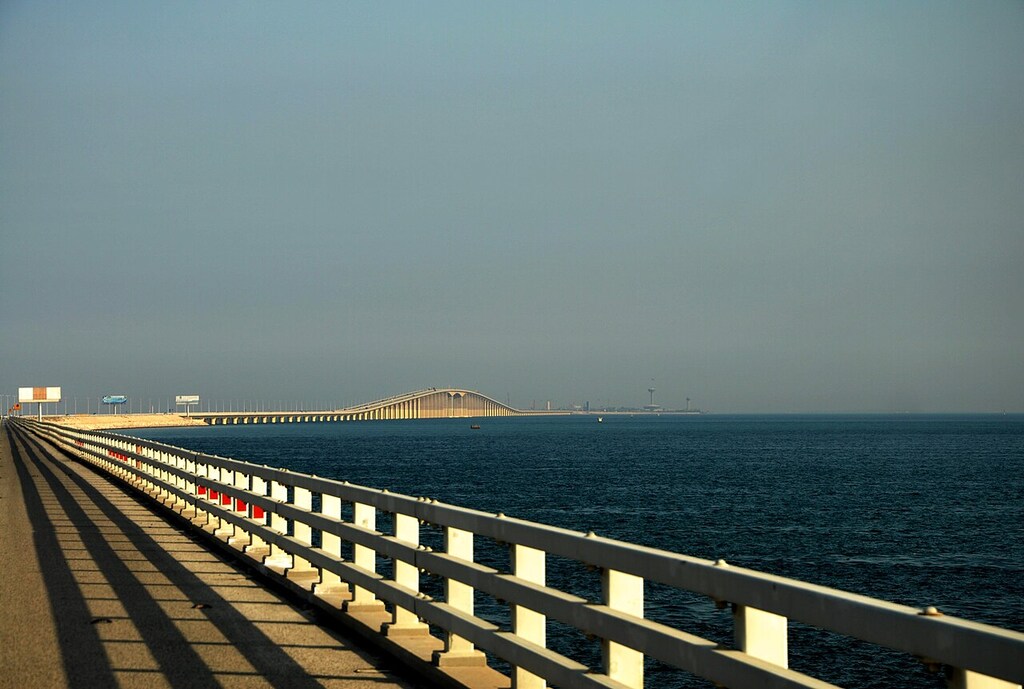
The King Fahd Causeway connecting Bahrain to Saudi Arabia remained open, while in parallel the GCC launched a temporary logistics fast-track scheme linking major ports and airports – using sealed trucks and exchanging documentation online – to streamline the flow of goods between member states.
This was further strengthened by the rapid launch of the Gulf Shuttle service by Mawani, the Saudi ports authority. With a capacity of up to 3,000 standard containers, the maritime route connects King Abdulaziz Port in Dammam to Khalifa Bin Salman Port in Bahrain, as well as key ports in the UAE and other neighbouring countries. This helped strengthen regional supply chains and maintain the flow of vital consumer and industrial goods across the GCC.
The private sector also stepped in to help maintain essential supplies. LuLu retail, for example, airlifted over 100 tonnes of fresh produce from international suppliers to Bahrain. This multimodal strategy made regional supply chains more resilient, maintaining the flow of vital consumer and industrial goods across the GCC.
In terms of exports, Saudi Arabia was also able to restore around 70% of oil shipments by utilizing its existing pipeline to the port of Yanbu on the Red Sea. By helping stabilize regional energy markets, this reduced economic pressure on the GCC as a whole. Meanwhile, state-owned Bapco Energies maintained domestic energy supply through contingency planning developed specifically for scenarios of regional disruption – an approach mirrored throughout the GCC.
The resilience of these systems was forged by cooperation at every level, from the rapid coordination between governments and infrastructure operators to deeper financial and economic integration. This included initiatives such as the $5.4 billion currency swap between the central banks of Bahrain and the UAE, designed to facilitate cross-border transactions and strengthen monetary cooperation during periods of uncertainty.
Despite the undeniable economic impact of the conflict, the bloc’s shared logistics infrastructure, joint initiatives and trade integration enabled it to adapt rapidly and mitigate some of the disruption.

Digital infrastructure for resilience
Digital infrastructure provided another layer of resilience. Across the Gulf, resilience and continuity have remained defining strengths. In Bahrain, financial services and the wider investor ecosystem continued to function without interruption, civil courts maintained proceedings remotely, and government services remained digitally accessible. Education moved online, too: Within days of the conflict starting, every school and university across the UAE switched to online, aided by routines carried over from the pandemic.
None of this was improvised. In Bahrain, the Cloud-First Policy, introduced in 2017, had already migrated approximately 85% of government operations to the cloud; coupled with nationwide 5G coverage, it kept courts sitting, classes running and payments flowing. These outcomes were made possible by years of planning, investment in infrastructure and a regulatory framework that enabled swift action when crisis struck.
Economic cushioning across the region
Alongside infrastructure resilience and regional coordination, targeted support measures played a critical role in maintaining business continuity across the GCC economy.
Dubai announced a $272 million stimulus package to support its tourism sector, while Qatar introduced a package of financial, regulatory and operational relief measures for businesses, alongside working-capital support and guarantee programmes for Qatari and Qatar-based companies. Meanwhile, Bahrain’s Labour Fund, Tamkeen, introduced a targeted finance and liquidity support package designed to assist more than 7,000 Bahraini small, medium and micro enterprises affected by the conflict.
At the same time, the Central Bank of Bahrain announced a $19 billion liquidity support package, alongside temporary loan deferrals, to reinforce financial stability and ease pressure on businesses and individuals. Central banks in the UAE and Qatar reacted in a similar fashion, easing liquidity rules and allowing loan deferrals. By the end of July, UAE banks had deferred repayments on $3.67 billion of loans for more than 135,000 customers.
These measures helped cushion the immediate economic impact of the crisis, while reinforcing confidence across the private sector. More broadly, they reflected the region’s increasingly proactive approach to economic resilience.
Signs of confidence
We are also seeing encouraging signs of continued investment across the region. Aluminium Bahrain, a Mumtalakat (Bahrain’s sovereign wealth fund) portfolio company, announced a deal worth $2.2 billion to acquire Aluminium Dunkerque – the largest aluminum smelter in the European Union. In financial services, over 60 memorandums of understanding, strategic agreements and key announcements were signed in Bahrain in October. Across the wider GCC, Abu Dhabi’s Mubadala Investment Company is set to expand into global logistics, with a $300 million co-investment alongside Stonepeak to support the acquisition of Seaco, forming one of the world's largest container leasing platforms. In Saudi Arabia, Indonesia’s sovereign fund Danantara completed a $533 million deal to purchase a hotel and development plots in Mecca.
While uncertainty and disruption remain, attention is also turning to the longer term. The resilience demonstrated is now being translated into continued investment in economic diversification, stronger international partnerships and the sectors that will drive long-term growth.
In a global economy that continues to be shaped by geopolitical tension, the economies best positioned for long-term success will be those that can turn resilience and preparedness into sustained economic momentum. As we’ve seen, deals continue to be executed, partnerships are being strengthened, and investments are moving forward, reflecting long-term investor confidence in the GCC market.