
The ban on rent increases will last for five years
Soaring rents are already driving people out of the city
For several years, Berlin rents have soared, more than doubling between 2009 and 2019. With more than eight in ten Berliners renting, residents struggled to keep up with rent increases that often outpaced wage boosts.
After demonstrations and data showing Germans were leaving Berlin for cheaper suburbs, the city parliament approved a law freezing rents on almost 1.5 million homes for the next five years. After 2025, the law will limit increases to 1.3% per year, to stay in line with inflation.
The law, which went into effect this month, has its detractors. Opponents cite studies finding that rent controls reduce housing supplies by 15% and push up uncontrolled rents.
One of Berlin’s biggest landlords - Deutsche Wohnen SE - says it saw 14% wiped off its stock market value when the Berlin rent freeze was announced last fall, prompting the company to say it would put all its Berlin developments on hold. It also described the rent freeze as unconstitutional.
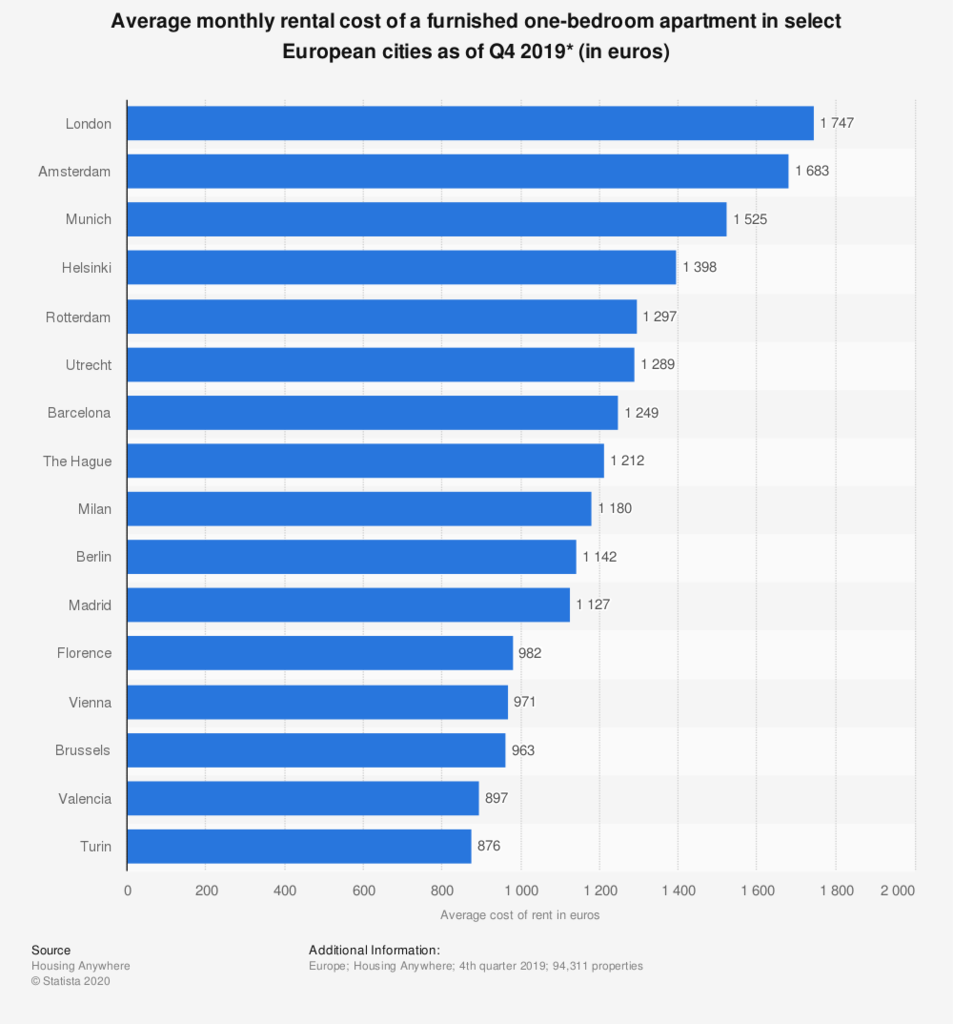
Berlin’s rents have grown quickly but remain more affordable than those in cities such as London, Paris or Rome. Today, the average monthly rent for a one bedroom furnished apartment in Berlin is the equivalent of around $1,200 USD.

Rent control is a complicated issue. The World Economic Forum’s Affordable Housing in Cities Report explains that “rent controls benefit tenants by keeping rent below market rates, but can also discourage the supply of new rental housing” since increased supply also keeps prices down.
As other experts explain, tenants in rent controlled housing might be less likely to change jobs or seek new opportunities for fear they’ll lose their affordable housing. Additionally, landlords might not update a unit until they can earn the market rate for it.
What's the World Economic Forum doing about the future of cities?
The Centre for Urban Transformation connects city leaders, businesses and governments to make sense of the challenges and opportunities shaping urban futures.
Through peer learning and collaboration, the Centre enables cities to exchange insight and translate shared understanding into practical, resilient urban solutions.
Of course, this law impacts just one segment of the Berlin market. Still, it highlights the challenges involved in addressing housing in any city or community. As explained in the Forum’s report, resilient solutions for affordable housing factor in short-and long-term needs while addressing “both the supply-side and the demand side of the housing market,” involving leaders from governments, business and non-profits.