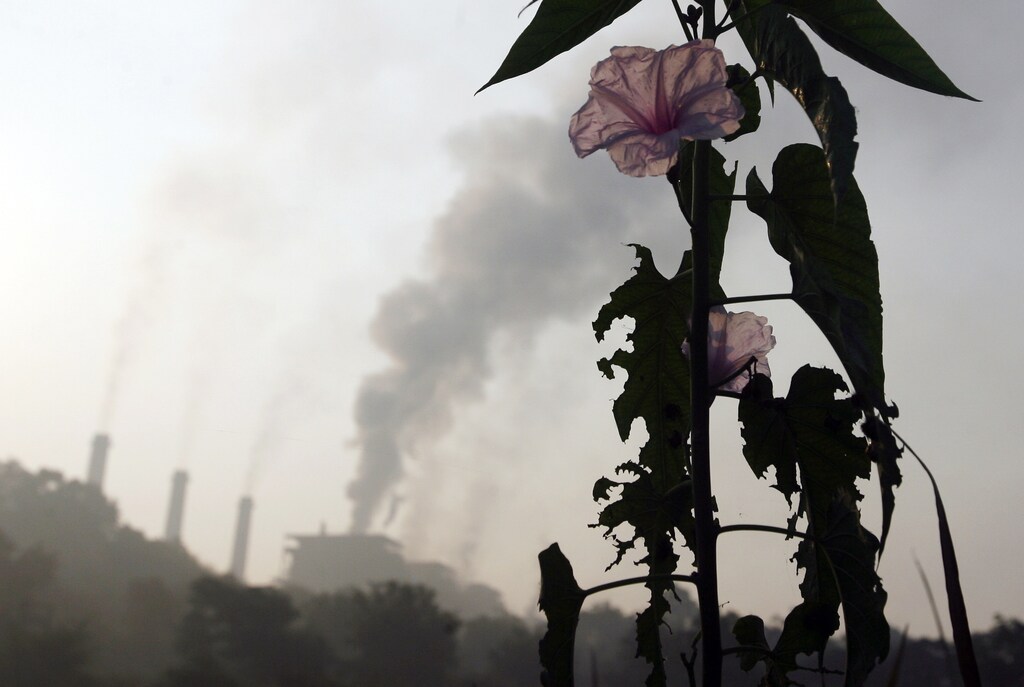
As a statistician, I have a habit of looking rationally at problems in terms of equations. This approach can be powerful, as it allows me to focus on variables that can change an outcome and quickly help me find out what matters most. In the fight against climate change, the world needs a global accord to eliminate carbon dioxide emissions. But how do we get to that common goal when all the parties have different priorities?
Globally, more than 1.3 billion people have no access to electricity; and 2.6 billion have no access to modern cooking facilities. More than 95% of these people are in sub-Saharan Africa or developing Asia, and 84% live in rural areas.
Developing countries like India have an obligation to their people to bring them out of poverty and reduce the income gap by providing basic services and ensuring access to electricity and clean water. But this comes at a price. As India modernizes and the population moves to urban areas, the use of traditional biomass and agro-waste has shifted to other energy sources, including fossil fuels. Add to this the price of climate change and rising pollution, and this is where most face a dilemma.
Equations can provide some of the answers. As global leaders try to tweak the variables to get to absolute zero emissions, an analysis of equations can give us a better understanding of where the Indian government should focus its efforts.
India: Balancing the equation with decarbonization
Electricity is the primary source of energy that can deliver accelerated growth. Coal-based electricity generation is the largest source of man-made CO2 emissions and India is no exception, as 60% of its electricity demand is met by coal.
In 2010, it was thought that electricity consumption would have to increase threefold by 2030 to bring 300 million people out of poverty. Therefore, electricity use is going to increase. But, how we use electricity is an important issue. According to McKinsey, 40% of global CO2 emissions can be reduced by focusing on energy-efficient technologies. Hence switching to BAT (best available technology) can immediately allow us to make the electricity available to more people. Switching to BAT will reduce consumption growth to 1.8 times from the originally projected factor of 3.
A third factor to consider is how we generate electricity. Simplifying the calculations and not counting the loss of power on the grid and PLFs (power load factors), an increase of 1.8 times from the current installed capacity of 315GW would mean an addition of 252GW. According to the Indian Ministry of Statistics and Programme Implementation, an immediate renewable energy potential of 147GW exists as of today.
Hence, immediate investment in implementable renewable energy can lead to a need for only 105GW of generation using fossil fuels. This is a major milestone for the Indian government as the objective of tripling the energy available for consumption will be achieved by just an 18% increase in fossil fuel-fired electricity generation. This will lead to 82% decarbonization of new electricity consumed by Indians.
To check my hypothesis, I went back to the latest Energy Technology Perspectives 2015 published by IEA and looked at the 2030 scenario. If you add the decarbonization potential due to renewables, end-use energy and nuclear, the total comes to 83%, which is fairly close to what I estimated using a bottom-up approach.
Capturing carbon, and using it
This brings us to the question of what to do with existing power plants? According to the International Energy Agency, the last 6% contribution will come from carbon capture and storage, or carbon capture and reuse (an option I prefer). Carbon capture and reuse is a collective term for technologies that involve capturing carbon dioxide emissions from existing large CO2 emitters and reusing them in an industrial process. The use of captured carbon dioxide for products like urea is already known and can create a carbon-negative scenario. India imports one-third of the urea it requires from international markets.
A 6% decarbonization from carbon capture and reuse could result in 126 million tons of CO2 reduction, equal to 17GW of coal-fired capacity decarbonization by 2030. Implementing carbon capture is the last, but an important, leg in decarbonizing existing and future capacity on coal. This could lead to a 14% penetration by 2050, leading to about 80% overall decarbonization of the Indian economy.
According to the World Bank, the public health expenditure of the Indian government is $61 per person per year, and burning coal is going to put pressure on the government budget. Delhi now ranks among the most polluted cities in the world and a recent survey revealed that nearly half of the city’s 4.4 million schoolchildren have irreversible lung damage. That is a national loss; it is not only the loss of future economic output but the loss of life as well.
Investing in clean energy may sound like a bitter pill to swallow, but it’s a pill worth swallowing.
Full details on all of the Technology Pioneers 2015 can be found here.
Author: Aniruddha Sharma, is CEO of Carbon Clean Solutions, a World Economic Forum Technology Pioneer