The relationship between India and the United States has been described as one of the most important of the 21st century.
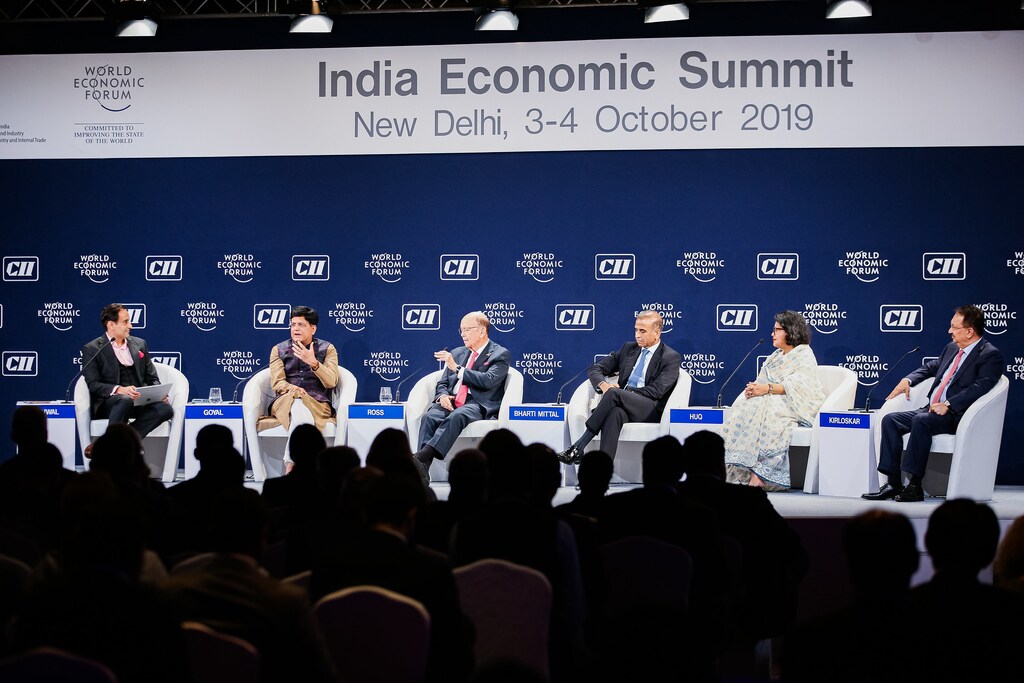
India is predicted to be the world’s second-largest economy by 2030, with the US the third-largest, giving it strong purchasing power. But cultural and policy barriers remain obstacles to a cohesive trade partnership, as highlighted in “Trading Against the Tide”, a discussion at the World Economic Forum’s India Economic Summit.
Piyush Goyal, Minister of Commerce and Industry, said India was committed to protecting the needs of its many small retailers, with 50-60 million small retail shops providing employment and working opportunities to around 120 million people. But the US is far from convinced that that is in either country's interest.
India has introduced changes to its Foreign Direct Investment policy which still allow foreign-owned e-commerce companies to provide a marketplace for buyers and sellers, but stop them selling their own goods - a business model that can mean lower retail prices that undercut smaller retailers.
Bricks and mortar or global online retail?
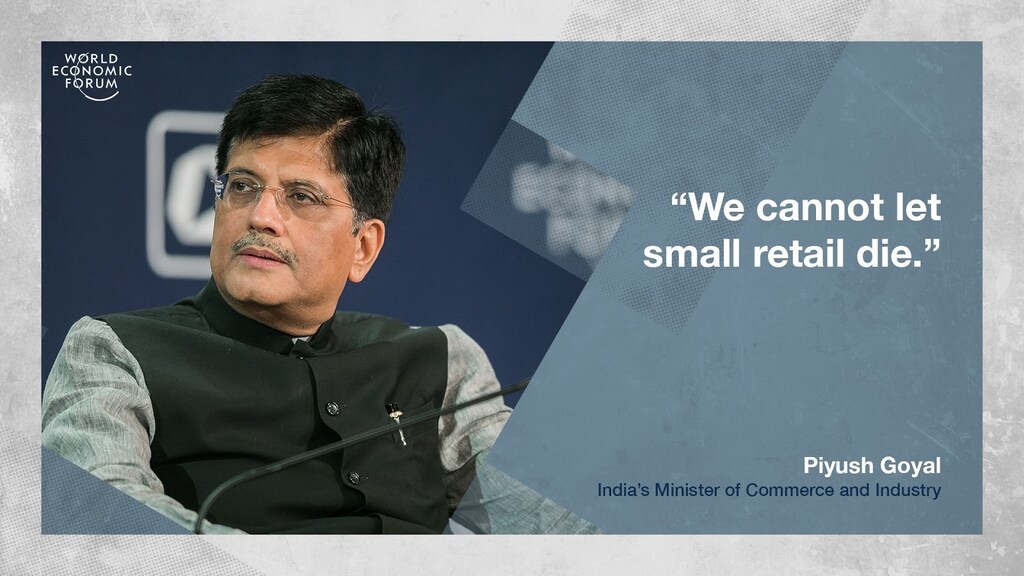
“We cannot let small retail die, and therefore we have restricted foreign direct investment in the multi-brand retail sector at 49%,” Goyal said at the Summit – adding that e-commerce should not provide a platform for predatory pricing.
But his American counterpart, US Secretary of Commerce Wilbur Ross, argued that protecting small bricks-and-mortar retailers would ultimately penalize all of India.
“If a hundred years from now, India still has as many small retailers as now, it will have held back the growth of the country immensely,” he said.
Ross pointed to the news this week that Amazon announced it was spending a third less this year on capital expenditure in India – the first time its annual investment in India has come down since it moved into the market in 2012.
“It probably would have spent a lot more in India if didn’t feel that there was a diminution in growth due to some of [India’s] policies,” Ross told the Summit. “So there is also that cost to India by the policy.”
The road to New Delhi
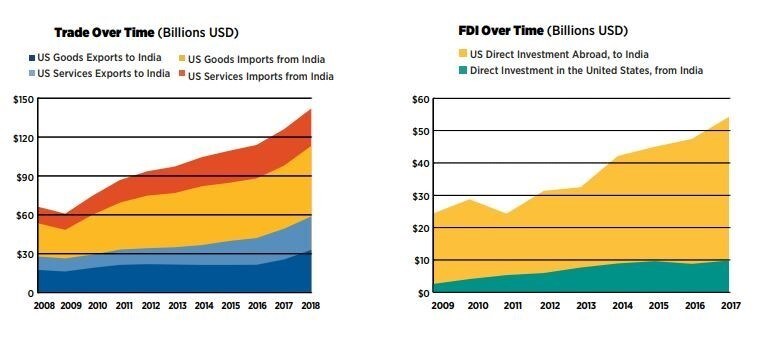
While recent India-US talks failed to result in a new trade deal, commercial interaction between India and the US is growing quickly.
Trade in goods and services grew at an average annual rate of 7.59% from 2008 to 2018, more than doubling in value from $68.4 billion to $142.1 billion. The US was the second-largest trading partner for India in goods in 2018, and its single largest export destination.
At the Summit, Ross noted that the US intends to increase total trade and reduce its trade deficit, and expressed concern about what he called “artificial and protectionist” trade barriers.
But he was optimistic about the future India-US trade relationship, saying that now elections are over, Prime Minister Narendra Modi has a “clear, strong position in the parliament, it should be a lot easier to take decisive action.”