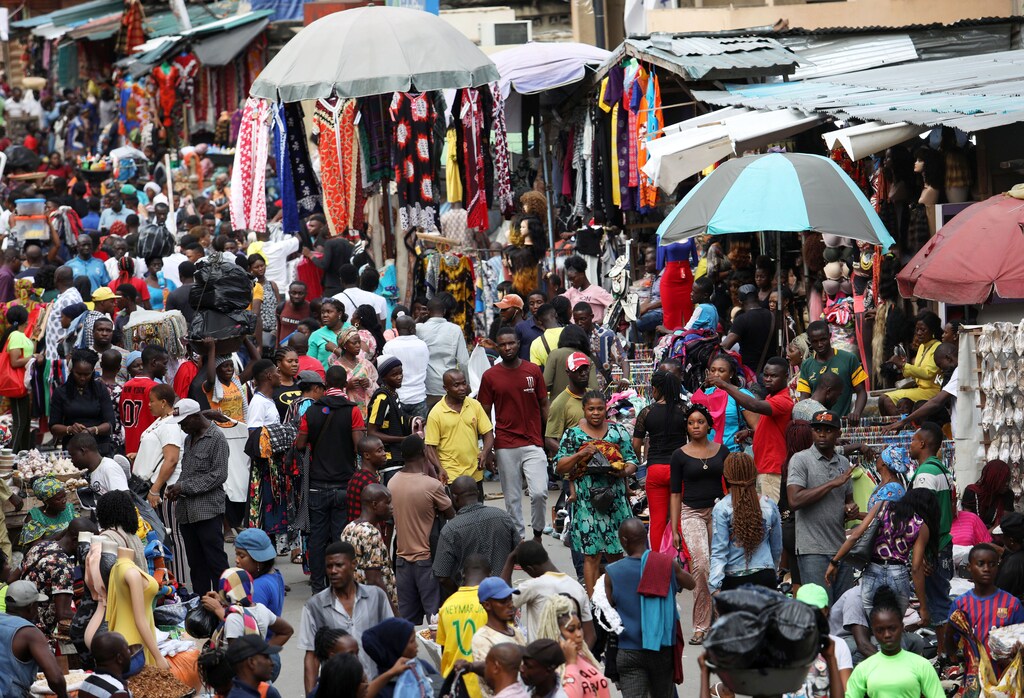
The world’s youngest countries are all in Africa, with forecasts for 2020 showing just one non-African country – Afghanistan – in the top 20.
The data, from the United Nations' World Population Prospects 2019, is a stark reminder of Africa’s youthful population.
Such a large number of young people presents both a challenge and opportunity for the continent.
The top 10
Niger is set to have the world’s youngest population in 2020, with a median age of just 15.2-years-old.
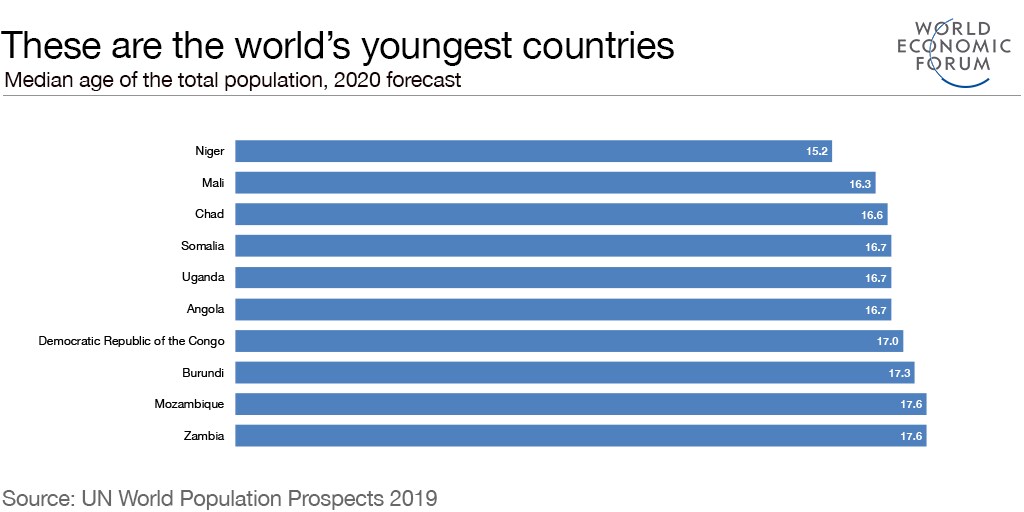
The West African country has the world’s highest birth rate, with every woman having an average of 7.2 children over the course of her lifetime. As a result, the country’s population is set to nearly triple by 2050.
Mali and Chad round out the top three, with median ages of 16.3 and 16.6, respectively.
The opportunity – and challenge – of youth
The African Institute for Development Policy highlights the opportunity of a young population in Africa.
Spending on health and education - coupled with an environment that facilitates jobs and investment - could create a demographic dividend, boosting economic development.
However, if such a dividend isn't realised, the continent could face a demographic burden. This carries the risk of high unemployment, poverty and low productivity, according to UNICEF. These risks carry a further threat to stability and security across Africa.
The most recent Gates Foundation report also notes the importance of young populations more broadly: "Today's booming youth populations can be good news for the economy; if young people are healthy, educated and productive, there are more people to do the kind of innovative work that stimulates rapid growth." But the report highlights the need for investment in human capital in order to make this a reality.