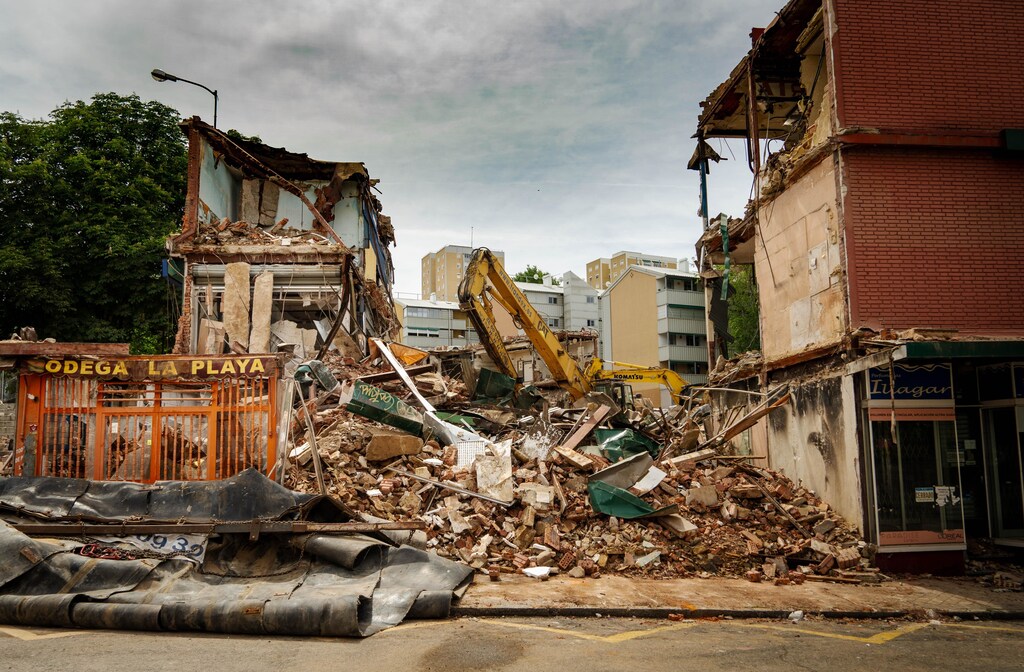
Countries such as Chile and Japan, which face regular earthquakes, have many regulations to ensure buildings can withstand these events as well as possible.
Building damage is the primary cause of death, injury and property loss suffered from earthquakes, says the US Resiliency Council.
Designers can help buildings withstand quake shocks by adding a flexible steel skeleton, or fitting a ‘base isolation’ system to separate the building from its foundations.
Making earthquake resistant buildings not only saves lives but reduces the economic and environmental consequences of these disasters.
Every country has hundreds of rules and regulations surrounding the construction of buildings. In countries such as Chile and Japan, which face regular earthquakes, many extra rules have been put in place to ensure buildings can withstand these disasters as well as possible.
Chile sits on the Pacific Ocean’s Ring of Fire, one of the world’s most earthquake-prone regions, and has faced more than a dozen quakes of at least magnitude 7 in the past 50 years. But loss of life has been kept low – a fact that the United Nations Office for Disaster Risk Reduction says is partly down to Chile’s strict building codes.

The rules were updated after the country faced the world’s biggest earthquake in 1960. They ensure buildings are constructed in a way that allows them to sway with seismic waves, rather than remain rigid.
How to make earthquake resistant buildings
When an earthquake strikes, it creates horizontal forces that shake buildings from side to side.
Because buildings are made of concrete, which is strong but has little flexibility, these forces can stretch the concrete and cause it to crack.

Designers can remedy this by adding a flexible steel skeleton made of something called rebar, which is also known as reinforcement steel. Casting rebar inside concrete boosts the overall strength of the concrete and enhances its ability to withstand force.
This is because rebar has elastic qualities and can help the building return to its original shape.
Shock absorbers for buildings
Buildings can also be fitted with “base isolation” systems to separate the building from its foundations through the use of springs or runners. This means that when an earthquake starts, the resulting movement will not impose stress on the structure of the building.
This system is used in Japan, where buildings are erected on shock absorbers – such as thick blocks of rubber – to help them stay stable during tremors.
What is the World Economic Forum doing to promote sustainable urban development?
Cities are responsible for 75% of global greenhouse gas emissions and are home to over half of the world’s population—a number that will grow to two-thirds by 2050. By prioritizing cleaner energy, cities could contribute more than half of the emissions cuts needed to keep global warming to less than 2°c, which would be in line with the Paris Agreement.

To achieve net-zero and nature-positive cities and communities by 2050, the World Economic Forum is partnering with public and private sector stakeholders on initiatives that drive global ambition through local action. Here are just a few:
Davos Baukultur Alliance: Advancing high-quality planning, construction and management of buildings, infrastructure, and public spaces using principles based on climate resilience, sustainability and circularity in the built environment. Learn more.
Global New Mobility Coalition: Exploring new solutions to reduce congestion and emissions, enhance EV infrastructure and transform urban mobility and deliveries. Learn more.
Alliance for Urban Innovation: Connecting innovators and entrepreneurs to new markets and opportunities that reimagine and reshape quality of life and local economies. Learn more.
G20 Global Smart Cities Alliance: Accelerating intelligent, practical solutions to build climate resilience, enhance public well-being and tackle the most pressing challenges facing cities and local communities. Learn more.
Future of Travel and Tourism: Driving inclusive and sustainable economic growth while preserving cultural heritage and protecting natural ecosystems. Learn more..
Discover how you can be a part of our efforts to create more sustainable and livable cities and communities. Contact us here.
After the Kobe earthquake in 1995, which killed more than 6,000 people, Japan carried out extensive research into making buildings earthquake-resistant, including retrofitting older structures, the New York Times reported. Like Chile, it put in place strict rules around making sure buildings are able to withstand earthquakes.
The benefits of quake-resistant buildings
“Building damage is the primary cause of death, injury and property loss suffered from earthquakes,” says the US Resiliency Council, which runs rating systems for building performance.
It says making sure buildings can withstand earthquakes not only saves lives and prevents injuries, but reduces the economic consequences of these disasters. There are also environmental benefits, as there is less need for debris to go to landfill, and no consumption and emissions spent on reconstruction efforts.
Turkey is facing costs of up to $85 billion following the earthquake of early 2023, with over $70 billion of this needed to repair homes.
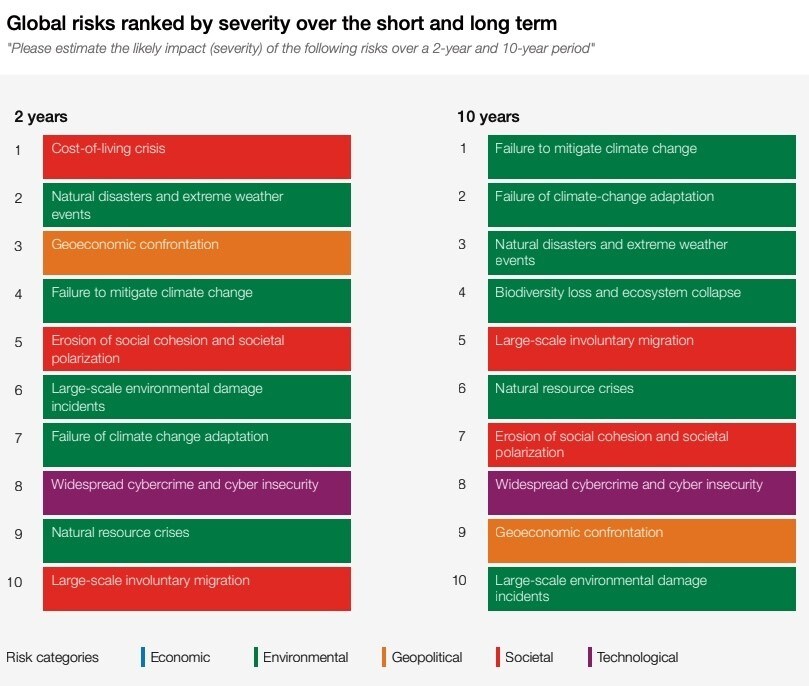
Natural disasters such as earthquakes, floods and wildfires are the second-most severe risk facing the world over the next two years, according to the World Economic Forum’s Global Risks Report 2023.
Research is being undertaken into any potential links between climate change and earthquakes, but NASA geophysicist Paul Lundgren told website Green Matters that: "We’re simply not in a position at this point to say that climate processes could trigger a large quake.”
The US Geological Survey says that the only correlation noted between earthquakes and weather is that large changes in atmospheric pressure – such as those caused by large storms – can trigger “slow earthquakes”, which release energy over a long period and don’t result in ground tremors.