At the frontier of biosecurity, risks and resilience are both on the rise
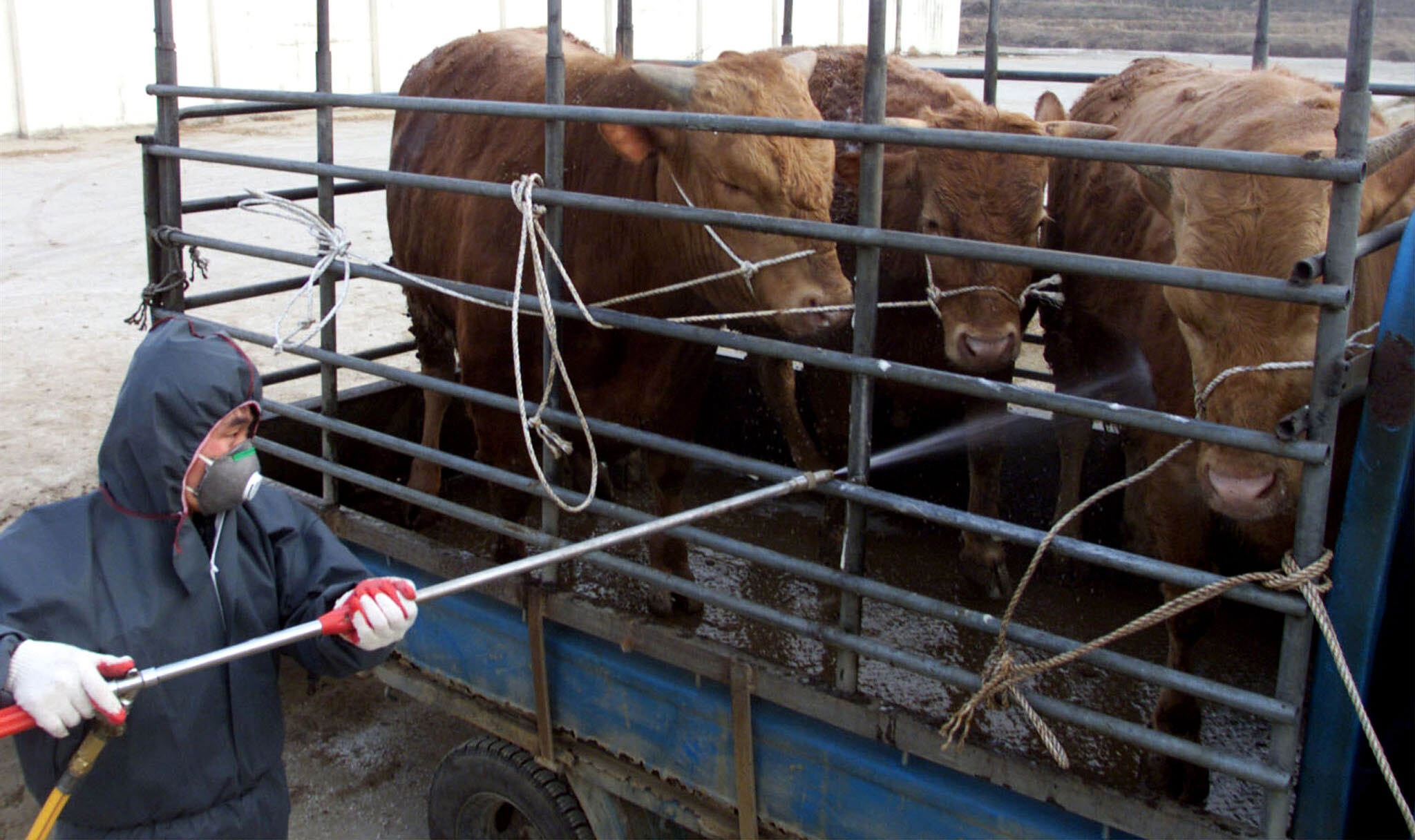
Biosecurity threats – from agriculture to AI – are on the rise, but a series of governance initiatives are providing a response. Image: Yun Suk Bong/Reuters
Amanda Wolthuizen
Vice-President (Strategy) and Chief of Staff to the President, Imperial College London- The convergence of climate change, AI biology and global mobility means the gap between biological threat emergence and impact is closing.
- AI is already compressing genomic sequencing and pathogen surveillance from weeks to hours, transforming risk and resilience.
- Real resilience and biosecurity requires more than technology – it needs strong, coordinated governance across government, industry and academia.
Biosecurity threats - risks posed by harmful biological agents such as viruses, bacteria or engineered pathogens - are no longer episodic. The convergence of climate change, AI-enabled biology and global mobility means that the gap between emergence and impact is closing rapidly, while our systems for surveillance, attribution and response are struggling to keep pace.
While natural biosecurity hazards remain more likely than manmade threats, the threat from intentionally released pathogens is rising. The increasing accessibility of laboratory tools and computing power means that, in principle, a technically capable individual could design organisms and substances with the potential to disrupt human health, agriculture or ecosystems.
Many of the systems that underpin global health security were designed primarily to detect and respond to naturally occurring outbreaks. They were not built for every type of threat that may emerge in a world where biological agents could be altered, deliberately engineered or sufficiently unfamiliar to evade detection approaches designed around known pathogens. In this context, the ability to detect and attribute the source of a pathogen is becoming a critical element of deterrence in an emerging biosecurity landscape.
How the biosecurity landscape is changing
The COVID-19 pandemic demonstrated both the scale of disruption biological threats can cause – as well as the extraordinary scientific capabilities that can be mobilized in response. It also reinforced the importance of strengthening outbreak analytics and surveillance systems capable of responding at speed. From Hantavirus outbreaks to Ebola epidemics, recent events reinforce that health systems must be prepared for a wide range of biological risks. This shift demands a new level of collaboration between government, industry and academia. It also requires us to harness artificial intelligence and other emerging technologies to build biosecurity capabilities at a scale and speed that traditional approaches cannot achieve.
Debate over the risks that frontier AI could pose to society has intensified in recent weeks. Biosecurity has emerged as one of the most concrete and near-term potential flashpoints in that conversation, as AI tools generate remarkable new areas of both risk and opportunity. Advances in genetic engineering and synthetic biology are reducing some of the barriers to biological research and development, while generative AI has the potential to accelerate this trend by making biological capabilities more accessible. This creates risks not only from deliberate misuse, but also from accidents as increasingly rapid research pushes the boundaries of what is technically possible. While these risks remain lower than those posed by naturally emerging infectious diseases, their potential to increase rapidly means they need to be considered as part of longer-term preparedness.
The challenge is to ensure that these same advances strengthen our ability to anticipate, detect and respond to biological threats. AI is already beginning to transform genomic sequencing and pathogen surveillance. What once took weeks of laboratory analysis can increasingly be completed in hours, allowing researchers to identify and track emerging threats with unprecedented speed and precision. In drug discovery and countermeasure development, AI-driven approaches are accelerating target identification, candidate screening and vaccine design, offering the prospect of narrowing the gap between threat emergence and therapeutic response.
Yet technological capability alone will not solve the challenge.
How governance will prevent biological risks
The core focus is building the translation pipeline that turns scientific breakthroughs into deployable, trusted and governed systems. This requires coordinated action across sectors. Industry scales the infrastructure and manufacturing capacity for new tools, governments enable rapid and safe deployment through agile regulation and procurement, and academia provides the science, talent and analytics that underpin effective decision-making. The UK’s successful COVID-19 Vaccines Taskforce demonstrated what is possible when institutional barriers to collaboration are removed. The challenge now is to make this model the norm rather than the exception by creating the structures and governance frameworks that enable sustained collaboration across sectors.
Funders, regulators and researchers must also work internationally to strengthen safety frameworks and establish shared guardrails for high-risk research, with the UK’s balanced and open approach offering a potential model.
Academia has a significant role to play in ensuring we stay resilient to biosecurity threats.
Imperial College London, for example, is working on pathogen surveillance, engineering biology, AI-driven analytics and health systems innovation. Researchers are exploring how new surveillance approaches, including wastewater monitoring and pathogen-agnostic detection, can strengthen early-warning systems and improve preparedness by identifying emerging threats earlier. The university is also exploring how AI can improve disease transmission modelling and support more adaptive approaches to countermeasure development.
Equally important is understanding how these technologies can be deployed responsibly, with governance and safeguards embedded from the outset. Imperial's Frontier AI Research Lab aims to address questions of safety, reliability, oversight and societal impact alongside technological advancement.
Cooperation as a bulwark against biosecurity threats
Cooperation is key to these efforts, including between academia, the private sector and non-governmental bodies.
The World Economic Forum is working alongside Imperial on the joint Centre for AI-Driven Innovation (CADI). CADI is focused on accelerating the adoption of high-impact AI across strategically important sectors, including life sciences, clean energy and advanced manufacturing. At its core is the insight that technological advances only generate value when institutions, policies and ecosystems can translate them into real-world impact.
Biosecurity provides one of the clearest examples of this challenge. The technologies emerging today have the potential to transform how we anticipate, detect and respond to biological threats. But achieving that potential will depend on our ability to build the partnerships, governance frameworks and innovation ecosystems needed to deploy them responsibly and at scale.
Initiatives like the Biosecurity Network of Excellence also work to this end by bringing together expertise from across disciplines to tackle one of the defining challenges of our time. Centred around three core themes – threats, surveillance and response – the Network will connect researchers with policymakers, industry leaders and international partners to strengthen collaboration and accelerate action. The Network aims to help close the gap between emerging biological threats and our ability to anticipate, detect and respond to them.
Resilience can no longer be built reactively. Meeting the biosecurity challenges of the coming decades will require deeper collaboration between governments, businesses, researchers and international organizations. AI and other frontier technologies provide powerful new tools, but their impact will ultimately depend on the systems, partnerships and governance structures we build around them.
Don't miss any update on this topic
Create a free account and access your personalized content collection with our latest publications and analyses.
License and Republishing
World Economic Forum articles may be republished in accordance with the Creative Commons Attribution-NonCommercial-NoDerivatives 4.0 International Public License, and in accordance with our Terms of Use.
The views expressed in this article are those of the author alone and not the World Economic Forum.
Stay up to date:
Cybersecurity
Related topics:


Forum Stories newsletter
Bringing you weekly curated insights and analysis on the global issues that matter.
More on Global RisksSee all

Rebecca Geldard
September 21, 2026