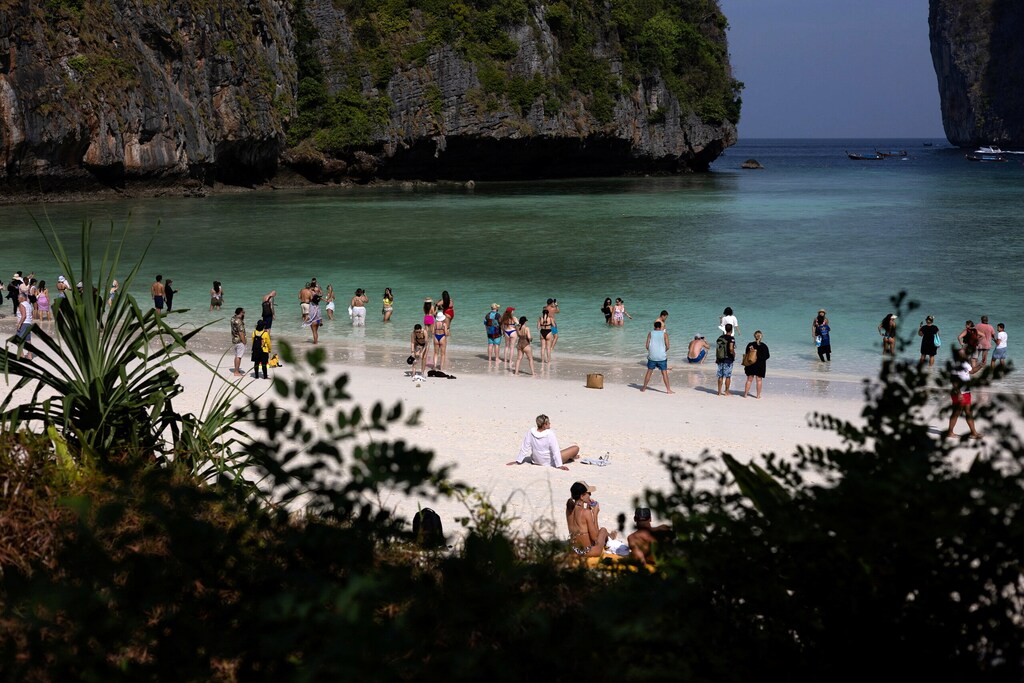
Last year brought a record 1.5 billion international travellers. This year has brought grounded aircraft, closed airspace, heatwaves and wildfires.
Growth and disruption now arrive together, and the destinations pulling ahead are the ones building resilience alongside demand.
The Travel & Tourism Development Index sets out five priorities for turning record demand into lasting value, from diversifying source markets to closing a workforce gap of more than 43 million people.
Last year the world welcomed a record 1.5 billion international tourists, and travel and tourism contributed $11.6 trillion to global GDP. This year has already brought grounded aircraft, closed airspace, heatwaves and wildfires.
Demand is climbing – but so are the shocks and structural pressures that can interrupt it, from extreme weather to overcrowding and rising costs. This means the key challenge for anyone running a destination, an airline, a hotel or any other tourism business is to keep operating while conditions keep shifting.
Our latest Travel & Tourism Development Index (TTDI) examines how 110 economies are answering that. The destinations pulling ahead tend not to be the fastest-growing ones. They are the ones that can absorb a shock, hold on to travellers’ trust and adapt as conditions get more complicated. Five things set them apart.
What is the World Economic Forum doing to promote sustainable urban development?
Cities are responsible for 75% of global greenhouse gas emissions and are home to over half of the world’s population—a number that will grow to two-thirds by 2050. By prioritizing cleaner energy, cities could contribute more than half of the emissions cuts needed to keep global warming to less than 2°c, which would be in line with the Paris Agreement.
To achieve net-zero and nature-positive cities and communities by 2050, the World Economic Forum is partnering with public and private sector stakeholders on initiatives that drive global ambition through local action. Here are just a few:
Davos Baukultur Alliance: Advancing high-quality planning, construction and management of buildings, infrastructure, and public spaces using principles based on climate resilience, sustainability and circularity in the built environment. Learn more.
Global New Mobility Coalition: Exploring new solutions to reduce congestion and emissions, enhance EV infrastructure and transform urban mobility and deliveries. Learn more.
Alliance for Urban Innovation: Connecting innovators and entrepreneurs to new markets and opportunities that reimagine and reshape quality of life and local economies. Learn more.
G20 Global Smart Cities Alliance: Accelerating intelligent, practical solutions to build climate resilience, enhance public well-being and tackle the most pressing challenges facing cities and local communities. Learn more.
Future of Travel and Tourism: Driving inclusive and sustainable economic growth while preserving cultural heritage and protecting natural ecosystems. Learn more..
Discover how you can be a part of our efforts to create more sustainable and livable cities and communities. Contact us here.
1. Diversify
The pandemic taught expensive lessons about depending on one market, one season or one type of traveller. Many destinations have acted on them.
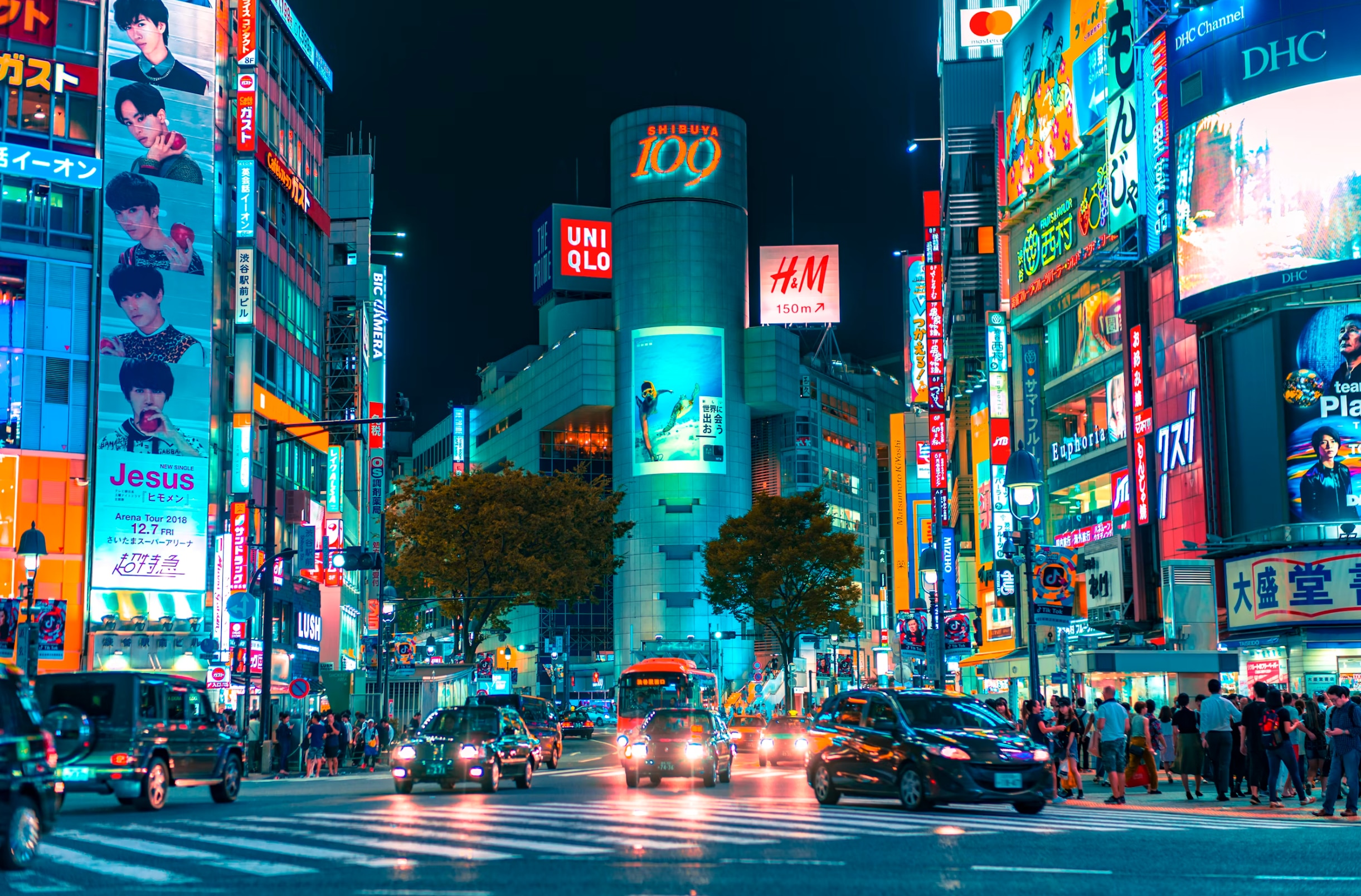
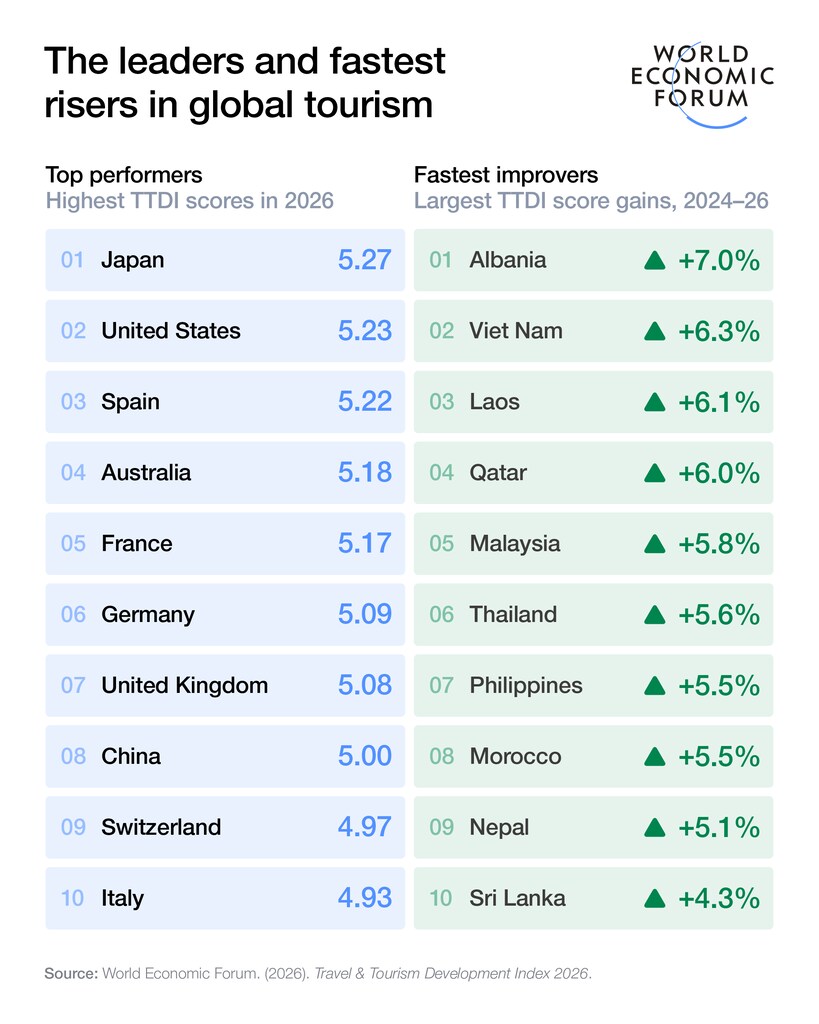
Japan is the clearest case. Diversifying its source markets and spreading demand across the country was a key reason it climbed from third place to first in the TTDI 2026. It welcomed 42.7 million international visitors last year while deliberately widening its tourism base, courting travellers from more countries, and encouraging them to travel beyond Tokyo, Kyoto and Osaka. Visitors to regional Japan rose 14% year on year, with the share of arrivals from the United States, Europe, Australia and the Middle East climbing to 18%, up from 14% in 2019.
Not only has Japan made its tourism industry more resilient to shocks, says the TTDI 2026, but it has also grown its tourism base in the process, demonstrating that “openness, connectivity and destination development” can build a more balanced and adaptable tourism system.
2. Protect access – both physical and digital
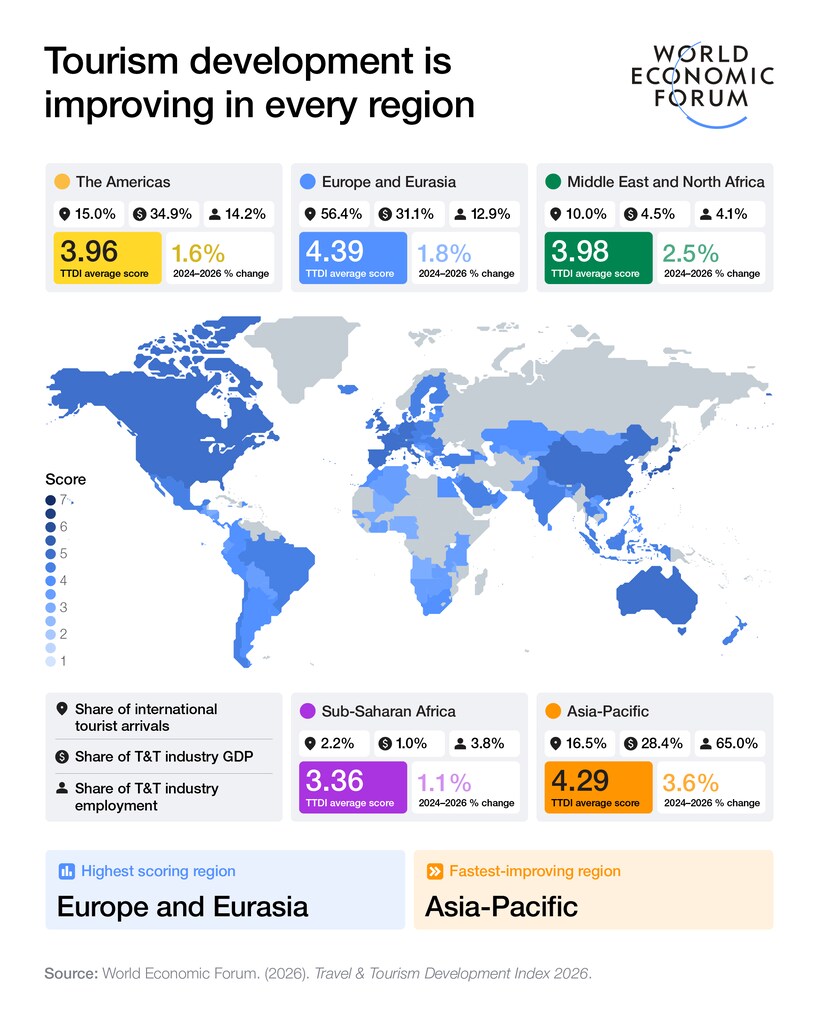
Moving people reliably has always separated strong destinations from weak ones. The gap shows up most clearly in air transport infrastructure, where the top 20 economies outperform the TTDI 2026 average by a wider margin than on almost any other measure.
But access means more than runways. It covers border management, visa policy and information that stays accurate and easy to find wherever travellers look for it, whether through a search engine, a booking platform or an AI assistant.
Germany, ranked sixth, saw this early. Its Knowledge Graph pulls more than 500,000 open-data records covering accommodation, events and attractions into a single source that search engines and AI platforms can read. Destination data, as the TTDI 2026 describes it, is becoming “critical digital infrastructure rather than a marketing asset”.
3. Compete on value, not price
Price is not what decides success. As the chart above shows, the top 20 tourism economies actually score below average on price competitiveness. Some destinations succeed at higher price points and some at lower ones – what matters is whether the experience, the access and the service still feel worth the trip.
Affordability still helps. Albania has improved more than any other economy, offering much of what its European neighbours provide at a lower cost. But as living costs bite, price on its own is a fragile position to hold.
Costa Rica shows the alternative: fewer additional visitors can drive considerably more value. Costa Rica ranks fourth in the TTDI 2026 for sustainability, having chosen environmental protection over mass-market growth. International arrivals grew by a modest 1% last year, but average visitor spending rose from about $1,602 to $1,848.
4. Make growth work locally
Travel and tourism is on track to contribute $16 trillion to global GDP by 2034, more than 11% of the world economy. Where that money lands matters as much as how much of it there is.
The TTDI’s socioeconomic pillar weakened this year. That is a warning. When tourism grows faster than a community’s ability to capture the benefits, public support drains away. That matters in practical terms, as it determines what governments can approve and what businesses can build.
Türkiye, ranked 36th, has been working on this since launching a national sustainable tourism programme in 2022. More than 2,000 accommodation providers are now certified for environmental impact and community benefit, and the country’s socioeconomic impact score improved by 8.3% over the same period.
5. Solve the people problem
The sector could be short of more than 43 million workers by 2035. Roughly 20 million of those roles cannot be automated, meaning infrastructure investment counts for little if there is nobody there to greet the guest.
Saudi Arabia has moved faster than almost anyone, recording the second-largest improvement in the TTDI 2026’s human resources and labour market pillar. Its tourism ministry runs scholarships, training and apprenticeships with international hospitality institutions, alongside support for people building long careers in the sector. Tourism employment passed one million jobs last year, with women accounting for 47% of those roles – up from 5% in 2018.
Building resilience is a shared job
No single organization can deliver these five priorities. A destination cannot compete on value without the people to deliver it, manage growth without the trust of residents, or protect access unless airlines, hotels, regulators, technology providers and destination managers are working from the same plan. That is why resilience has to be built through partnership – across government, industry and the communities that host visitors.
The destinations that do best in the years ahead will be the ones that keep their systems running, adapt as conditions change, and continue delivering something worthwhile for visitors, businesses and the communities that host them. That is what the shift from recovery to resilience actually looks like, and the work happens before the disruption, not during it.