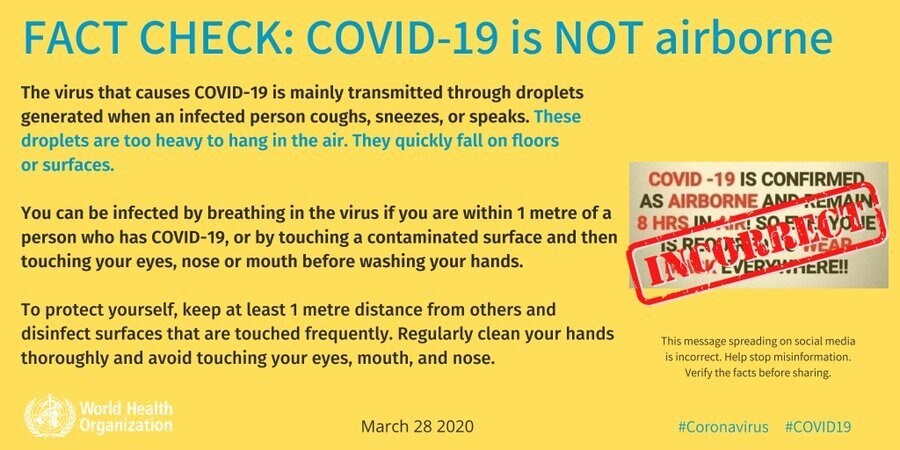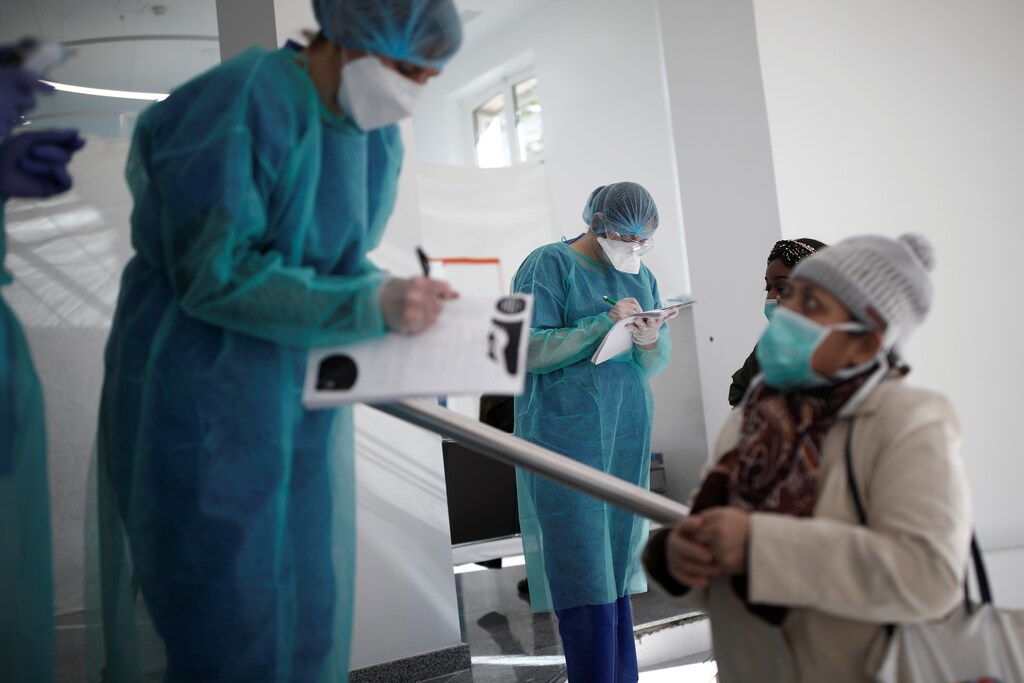
As coronavirus continues to spread across the globe, here are some of the most significant developments and selected articles to read, as of Tuesday 31 March.
COVID-19’s impact around the globe
More than 37,000 people have died worldwide, with over 780,000 cases of infection, according to Johns Hopkins University. More than 166,000 people have recovered from COVID-19 coronavirus.
Growth of new cases in Spain start to slow.
Tokyo Olympics and Paralympics confirmed for new 2021 dates.
France reported 418 deaths in one day, its highest one-day death toll yet.
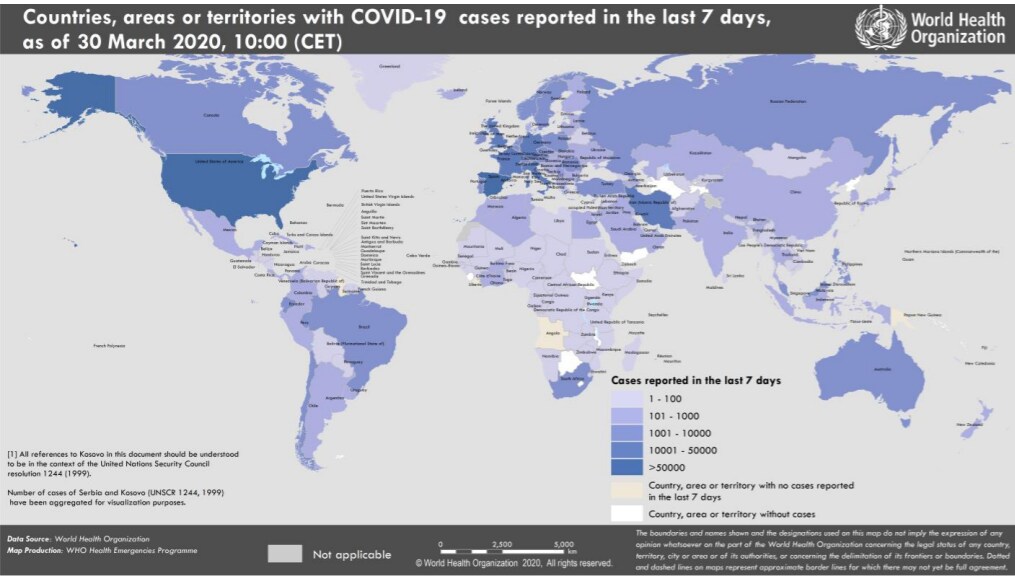
Who should wear a face mask? WHO officials weigh in. At a briefing yesterday, World Health Organization (WHO) officials gave their recommendation on how masks can best be deployed at a briefing on 30 March. Masks are most important to these key groups:
Those who are sick, to prevent spreading the disease to someone else.
Caregivers for those who are sick, to protect themselves and to prevent further transmission throughout a family unit.
Those who are frontline healthcare workers. Right now the people most at risk from this virus are frontline healthworkers who are exposed to the virus "every second of every day", said Michael J. Ryan, Chief Executive Director of the WHO Health Emergencies Programme.
Just approved: A test than can detect coronavirus in minutes. Abbott Laboratories said it had won US marketing approval from the Food and Drug Administration under its Emergency Use Authorization for a diagnostic coronavirus test that can deliver results to patients within minutes - to be used in physician offices, urgent care clinics and hospitals. Currently, the US has more cases than any other country.
It could take three years for the US economy to recover from COVID-19. A new report from consultancy McKinsey & Company. explored different economic recovery scenarios based on how well lockdown and social distancing measures may work to fight the spread of coronavirus. In the best-case scenario, the economy could rebound by the third quarter of 2020. However, if measures can't prevent a resurgence, the world's largest economy might not bounce back until 2023, according to the report.
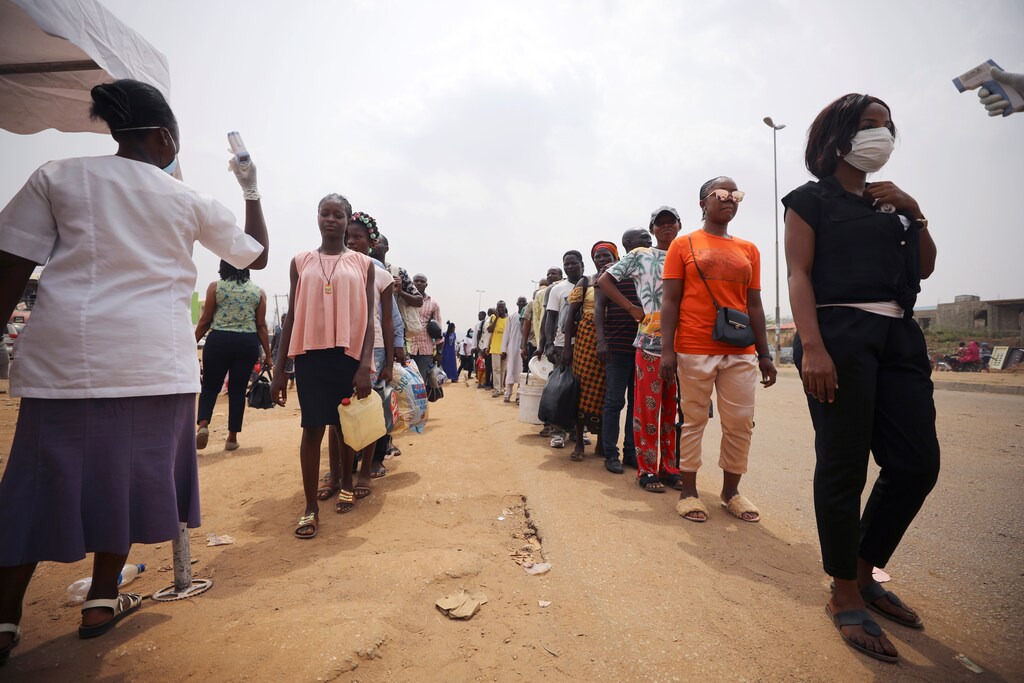
How Viet Nam is containing COVID-19 with limited resources. Viet Nam has so far reported no fatalities as a result of the coronavirus pandemic. The government worked quickly to suspend flights, shut schools and quarantine new arrivals. Additionally, any infected cases have been isolated and their contacts traced. “Neighbours know if you come from a foreign country,” said Truong Huu Khanh, head of the department of infectious diseases at Ho Chi Minh City Children’s hospital. “If an infected person is in the area, they will report this.”