A sweeping lockdown is in place across India to slow the spread of COVID-19.
People are banned from going out except in emergencies or to buy essential food and medicine.
The lockdown aims to prevent a spike in cases which could quickly overwhelm India’s health service.
India’s Prime Minister Narendra Modi has enforced the world’s biggest lockdown to limit the spread of coronavirus, telling 1.3 billion people to stay at home for three weeks.
“If we are not able to manage this pandemic in the next 21 days, the country and your families will be set back by 21 years,” Modi said as he announced the restrictions.
As of 1 April, India had recorded more than 1,500 cases of coronavirus, and 45 deaths. These rates may seem relatively low for a population the size of India’s – the country is home to almost a fifth of the world’s people. But India has just eight doctors per 10,000 people, prompting fears that rising numbers of cases could quickly overwhelm its healthcare system.
The new restrictions have brought the country to a standstill, emptying streets, grounding flights, halting rail services and putting millions of people out of work.
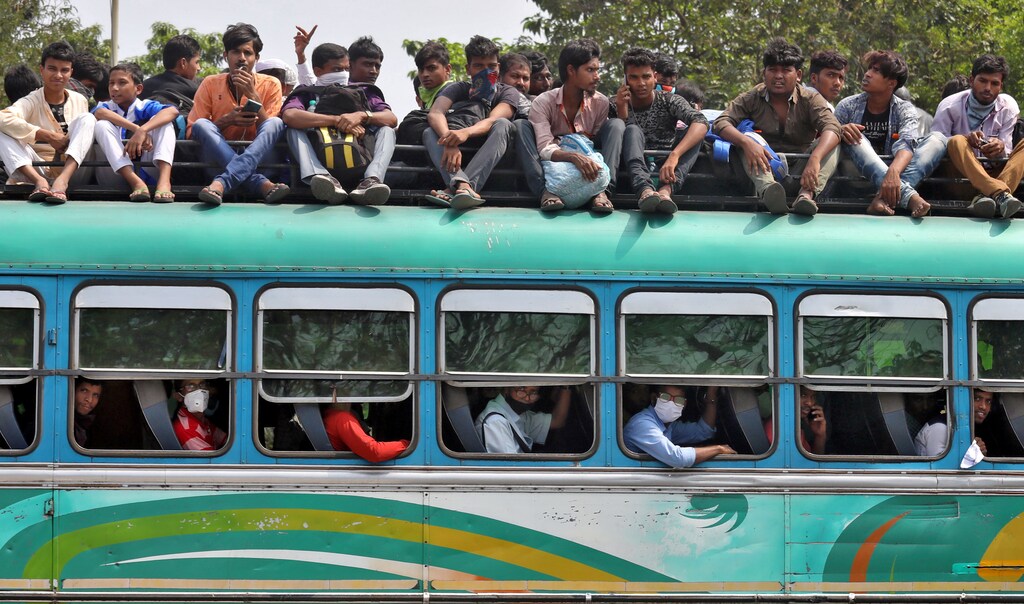
Before the lockdown began on 25 March, crowded buses returned people to their villages and towns.
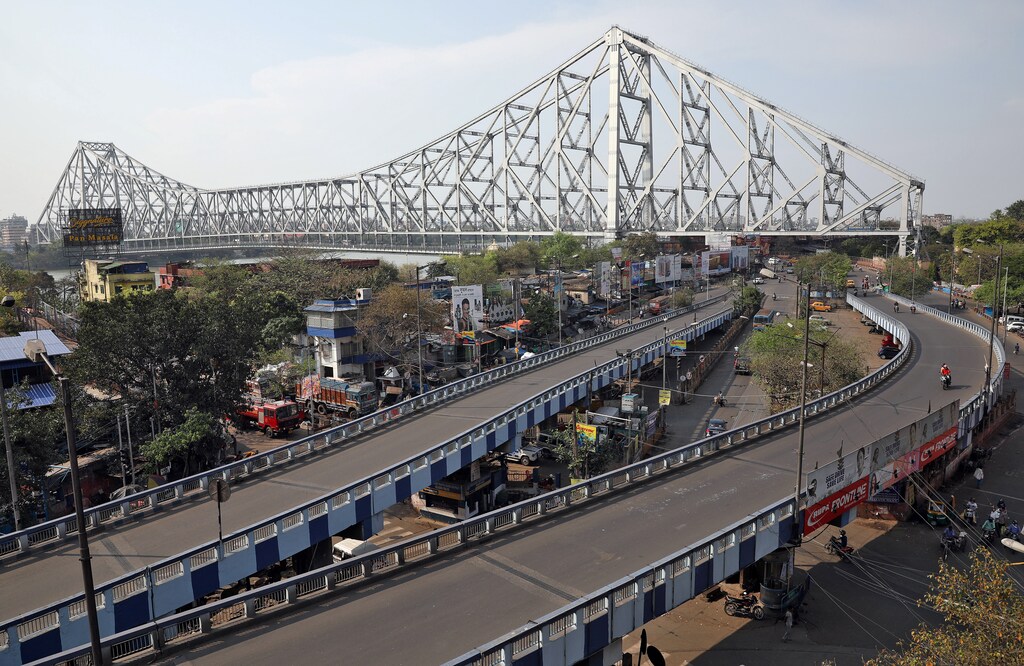
The lockdown has emptied roads, including this main highway in Kolkata.
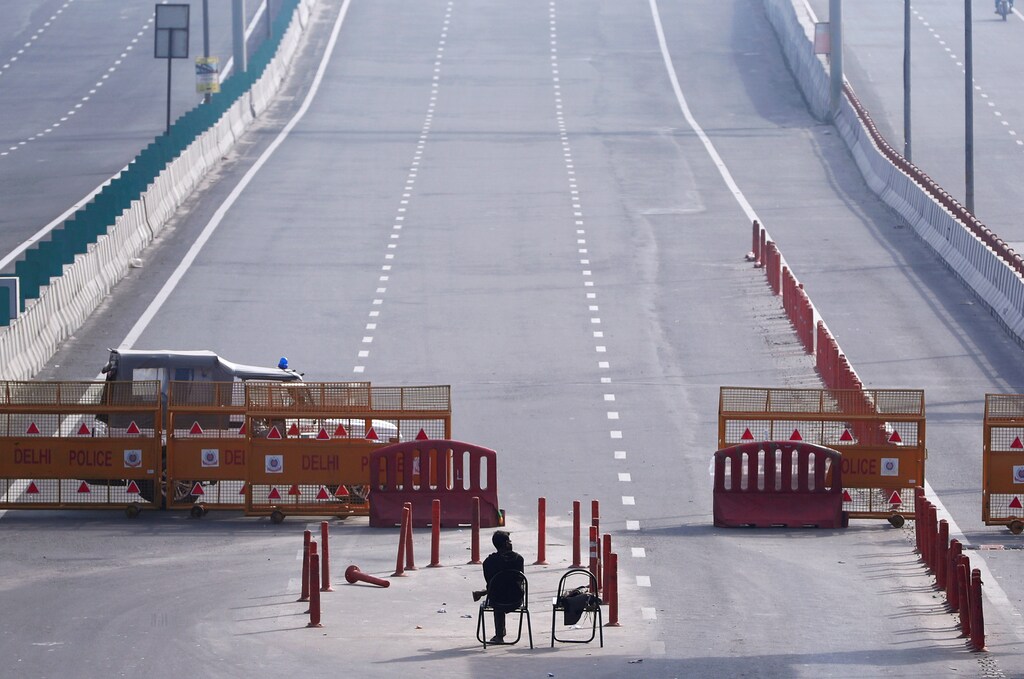
Barricades went up as New Delhi and other cities closed roads.
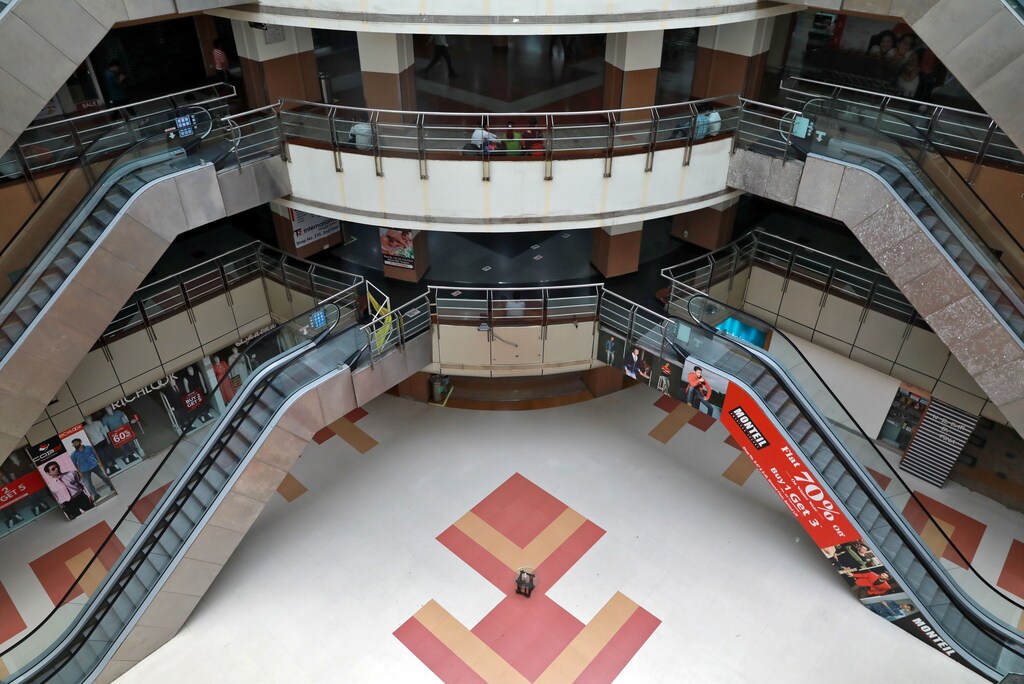
Government restrictions on public gatherings have left usually bustling places such as shopping centres deserted.
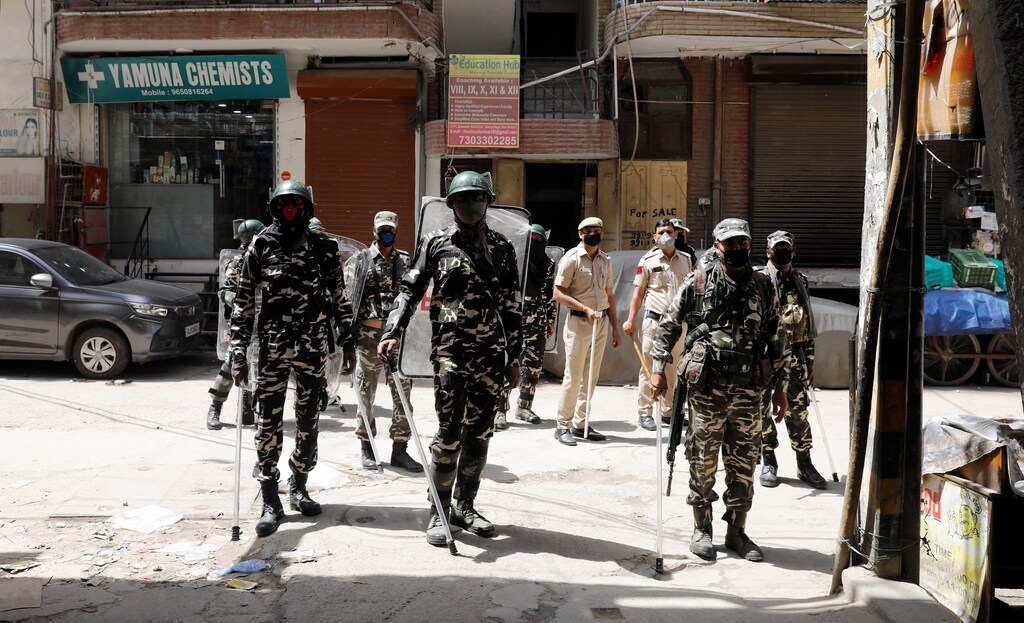
People are only permitted to venture out of their homes in emergencies or to buy essential food or medicines, with paramilitaries and police officers on the streets to enforce the ban.
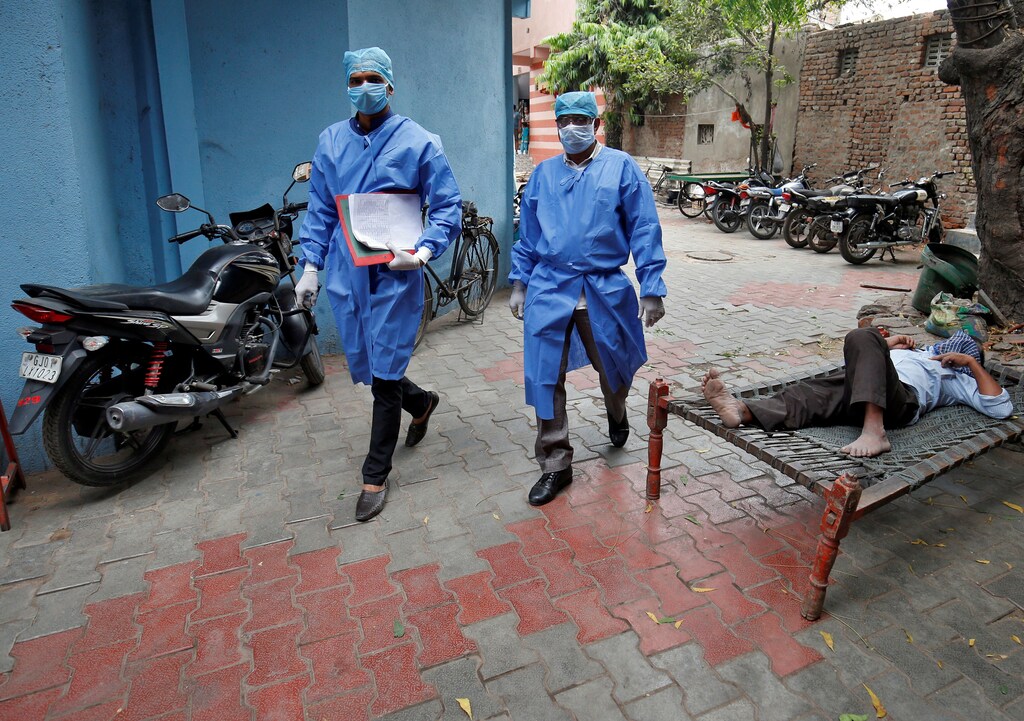
Dressed in protective gear, police officers arrive in a residential area of Ahmedabad to check on people under home quarantine.
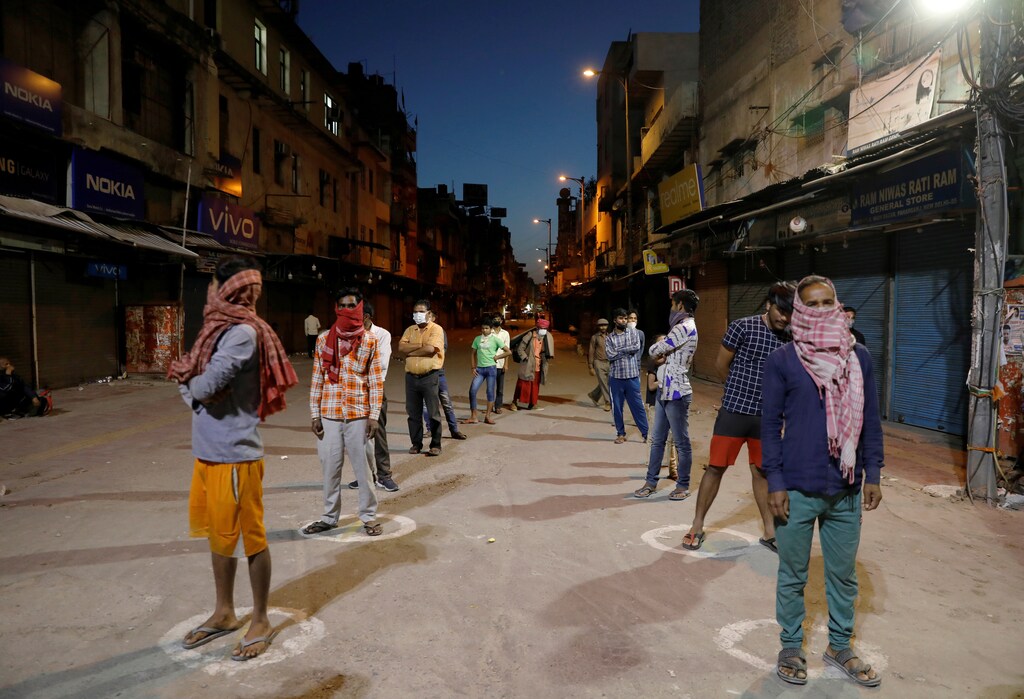
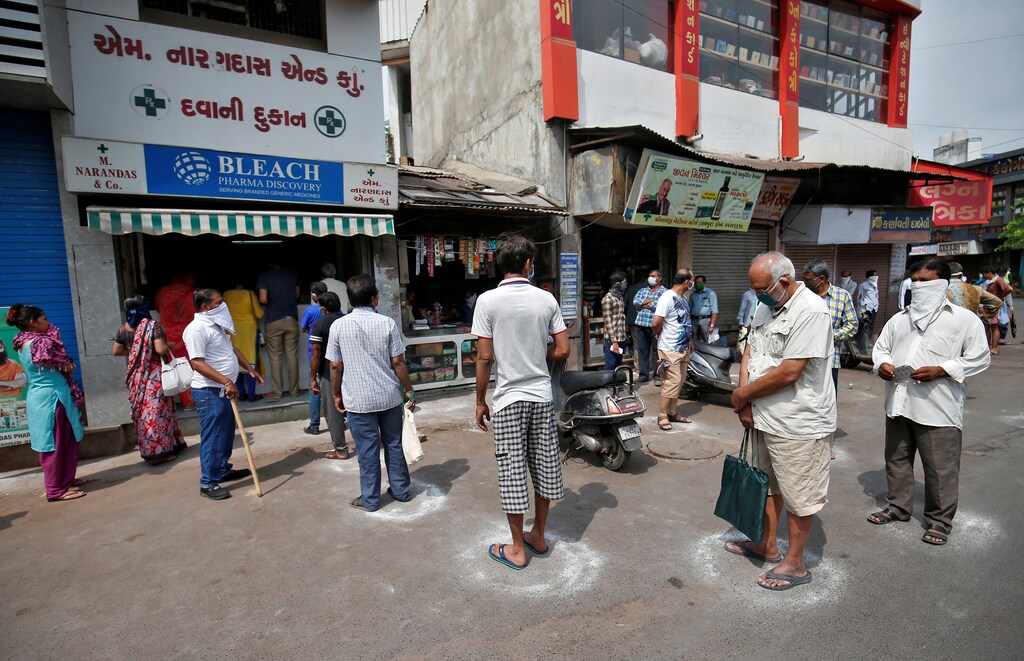
People stand in chalk circles to maintain a safe distance from others, while they queue for medicine in Ahmedabad.
Hospitals, police and other essential service providers are exempt from the stay-at-home restrictions, and grocery stores and pharmacies remain open.
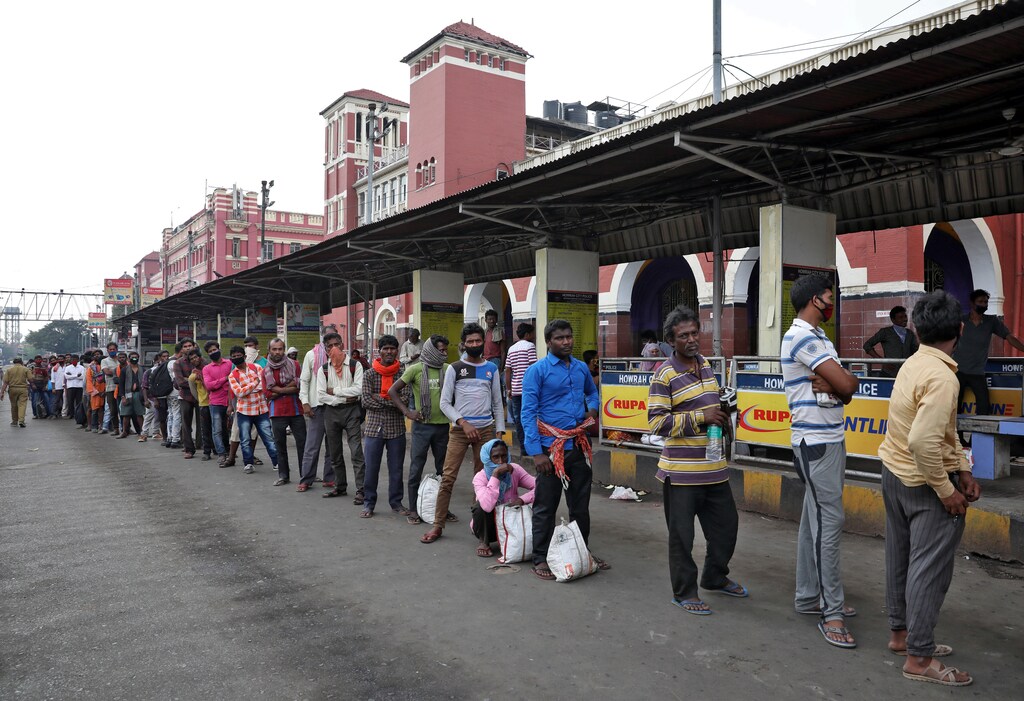
Migrant workers wait in line to receive free food outside Kolkata’s Howrah railway station.
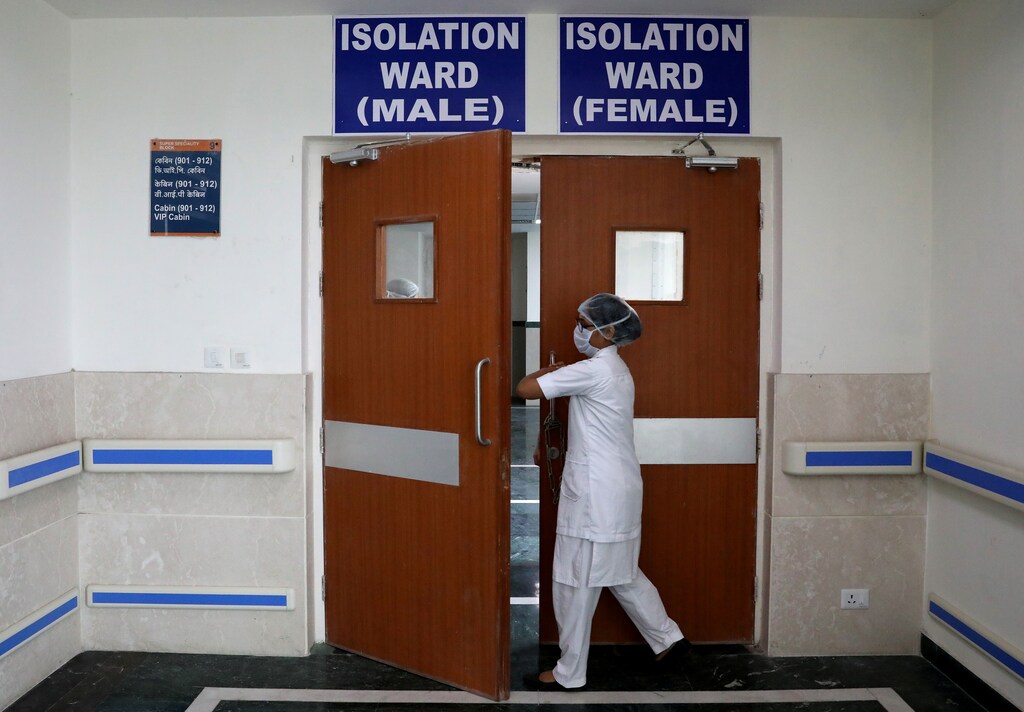
In Kolkata, a medical worker enters a new isolation ward for people with COVID-19 symptoms.
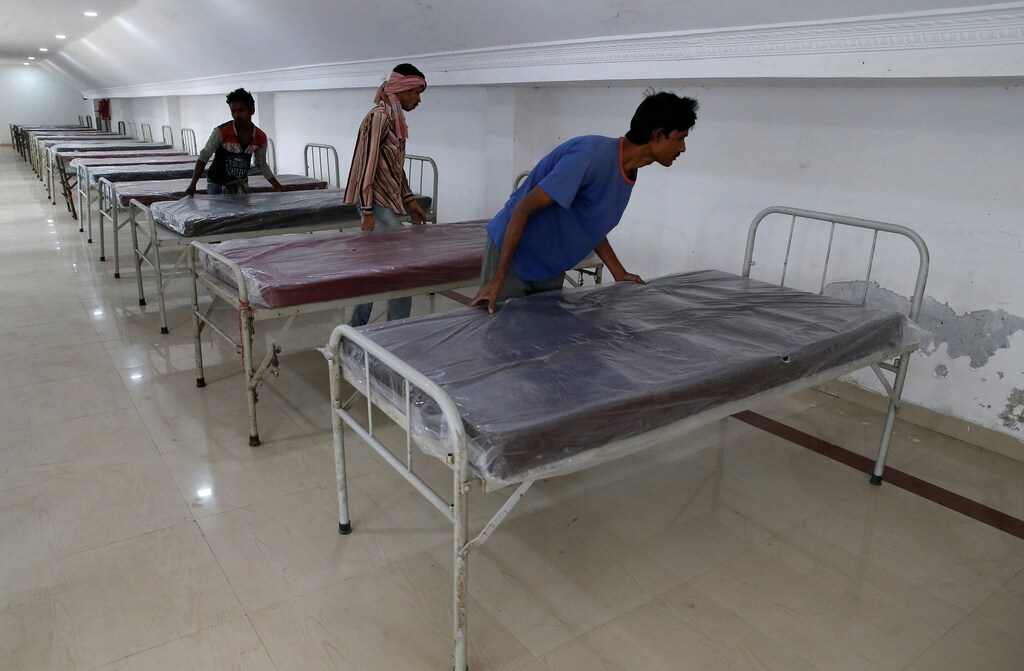
Beds are prepared in a quarantine facility. India’s Ministry of Defence has set up seven additional quarantine facilities to receive Indian citizens returning home from countries affected by coronavirus.
As the number of COVID-19 cases worldwide continues to climb, efforts to slow the spread of the virus have led to a quarter of the global population living under lockdown conditions.