This daily round-up brings you a selection of the latest news updates on the COVID-19 coronavirus pandemic, as well as tips and tools to help you stay informed and protected.
Today's top stories: A new outbreak in Beijing; European countries begin to reopen borders; and 22% of the global population could be at risk of severe COVID-19.
1. How COVID-19 is affecting the globe
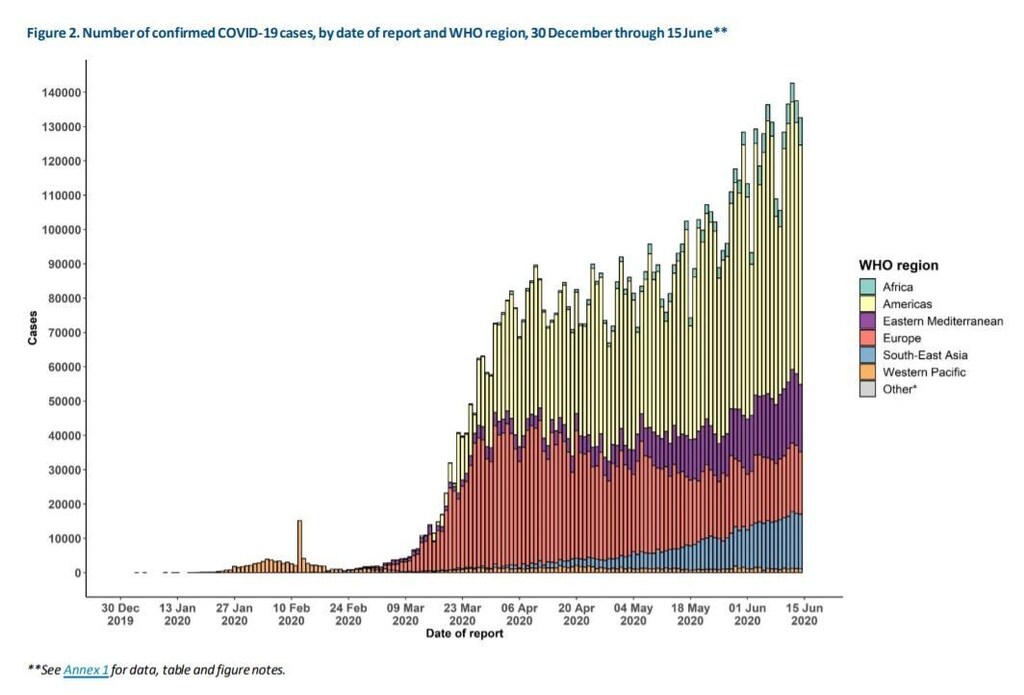
Confirmed coronavirus cases have now surpassed 8 million worldwide, according to Johns Hopkins University. More than 436,000 people have died from the virus, while over 3.8 million have recovered.
Chinese capital Beijing is reintroducing lockdown measures and mass testing after a new cluster of cases emerged from a food market.
New Zealand has two new confirmed cases of coronavirus, ending its run of 24 days with no new cases.
Germany and France have reopened their borders to other EU countries, with Spain to follow on 21 June.
The US Food and Drug Administration has revoked the emergency use in hospitals of chloroquine phosphate and hydroxychloroquine sulfate, amid concerns over their effectiveness and the potential risk of harmful side effects.
2. WHO responds to the new outbreak in Beijing
In a media briefing on 15 June, the World Health Organization (WHO) offered its help to Chinese authorities, as it reimposes lockdown measures following a new cluster of confirmed COVID-19 cases in Beijing.
As of 16 June, there have been 106 new cases in five days in the city - after more than seven weeks with no new cases. The new outbreak has been linked to the city's largest wholesale market.
3. Study: 1.7 billion at risk of severe COVID-19
It's estimated that around 22% of the global population - or 1 in 5 people - have an underlying health condition that puts them at greater risk of severe COVID-19, according to new research.
A modelling study published in the Lancet used data from the WHO and health agencies in the US and UK to compile a list of 11 categories of underlying conditions that could increase the risk of hospitalization with severe COVID-19.
It includes cancer patients undergoing treatments that weaken the immune system, and those with diabetes, HIV/AIDS and diseases of the heart and lungs.