This daily round-up brings you a selection of the latest news updates on the COVID-19 coronavirus pandemic, as well as tips and tools to help you stay informed and protected.
Top stories: July was the worst month so far, stricter lockdown imposed in Australia's Victoria and WHO chief calls COVID-19 a 'once-in-a-century' crisis.
1. How COVID-19 is affecting the globe
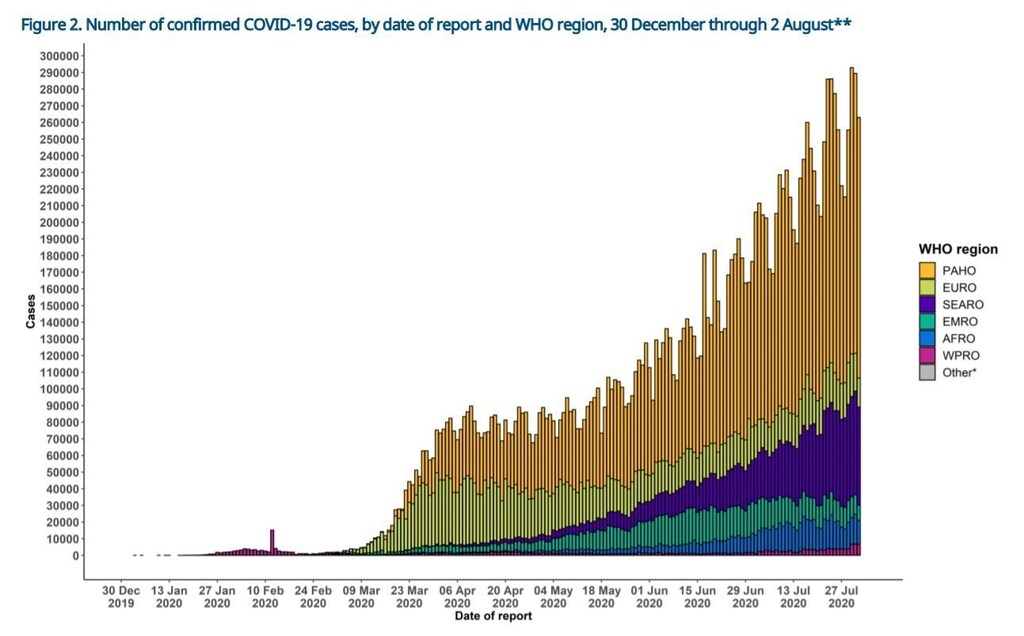
Confirmed cases of COVID-19 have topped 18 million around the world, according to Johns Hopkins University of Medicine. The number of confirmed coronavirus deaths now stands at more than 689,000.
July was the worst month for cases since the outbreak began in many countries, the Guardian reports. Nearly 8 million cases were recorded in July alone.
Cases in Latin America, the world's worst-affected region, have neared 5 million with 200,000 deaths recorded on 1 August.
Stricter measures are being imposed in the state of Victoria, Australia, after a 'state of disaster' was declared. An overnight curfew has been imposed, schools have closed and only one member of the household is allowed to leave once a day, to pick up essentials.
The US is entering 'new phase', with the virus widespread in both rural and urban areas, White House expert Dr Deborah Birx told CNN.
Manila and surrounding provinces in the Philippines are going back into lockdown from 4 August, as infections jumped to more than 100,000.
The outbreak in Danang, Viet Nam has spread to at least four factories, with a workforce of around 3,700.
2. WHO chief: COVID-19 'once-in-a-century' crisis
The Director-General of the World Health Organization said the COVID-19 pandemic is a "once-in-a-century health crisis" which will have effects "felt for decades to come".
Dr Tedros Adhanom Ghebreyesus was speaking at the fourth meeting of the Emergency Committee on COVID-19 at which it was unanimously agreed the outbreak still constitutes a public health emergency of international concern (PHEIC).
"Many countries that believed they were past the worst are now grappling with new outbreaks," he added.
"Some that were less affected in the earliest weeks are now seeing escalating numbers of cases and deaths. And some that had large outbreaks have brought them under control."
The WHO first declared a PHEIC on 30 January - when there were fewer than 100 cases and no deaths outside China.
The committee advised countries to support research efforts and enable equitable allocation of diagnostics, therapeutics and vaccines.
3. Ninety-minute COVID-19 tests to be rolled out in UK
Testing times for COVID-19 will be cut from up to 48 hours to just 90 minutes in Britain, with new on-the-spot tests available next week.
Millions of DNA and swab tests will be sent out to hospitals, care homes and laboratories, Reuters reports, which can also detect influenza - and won't need to be administered by a health professional.
Health secretary Matt Hancock said: “The fact these tests can detect flu as well as COVID-19 will be hugely beneficial as we head into winter, so patients can follow the right advice to protect themselves and others."
Meanwhile, diners in the UK can get 50% off their bill from 3 to 31 August at restaurants participating in the government's Eat Out to Help Out scheme, designed to kick-start the food industry.