This daily round-up brings you a selection of the latest news updates on the COVID-19 coronavirus pandemic, as well as tips and tools to help you stay informed and protected.
Top stories: WHO warns of resurgence in Europe, Mexico's surge, and the true figure for US cases could be 10 times higher than reported.
1. How COVID-19 is affecting the globe
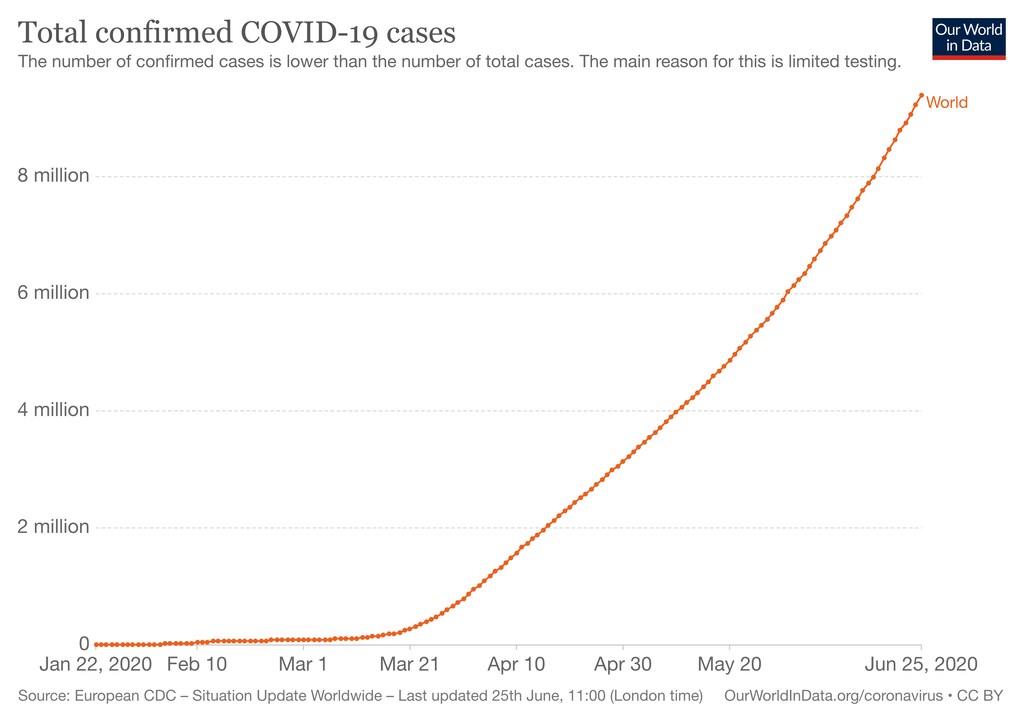
Confirmed cases of coronavirus around the globe have surpassed 9.6 million, according to Johns Hopkins University. More than 489,000 people are known to have died from the virus, while over 4.8 million are known to have recovered.
The US had a record high of new COVID-19 cases, with 39,818 recorded on 25 June, the largest one-day increase of the pandemic. Texas, one of the worst-affected states, has paused its easing of lockdown.
The death toll in Mexico has passed 25,000 as cases surge in Latin America.
South Africa, the worst-affected country in Africa, has recorded more than 118,000 cases, with more than 2,200 deaths.
The WHO warned there has been a "significant resurgence" of cases in Europe with 30 countries seeing increases in new cumulative cases over the past two weeks.
New Zealand Prime Minister Jacinda Ardern launched the country's ski season and said tourism would feel "a significant impact" of no foreign visitors.
2. CDC: Only 1 in 10 US cases likely to have been identified
The true number of coronavirus cases in the United States could be 10 times higher than previously thought, according to the director of the Centers for Disease Control and Prevention.
In a media briefing on 25 June, Dr. Robert Redfield said: “We probably recognized about 10 percent of the outbreak.”
The current total stands at 2.4 million confirmed cases, according to Johns Hopkins University, which would mean there could in fact be more than 20 million.
Redfield said that between 5% and 8% of Americans have been infected to date, according to estimates based on antibody test results from across the country.
3. Severe COVID-19 'uncommon' in children
Children in Europe are very unlikely to die from COVID-19, according to a cohort study of 25 countries published in the Lancet.
Led by researchers from the UK's Great Ormond Street children's hospital, the largest clinical study of children outside China looked at 582 young patients, aged from 3 days to 18 years, who were infected with coronavirus.
The researchers said: "Our data show that severe COVID-19 is uncommon in young children, including infants, despite their immune maturation being incomplete."