World Malaria Day is observed every year on 25 April.
While progress has been made on malaria prevention and control over the past two decades, there is still much work to be done, says Statista.
There were an estimated 619,000 deaths caused by the disease in 2021 - down from 897,000 in 2000.
World Malaria Day, observed every year on April 25, "is an occasion to highlight the need for continued investment and sustained political commitment for malaria prevention and control". In 2023, the theme as designated by the World Health Organization is "Time to deliver zero malaria: invest, innovate, implement".
How is the World Economic Forum improving the state of healthcare?
The Centre for Health and Healthcare connects leaders to make sense of challenges facing health systems worldwide, including access, equity, resilience and preparedness.
Through trusted dialogue and public-private collaboration, the Centre enables partners to align around shared priorities and advance collective action to improve health outcomes.

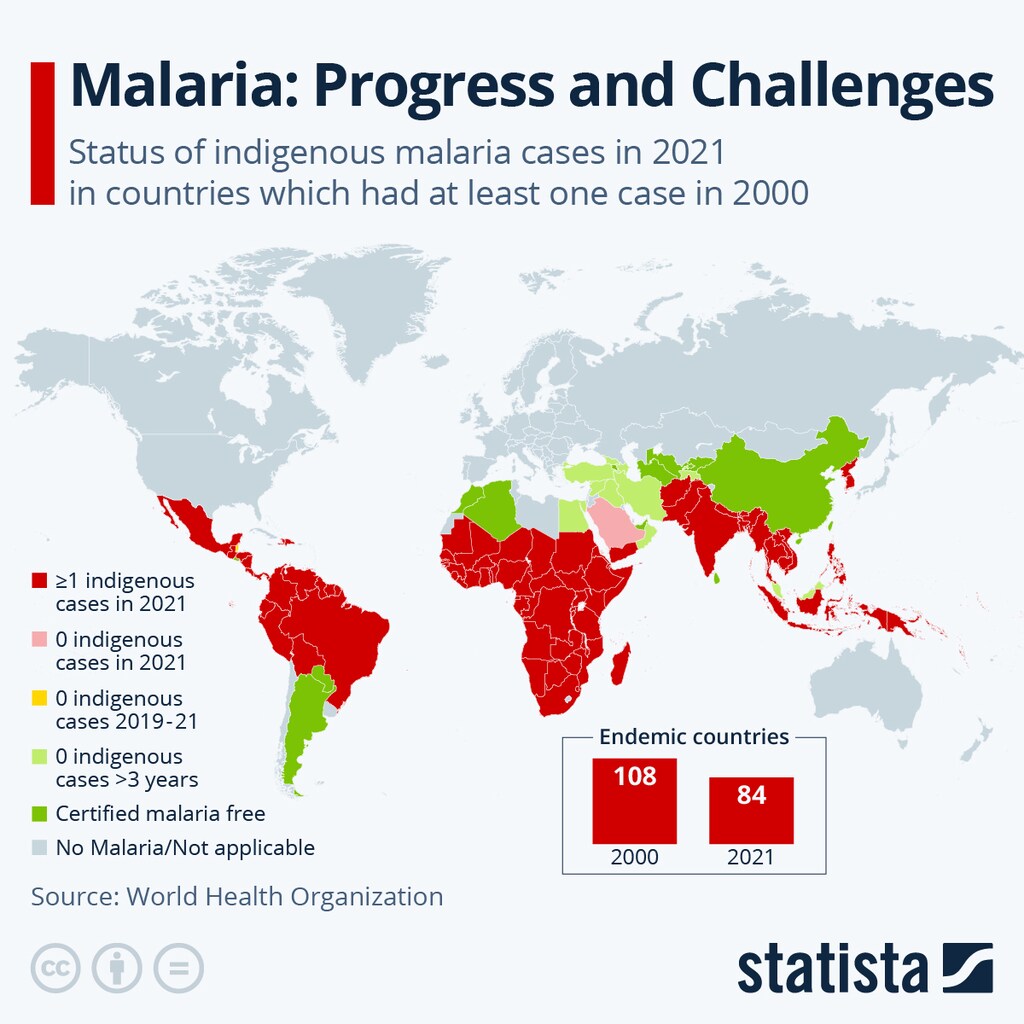
As this infographic shows, while progress has been made over the last two decades, there is still an incredible amount of work to be done. Globally in 2000 there were a total of 108 endemic countries. By 2021 this had dropped to 84, yet nearly half of the world's population was still classified as 'at risk' of malaria. There were an estimated 619,000 deaths caused by the disease in 2021 - down from 897,000 in 2000.