Women’s health is gaining more investment and attention, creating an opportunity to connect the dots more effectively in women's healthcare.
Women’s health has long been recognized as important but largely under-addressed in health and healthcare. Over the past few years, however, it has moved to the forefront of the global health policy agenda.
Governments, international organizations, researchers and the private sector have made a compelling case for why investing in women’s health matters: to improve health outcomes and advance equity, strengthen economies and build more resilient societies. This progress should be celebrated.
Much of the momentum has focused on a singular question – why should we invest in women’s health – which continues to shape policy, research and investment worldwide. It is therefore time we ask another: assuming we all agree that women's health matters, what are we still missing?
Recognizing opportunities beyond the immediate clinical encounter
Health systems themselves are changing. The population is ageing, the burden of non-communicable diseases is growing and rising fiscal pressures are forcing countries to think differently about how health systems create value.
At the same time, advances in genomics, digital technologies, artificial intelligence (AI), and new models of care are transforming how health information is generated, connected and used.
These advances allow us to move beyond basic responsiveness to identify opportunities for earlier intervention and ongoing support for better long-term health. Viewed through this changing landscape, women’s health looks different.
A recent article from The Lancet described women’s health as “precision medicine’s unfinished business.”
This highlights how growing understanding of female biology reveals connections across diseases, biological systems and the different stages of women’s lives that traditional organ- and speciality-based approaches do not always capture.
At the same time, recent analysis has raised questions about where growing investment in women’s health is flowing, particularly whether sufficient investment is reaching the underlying biology, evidence and clinical validation needed to translate innovation into meaningful improvements in care.
This raises an important health-system question: as we become better at recognizing these connections, are our health systems equipped to act on them?

How health conditions can expose long-term implications
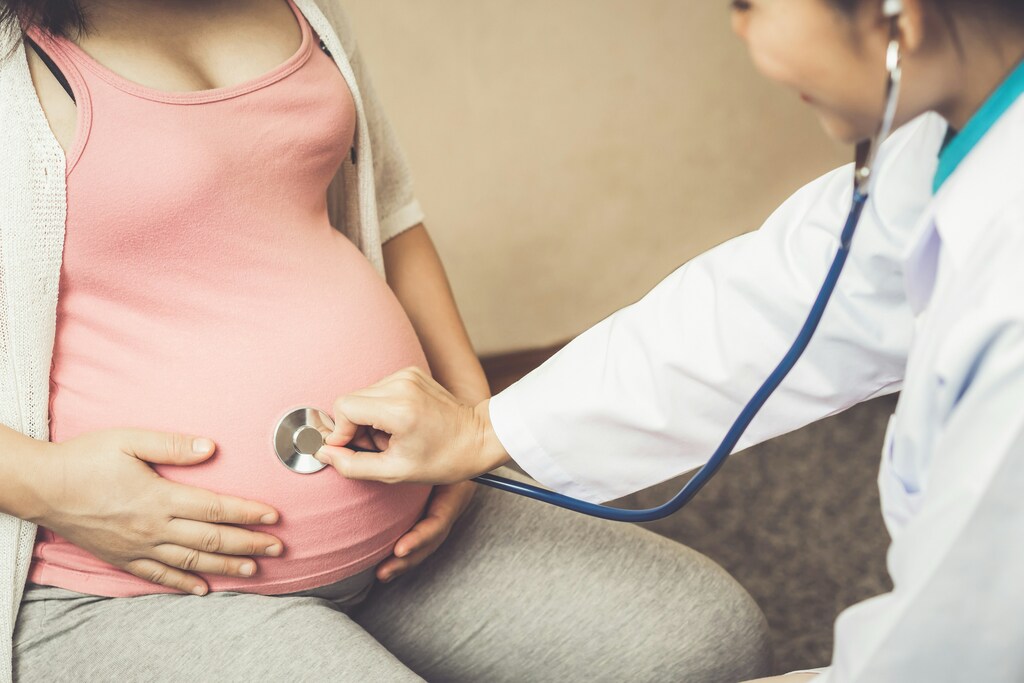
Consider pregnancy. Gestational diabetes is not only a condition requiring care during pregnancy; women who experience it face a substantially higher risk of developing type 2 diabetes later in life.
Similarly, pre-eclampsia is associated with an increased risk of future hypertension and cardiovascular disease. Our understanding of pre-eclampsia itself is also evolving.
A recent World Health Organization led global consultation proposed recognizing it as a multi-organ disorder that can be detected through six weeks postpartum, creating an opportunity to strengthen continuity between antenatal and postnatal care.
These conditions can also provide information relevant to the child’s future health, although the pathways are complex and reflect a combination of biological, genetic and environmental factors.
Pregnancy therefore provides an opportunity to address an immediate health need and generate information whose relevance may extend well beyond pregnancy.
Similar patterns are visible elsewhere. Polyendocrine-metabolic ovarian syndrome, formerly known as polycystic ovary syndrome, can carry longer-term cardiometabolic implications, while the menopausal transition is increasingly being considered alongside bone, cardiovascular and metabolic health.
How to learn from experience
The evidence is not equally mature across these areas but together they raise a broader question: what happens when we recognize a signal but our health systems are not designed to act on it?
Better science and diagnostics can help identify risk earlier but identifying risk does not, by itself, improve health. Information needs to reach the right part of the health system. Someone needs to be responsible for acting on it, appropriate interventions must exist and women need to be able to access the follow-up care those insights require.
These connections do not always happen. Information generated during pregnancy, for example, may remain within maternity care even when it has implications for longer-term cardiovascular or metabolic health.
However, fragmented information, unclear accountability and weak transitions between different parts of healthcare are not exclusive to women’s health. Health systems have been grappling with them for decades.
Perhaps that is precisely where an opportunity lies. Women’s health does not need to solve these challenges from scratch. Other areas of healthcare have accumulated experience in becoming more preventive, proactive and connected over time.
Paediatrics has embedded preventive contact points across stages of development. Cardiovascular prevention has demonstrated how risk information can inform earlier action. Meanwhile, diabetes prevention has shown the value of connecting elevated risk with structured interventions.
The populations, conditions and health-system environments are different but they provide something potentially more useful – experience. The opportunity may be to borrow the lessons, rather than the models themselves.
What has worked and what hasn't
Learning from what has worked — and what hasn't
Learning from failures matters just as much. Experience from cancer survivorship has shown that creating a handover document does not necessarily improve continuity of care when responsibility and follow-up remain unclear.
Similarly, evidence from sex-specific cardiac diagnostics shows that identifying more women at risk does not automatically improve outcomes if appropriate management pathways are not followed.
There is an important lesson here. More information is not necessarily better care. More screening is not necessarily better prevention. The value comes when health systems can connect information to deliver meaningful action.
Such action is also likely to occur outside the traditional walls of healthcare, for example, in the workplace. Japan offers a useful case study in how the government has made women's health a business metric.
As women’s health continues to gain policy attention, the opportunity is therefore not only to ask what needs to change but what healthcare already knows about how to change it.
That might mean strengthening connections between maternity and primary care, ensuring clinically relevant information follows women across care settings or considering how existing interactions across women’s lives can support appropriate prevention and earlier intervention.
The solutions will differ across countries and resource settings. The objective is not to create more healthcare simply because more information is available, nor to medicalize every stage of a woman’s life. It is to recognize where information can meaningfully improve future health and build the pathways necessary to act on it.
The momentum behind women’s health has helped establish why change is needed. Perhaps the next phase is about learning how to deliver that change, drawing on the successes and failures of health systems that have already tried to become more preventive, proactive and connected.
Women’s health may not need a completely new model of care but it may need us to make better use of what healthcare has already learned.