Food security and self-sufficiency are hot topics in nations around the world, as we look to create a more sustainable future for ourselves and the Earth. Equally, tackling hunger, famine and undernourishment are key objectives for the Sustainable Development Goals (SDGs) – farming and agriculture practices have a key role to play in this.
But which country has the largest area devoted to permanent cropland? The following charts use 2013 World Bank data to show the countries with the highest percentage, and those with the largest total area.

Tuvalu, the tiny Polynesian island nation where 60% of the total land area is devoted to permanent crops, comes first. Second is São Tomé and Príncipe, with 40.6%. The top three is completed by Kiribati, with 39.5%.
The list is dominated by some of the world’s smaller nations, but major Asian economies Malaysia and the Philippines feature in ninth and 10th place.

Indonesia tops the chart showing countries with the largest overall area, with 225,000 square kilometres taken by permanent cropland, or 12.4% of its total. Second on the list is China, with 160,000 sq km – some 1.7% of its total land area. Completing the top three nations is India, where 130,000 sq km is given over to permanent crops.
The world’s largest nations feature prominently in this second chart, from China and India to Brazil and Canada. The only countries to feature on both lists are Malaysia and the Philippines.
Have you read?
To keep up with the Agenda subscribe to our weekly newsletter.
Author: Joe Myers is a Digital Content Producer at Formative Content.
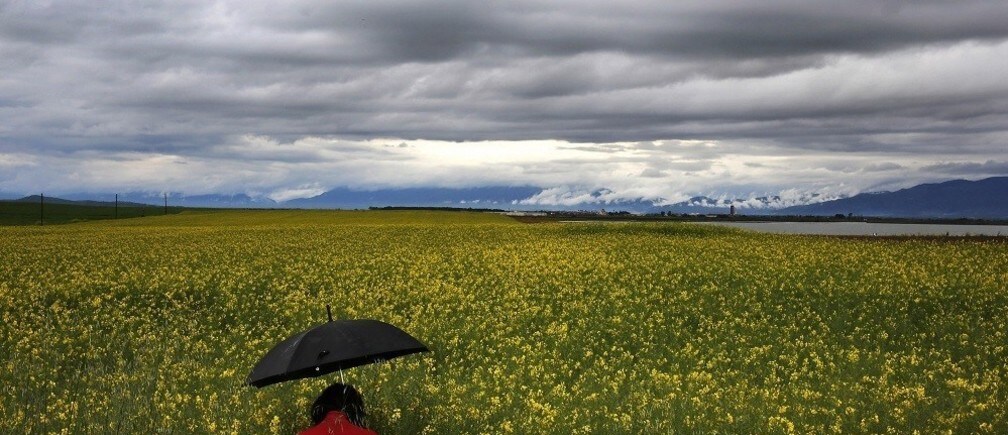
Image: A woman walks through a field, April 18, 2014. REUTERS/Yannis Behrakis