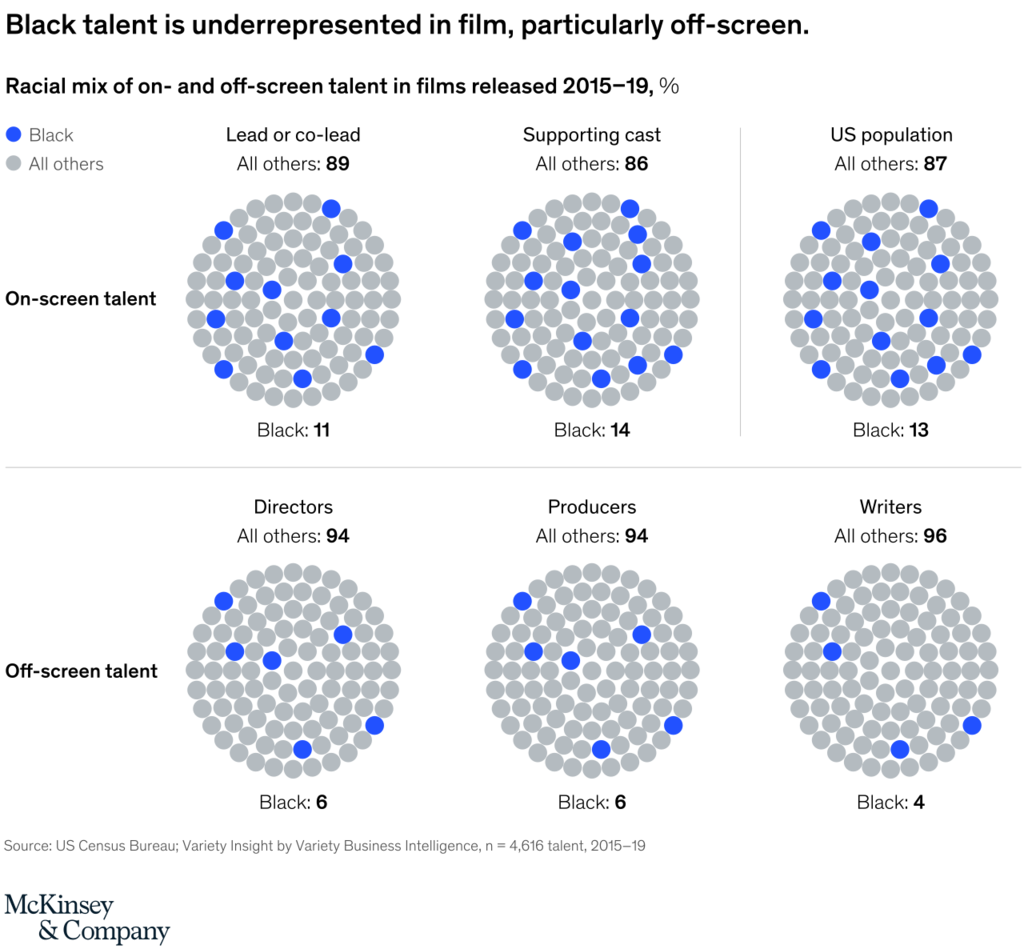
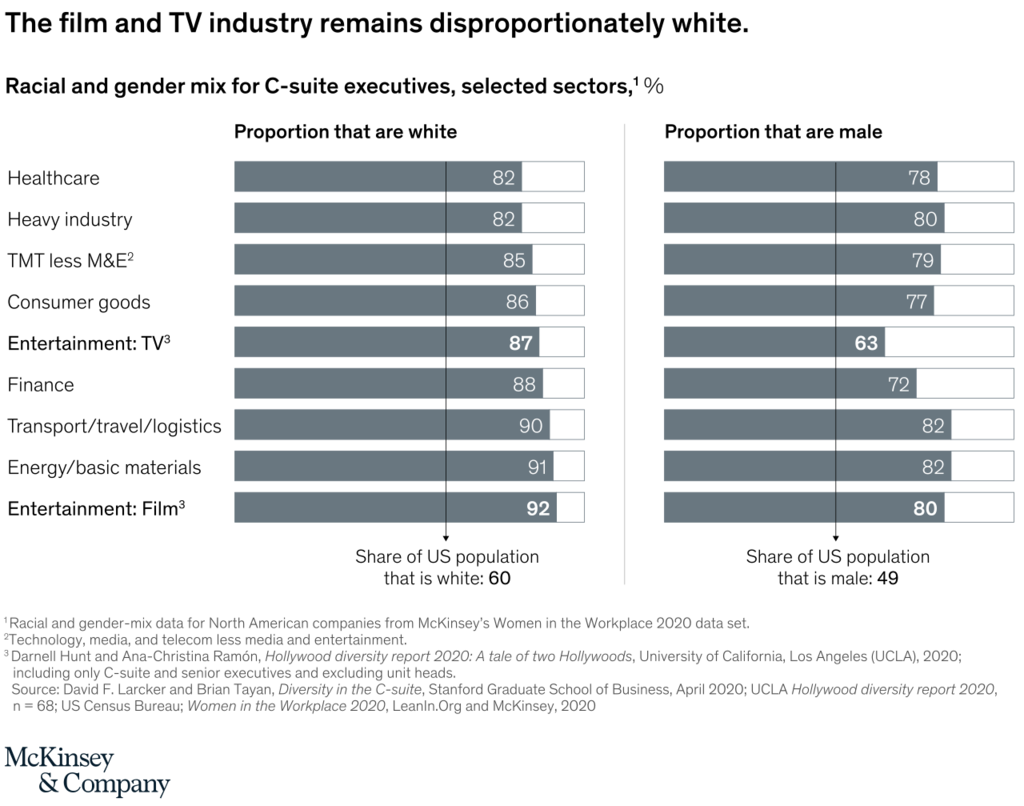
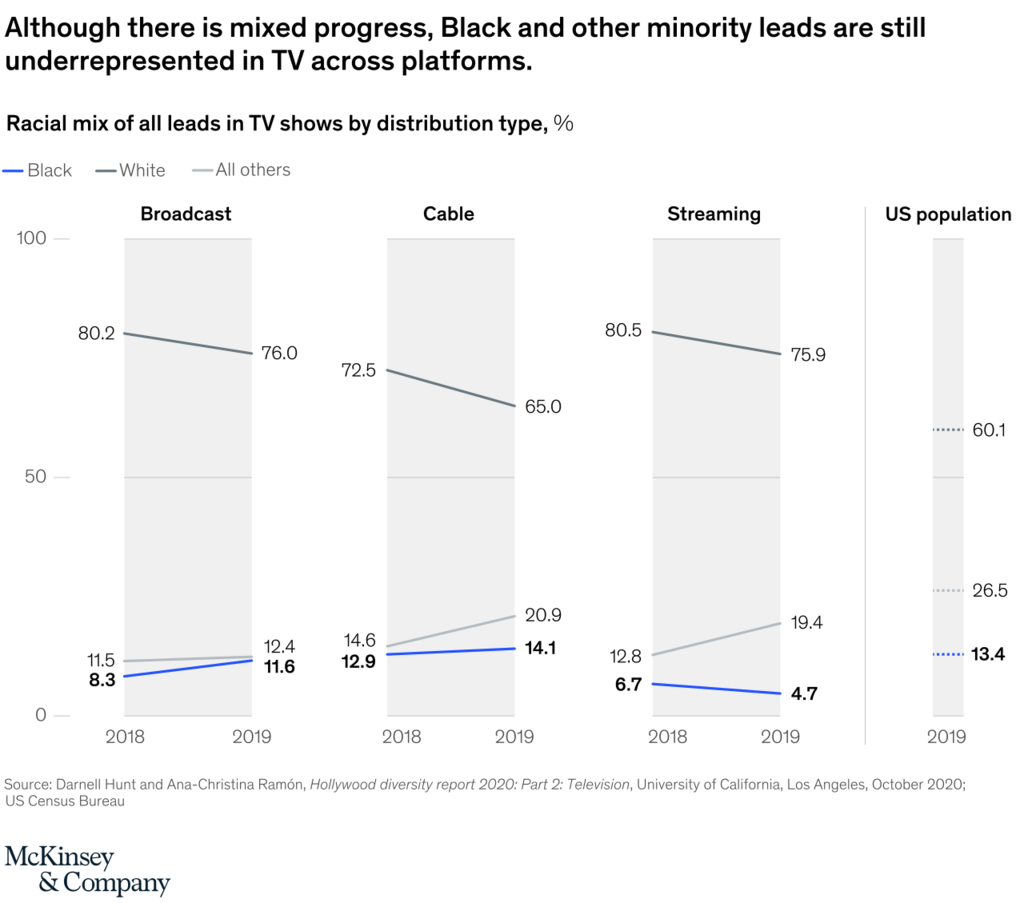
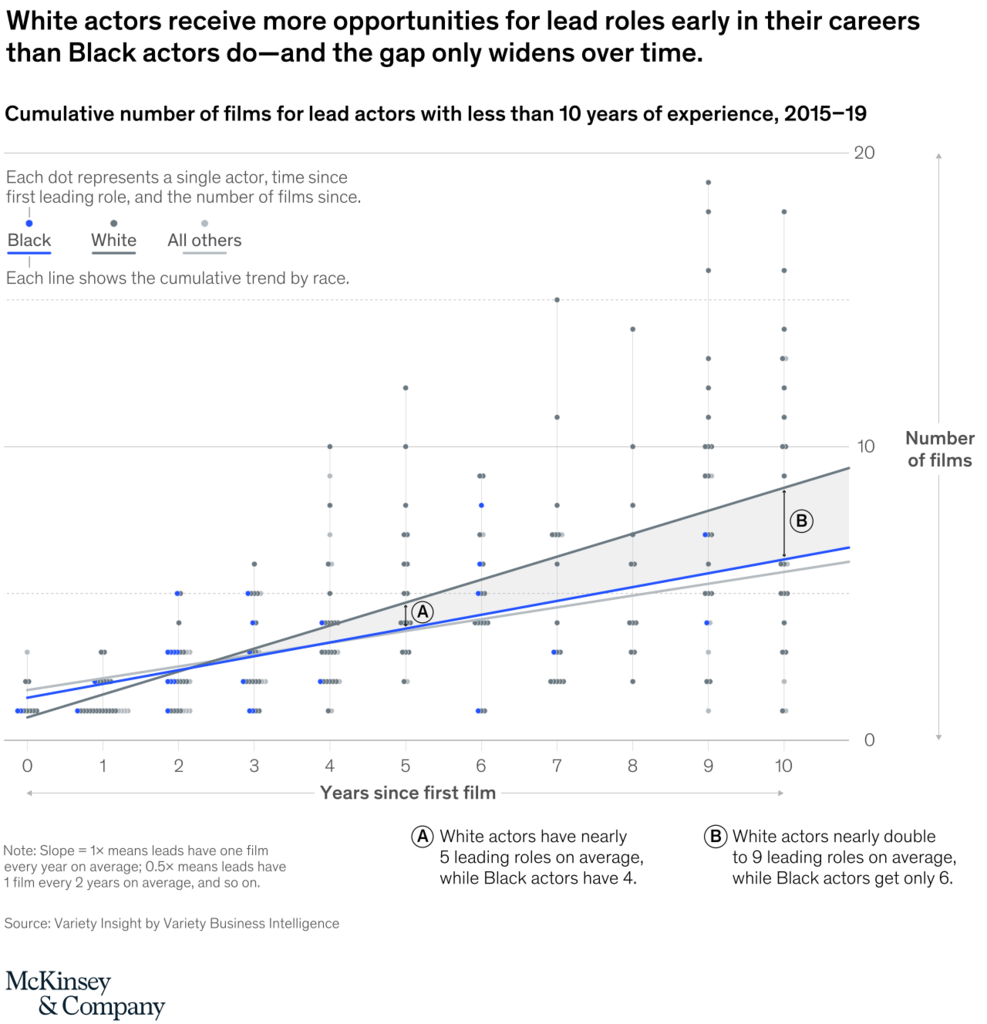
Black people are significantly under-represented in the film and TV industry, according to a McKinsey report.
Increasing opportunities for Black people in film and TV could improve equality and also generate over $10 billion in annual revenues across the industry.
The report also showed that few Black people are given creative, off-screen roles.
Here are four measures to improve diversity and inclusion in the film and TV industry.
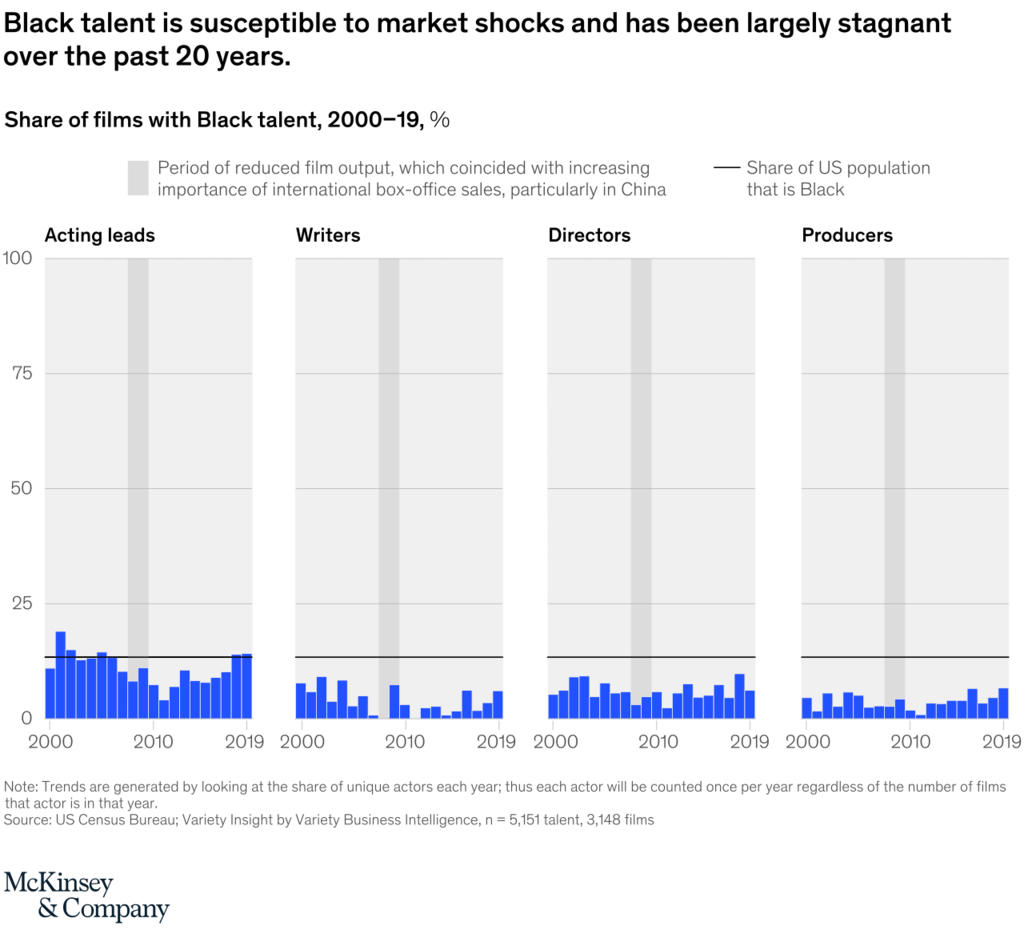
Black professionals are substantially underrepresented in film and TV, and the relatively few that do find success must bear the lion’s share of responsibility for creating opportunities for other Black people. Barriers to inclusion run deep and wide, extending from the most junior positions to the most senior.
Talent is missing out and so are audiences. Mckinsey estimate that closing the opportunity gap could generate more than $10 billion in annual revenues across the industry, the equivalent of a 7 percent expansion in baseline revenues.
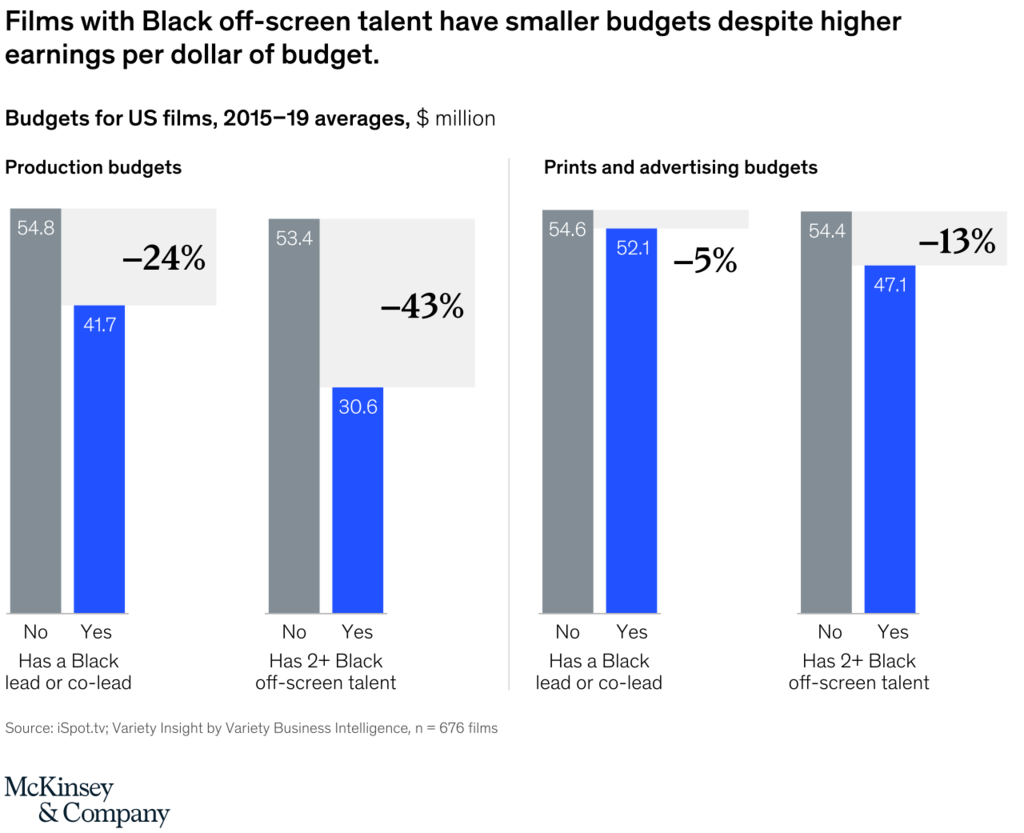
Mckinsey's new report, Black representation in film and TV: The challenges and impact of increasing diversity, examined data on thousands of productions and interviewed more than 50 industry professionals. It found that not only do fewer Black-led stories get told, their projects receive less funding and are quicker to be shelved. In all, less than 6 percent of writers, directors and producers on US films are Black.
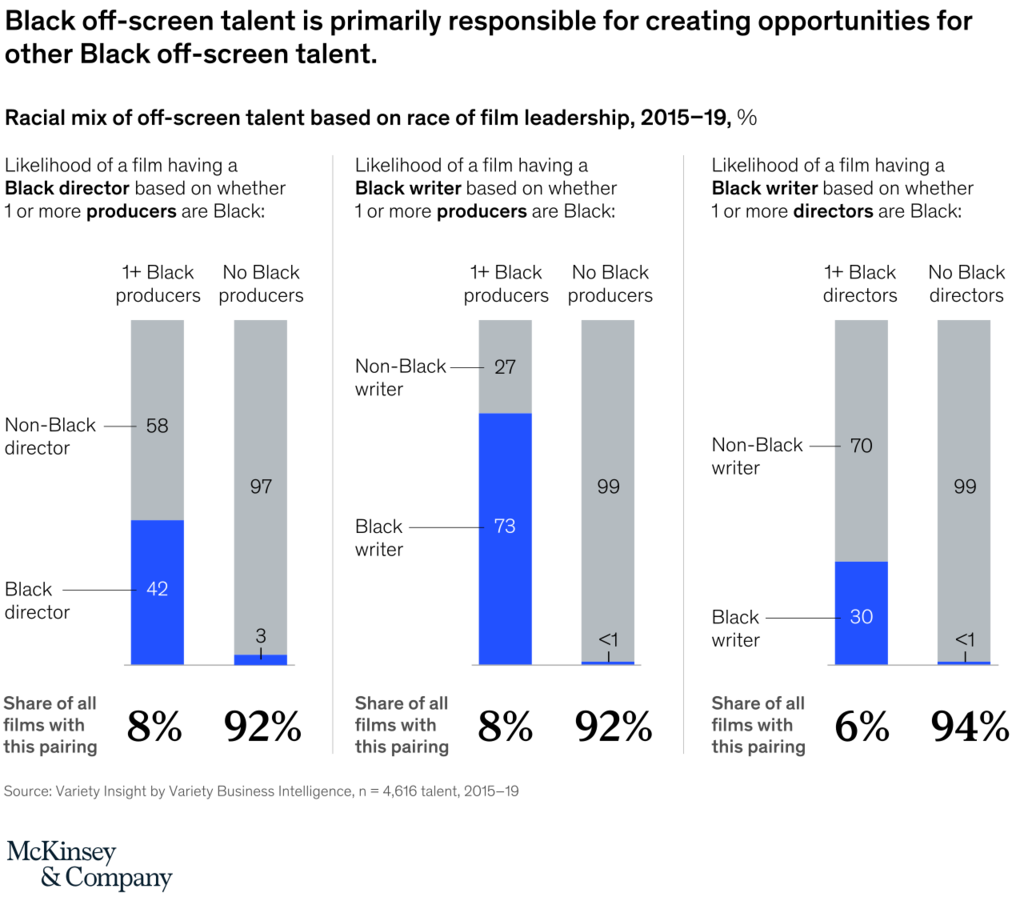
Notably, it often falls to the small number of Black artists in those key “above-the-line” positions to create room for other Black artists. While films with a Black producer or director represent a small sliver of all those produced, these productions are significantly more likely to have Black representation.
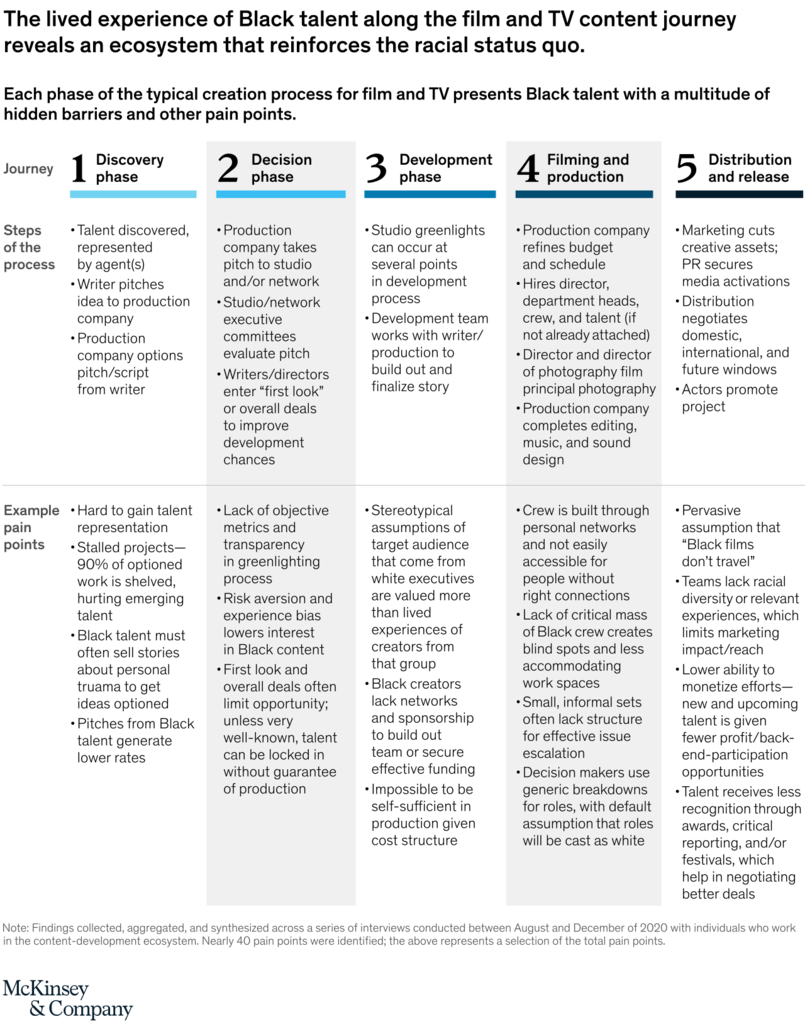
For many Black professionals, the issue is not so much glass ceilings, but steel doors. Breaking into the industry is often only possible after years of low or unpaid work. Securing that work often depends on who you know. And pitching a show effectively requires relating to it, something that’s far more difficult when decision-makers have a different lived experience.
Once in the door, there are numerous other challenges. A single flop can torpedo a career. Pigeon-holing is another problem. “…[Studios] are looking for Wakanda or poverty, with no in between,” said one creative executive. In an ecosystem designed to cater to white talent, Black talent is subject to a “Black tax”; this means having to pay out of pocket for such essentials as proper hair, makeup and lighting, or spending countless hours trying to reform the industry on their own.
Achieving equity in film and TV is a complex, system-level challenge that will require collective action. Mckinsey believe the following four measures could begin to create a more equitable and rewarding experience for all underrepresented groups.
What's the World Economic Forum doing about diversity, equity and inclusion?
The Centre for New Economy and Society connects leaders to make sense of how economic and technological change is reshaping jobs, skills and opportunity.
Through shared insight and collaboration, the Centre enables partners to explore inclusive economic models that support people and societies through transition.
1. Ensure diverse representation, especially among off-screen talent and executives, by expanding recruiting to HBCUs and state schools, looking beyond Los Angeles or New York, and formalizing mentorship and sponsorship programs.
2. Increase transparency and accountability through frequent and public intersectional reporting.
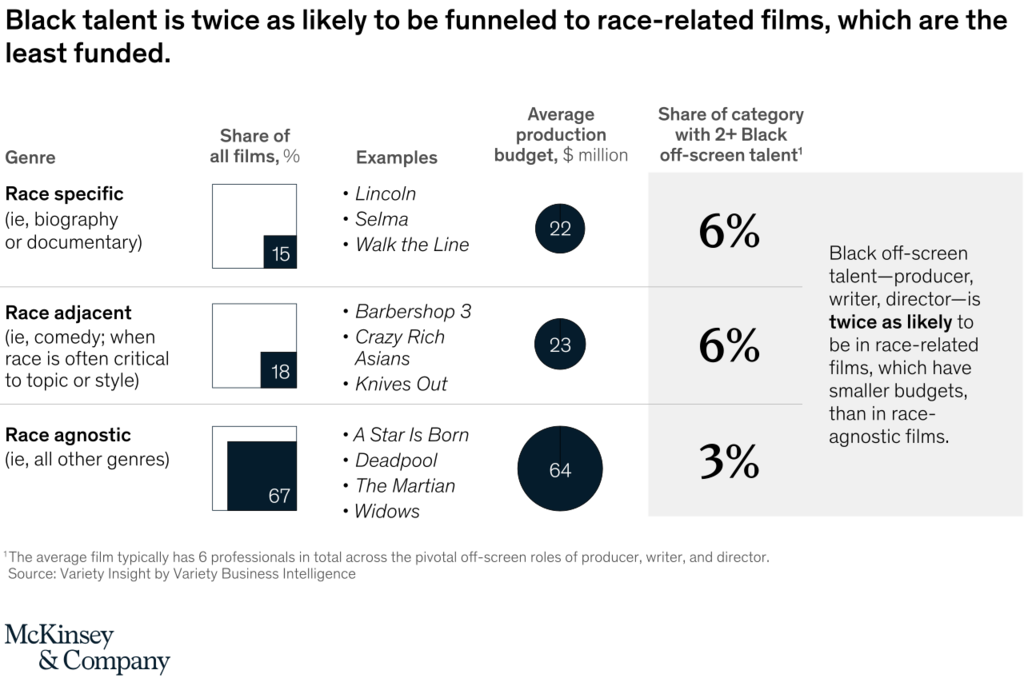
3.Support a variety of Black stories by dedicating a larger share of upfront funding to increasing diverse content and talent.
4. Create an independent organization dedicated to advancing racial equality that could develop best practices and track and report progress across the industry.
Mckinsey recognize that that there is no silver bullet to increase diversity and inclusion in the industry. But starting a concerted, multifaceted effort should put film and TV on a path to becoming more just, and also more profitable.