
This week, Meta announced that it beat its previously stated diversity goals by two years.
The company cited the increasing prevalence of remote jobs.
Research shows that underrepresented groups are more likely to prefer and stay at jobs that offer remote or hybrid work schedules.
By now, companies and employees worldwide are well aware that there are benefits and drawbacks to remote working. One benefit that corporations are experiencing is improvement in employment diversity.
This week, Meta announced that it had exceeded its diversity and inclusion goals, citing the increasing prevalence of remote jobs in the company. The tech giant—the parent company to Facebook, Instagram and WhatsApp—publicized its progress in its annual diversity report.
“For the first time, we’re hiring individuals who are fully remote and working from locations where we don’t have offices, increasing the diversity of our candidate pool and workforce,” Maxine Williams, Meta’s chief diversity officer, said in a statement.
Impact of remote work on Meta's workforce diversity
In this month’s report, Meta stated that, since 2019, the company has doubled the number of Black and Hispanic workers in the United States and the number of women globally. The announcement comes two years ahead of the company's previously stated goal to achieve the doubling by 2024. The total number of underrepresented employees—which also includes LGBTQ+ and disabled people—continued to rise as well, hitting 46.7% in 2022.
Amid the broad shift to remote work due to the COVID-19 pandemic, Meta began hiring employees for fully remote work for the first time. This reshaping, the company says, expanded and diversified its workforce and pool of potential hires. Today, over 75% of Meta staff are working with teams that span various locations.
Even before the outbreak of COVID-19, some companies were exploring how remote working could facilitate greater workplace diversity. “Let’s explore the connection between remote culture, inclusion, and human performance,” Kevin Smith, chief product officer for the remote-focused software design company Abstract, said in a 2019 company blog post.
The trend was accelerated after the pandemic forced remote work, with companies across industries noting the positive impact remote working has had on diversity and inclusion.
Aside from diversifying hiring pools, research shows that underrepresented groups are more likely to prefer and stay at jobs that offer remote or hybrid work schedules. McKinsey & Company, the global management consulting firm, found that Black employees were 14% more likely to say they would leave a job if remote work was not available than their white counterparts. LGBTQ+ employees, meanwhile, were 24% more likely to leave than their heterosexuals peers.
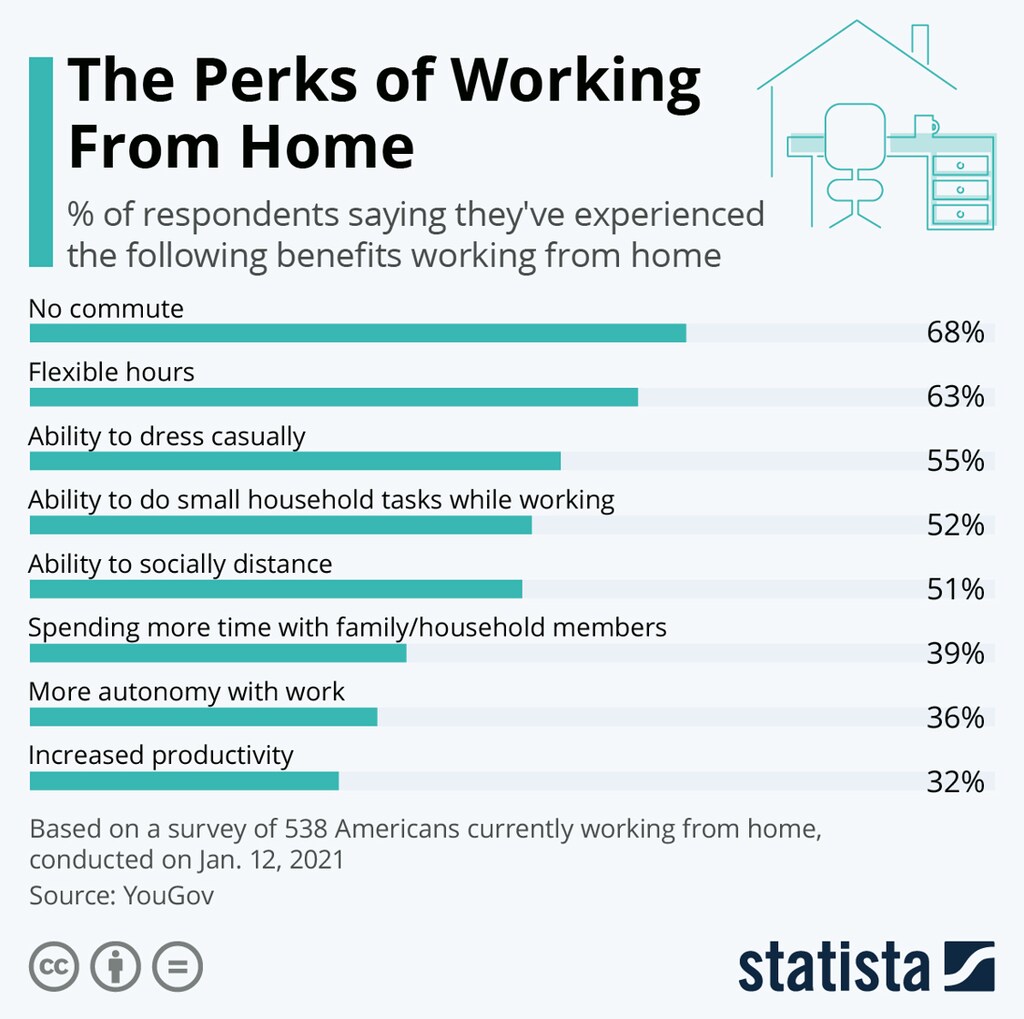
Moreover, research has shown that remote and hybrid work is effective. One survey, conducted in December 2020, found that 83% of companies polled determined that their employees could successfully work remotely.
How is the World Economic Forum promoting equality in the workplace?
The Future of Jobs Report 2023 found that 75% of companies surveyed expect to adopt AI, big data and cloud technologies in the next five years.
The Centre for the New Economy and Society provides a platform for leaders to share insights on the adoption and efficacy of new technologies, and the readiness of the workforce to use them. Our work includes developing insights and dialogue on growth, jobs, skills, equity and risks.
Learn more about our impact:
Gender parity: Since 2006, we have annually measured the state and evolution of gender parity in 101 economies, supporting decision-makers to identify the most effective policies to close gender gaps. In Chile, we helped establish gender parity accelerators and benefitted 728,000 women – reducing the gender gap by 37% in the participating companies.
Reskilling Revolution: With our partners, we are helping the global workforce future-proof their careers, working with over 350 organizations to provide 1 billion people with better education, skills and economic opportunities by 2030.
Disability inclusion: Working with the Valuable500, we are collaborating with the largest global network of CEOs committed to closing the disability inclusion gap. Members are making progress by increasing the adoption of digital accessibility best practices and including disability in diversity, equity and inclusion strategies.
Racial justice: We are collaborating with a global coalition of 55 organizations in 13 industries who are committed to building equitable and just workplaces for professionals from under-represented racial and ethnic identities.
Want to know more about our centre’s impact or get involved? Contact us.