
This regular round-up brings you essential news and updates on the labour market from the World Economic Forum’s Centre for New Economy and Society.
Top stories: AI companies are turning to highly trained professionals to improve their models; the work can provide valuable income but may also help automate some of the tasks these experts perform; and new proposals would give workers greater control over – and a share in – the value created from their knowledge.
AI doesn't learn professional judgement on its own. It needs people who know what a sound legal argument looks like, whether a diagnosis is clinically appropriate or why a financial model rests on flawed assumptions.
Specialized gig platforms now pay professionals to evaluate AI outputs and show models how experts think, with some roles advertised at more than $100 an hour. That can provide flexible income for skilled workers, but it raises a harder question: when an expert's judgement becomes an input into an AI system, are they a contractor selling hours – or should they retain a stake in what their knowledge helps to build?
When expertise becomes training data
The human labour behind AI has been largely invisible. The International Labour Organization says tens of millions of people may be involved in work such as tagging, classifying, cleaning and validating data, much of it carried out through digital platforms or outsourcing companies in developing countries.
Now demand for this “human data” is moving further up the skills ladder. AI training companies are recruiting mathematicians to annotate proofs, lawyers to assess briefs and professors to grade essays, according to The New York Times. The trend is global: underemployed lawyers, architects and engineers in China are taking on specialized AI gig work, while in the US, skilled workers over 50 are using AI training as “bridge jobs”, The Guardian reports.
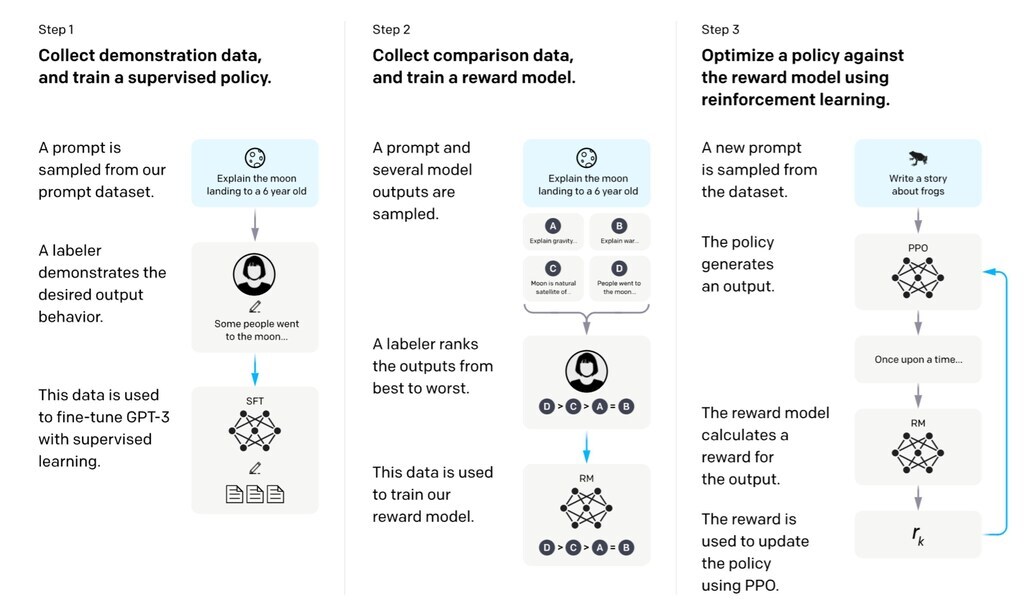
Through RLHF (Reinforcement Learning from Human Feedback) and related techniques, this work produces more than a completed assignment – it can create a detailed record of how a professional reaches a decision.
The value placed on authentic human reasoning was underscored by reports of contract workers being fired for using AI to complete their tasks. Some AI training firms forbid contractors from using AI substitutes for this work, highlighting the continued importance of human judgement in improving systems that may eventually perform some of the same tasks.
A new frontier in labour relations?
The standard rule of contract work applies – professionals get paid for their time, but they don't get a stake in the final product.
Research on the ownership of workplace expertise suggests this could create an incentive problem. When workers realize their knowledge could be used to train AI systems capable of performing similar work, they may have reason to withhold some of what they know. The research also argues that individual data ownership could allow employers to “pit workers against each other”, because one worker sharing their knowledge could weaken the bargaining position of others.
One proposed alternative is collective ownership. Researchers at Harvard, MIT and the University of Michigan envision “knowledge guilds” – worker-led intermediaries that would treat workplace expertise as “knowledge capital” and allow employees to negotiate collectively over how it is used.
Guilds could establish rules around consent, privacy and financial returns, with one potential way of measuring value being the labour hours an AI system saves. The researchers argue that such collective arrangements could give workers a stake in AI-driven productivity gains while reducing incentives to withhold valuable knowledge.
The idea echoes a broader debate about data collectives, which Harvard Business Review argues could become a new frontier in labour relations by allowing workers to pool their data and negotiate terms collectively.
How the Forum helps leaders make sense of AI and collaborate on responsible innovation
Building AI with workers
Knowledge guilds remain a proposal with practical hurdles, from tracing individual contributions to dividing returns fairly. Yet the underlying principle – that workers should help shape the tools built from their labour – is gaining traction.
Brookings researchers call for institutions that bring government, business and unions together to co-design workplace AI. Because employees carry institutional knowledge and context about how tasks are actually performed, “worker voice” can be important to system design.
Greater worker participation may benefit employers too, by helping build the trust professionals need to share their knowledge and engage with new technologies.
Where will future experts come from?
The ownership debate assumes there will be future experts whose knowledge can be shared – and that is not guaranteed.
Expert judgement requires years of practice, typically starting with routine tasks where junior professionals learn their trade.
The World Economic Forum’s Artificial Intelligence and the Future of Entry-Level Work report finds that “more than one in three young workers globally face medium-to-high exposure to AI task automation”. Exposure does not mean these jobs will necessarily disappear; rather, it indicates that a meaningful share of their tasks could be affected by AI.
If senior professionals transfer their judgement to AI while entry-level tasks are increasingly automated, the traditional apprenticeship model could break down.
Protecting this pipeline does not mean preserving busywork. It requires organizations to deliberately redesign early-career roles, so that AI supports learning rather than bypassing the next generation of talent entirely.
So, should experts training AI own a stake in what it earns? There is no settled answer. Knowledge guilds and collective ownership models remain proposals rather than established features of the labour market. What comes next will depend in part on whether platforms, employers or worker organizations begin testing new models for collective bargaining, consent or sharing AI-driven productivity gains.
The debate is ultimately about more than gig work: it asks how the value of accumulated knowledge should be shared – and how future experts will acquire enough of it to keep teaching both humans and machines.
More labour news in brief
AI is increasingly reshaping roles across UK businesses: 30% of businesses reported using AI in September, with administrative and clerical roles the most affected, according to the Office for National Statistics.
Workplace monitoring is becoming a bigger issue in the age of AI: Employees are increasingly being monitored by AI systems, The Guardian reports, suggesting technology is changing not just how people work, but how closely their work is watched.
Could AI make hiring more secure – but less human? As employers battle deepfakes, fake identities and AI-assisted applications, recruitment teams are increasingly turning to identity checks and AI-powered security tools to verify candidates.