There continue to be shifts in what employees want from their jobs since the pandemic began, says a survey from Microsoft.
Managers and their employees do not agree about how remote working affects productivity, it finds.
There needs to be an end to ‘productivity paranoia’ around home working, Microsoft’s chief executive says.
There is also evidence of longer days and more weekend work since the pandemic started – and a danger that flexible working could lead to digital exhaustion.
Bosses and their employees disagree sharply about how productive it is to work from home, according to a new survey of workplace trends from Microsoft.
More than half the managers questioned told researchers that productivity has dropped since the shift to remote working. But 8 out of 10 employees say they work at least as efficiently when logging on at home.
It’s one of the main findings of the Work Trend Index Pulse Report, which questioned 20,000 people in 11 countries.
Microsoft Chief Executive Satya Nadella told BBC News that the differences in opinion over productivity when homeworking need to be resolved:
“We have to get past … ‘productivity paranoia’, because all of the data we have shows that 80% plus of the individual people feel they’re very productive – except their management thinks that they’re not productive,” Nadella said.
Tensions over homeworking are only one of the issues explored in the survey – here are its five top findings:
1. Employees have a new ‘worth it’ equation
In the past two years, there has been a big shift in what people want to get out of their jobs and what they are prepared to offer in return, the report says.
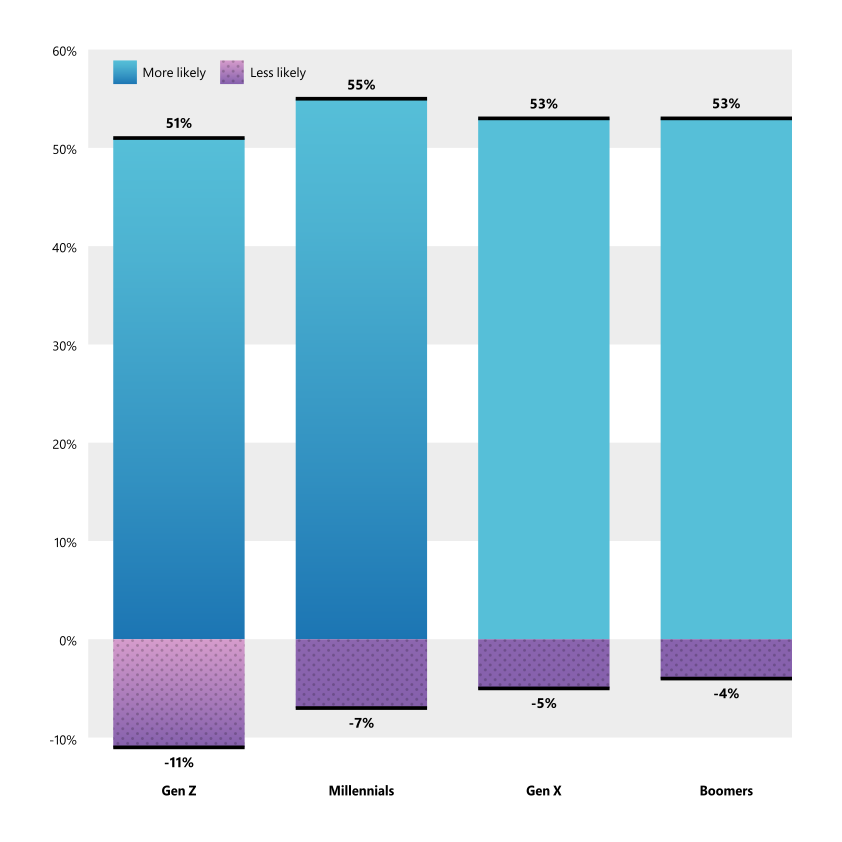
Around 53% of people now say they are more likely than before the pandemic to prioritize health and well-being over work.
“I have come to be more protective of my family since the pandemic,” one public sector manager from Canada says. “I can always find another job. I can’t find another family.”
For leaders, that presents the challenge of creating a flexible working culture that prioritizes well-being.
2. Managers feel wedged between leadership and employee expectations
There’s a stark difference in opinion between bosses and their employees over how much useful work is going on at home.
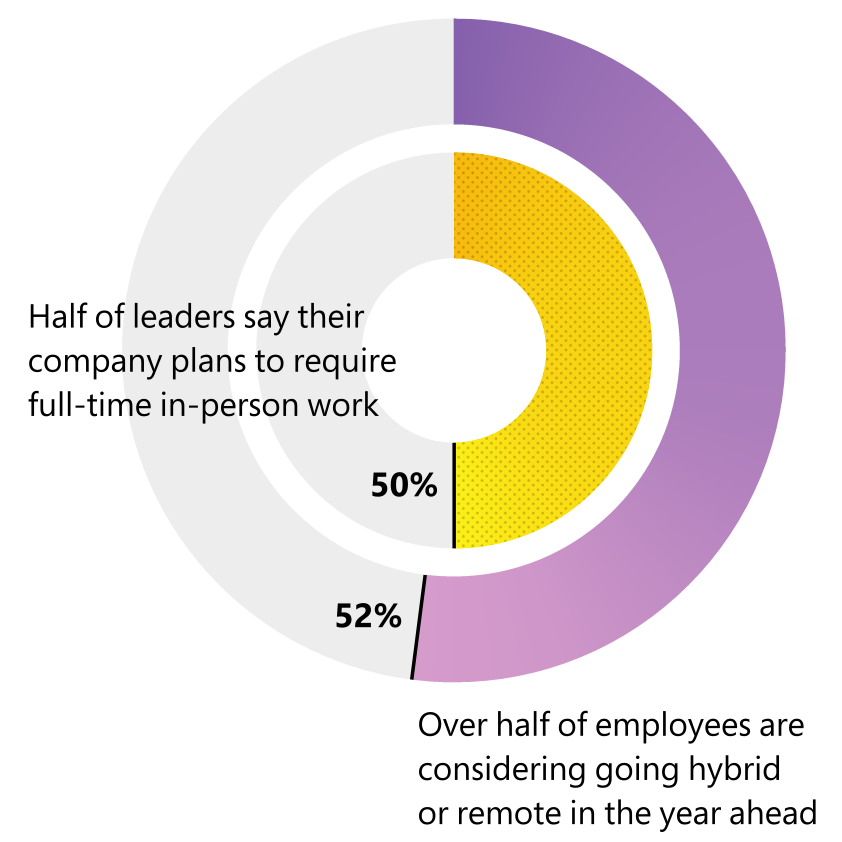
Half of the business leaders surveyed say their organization already requires, or plans to require, full-time in-person working in the next 12 months.
That’s despite 52% of employees saying they are likely to consider a shift to hybrid or remote working.
The report says that: “Leaders have a new and urgent challenge in an uncertain economy and labour market: setting the standard for flexible work in a way that balances business outcomes with new employee expectations.”
3. Leaders need to make the office worth the commute
In the age of remote working, are bosses being clear enough about when and why people should come into the workplace?
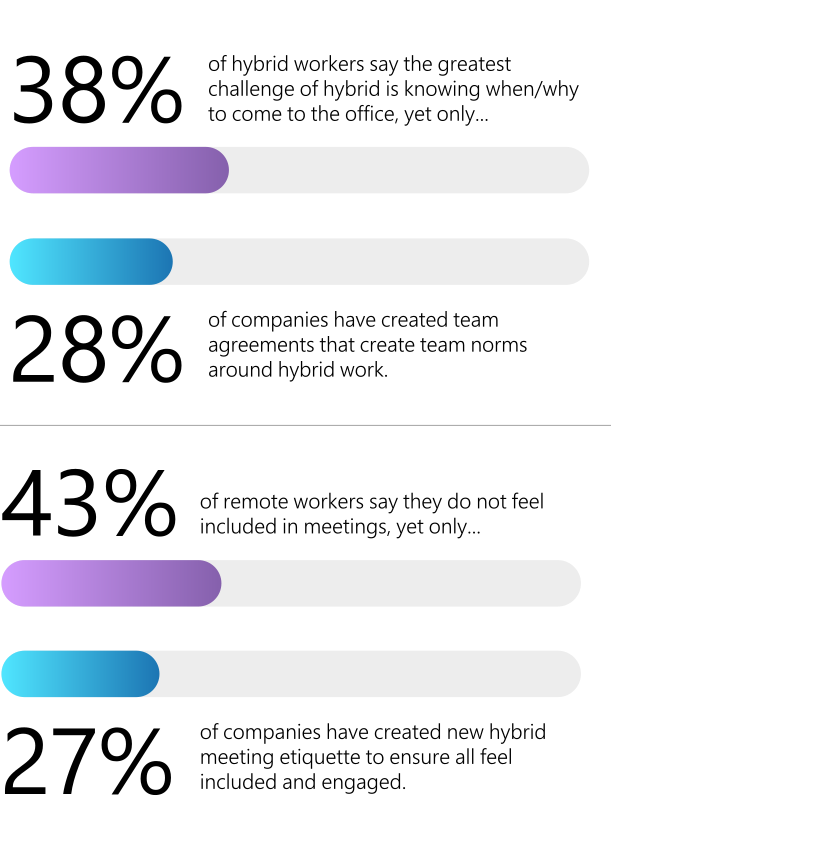
The survey shows only 28% of leaders have put in place agreements that spell out what office days are for.
It’s no surprise then that 38% of hybrid workers say their biggest challenge is knowing when and why to go into the office.
Leaders need to define “the purpose of in-person collaboration”, the report says, adding that those who fail to do so “risk missing out on the true benefits of hybrid work”.
4. Flexible work doesn’t have to mean ‘always on’
There’s a danger of flexible working leading to digital exhaustion, the report suggests.
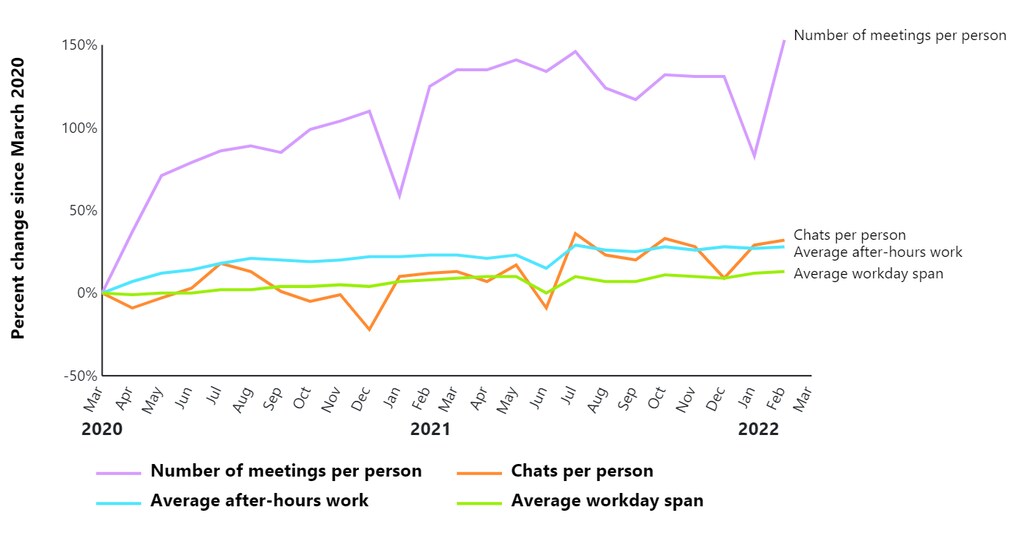
As well as big increases in weekly meeting time since the pandemic began, the working day has increased by 46 minutes since the start of the pandemic, according to anonymous data collected from Microsoft 365 users.
Working after hours is up by 28% since March 2020, and weekend working has grown by 14%.
Companies need to make more efforts to ensure they have “sustainable hybrid work practices”, the report says. This includes “new norms around flexible work to reduce time spent in meetings and empower people to hit the off switch”.
5. Rebuilding social capital looks different in a hybrid world
The study suggests we have fewer work friends since remote working became so commonplace.
Only half of remote workers told researchers they have a strong relationship with their team.
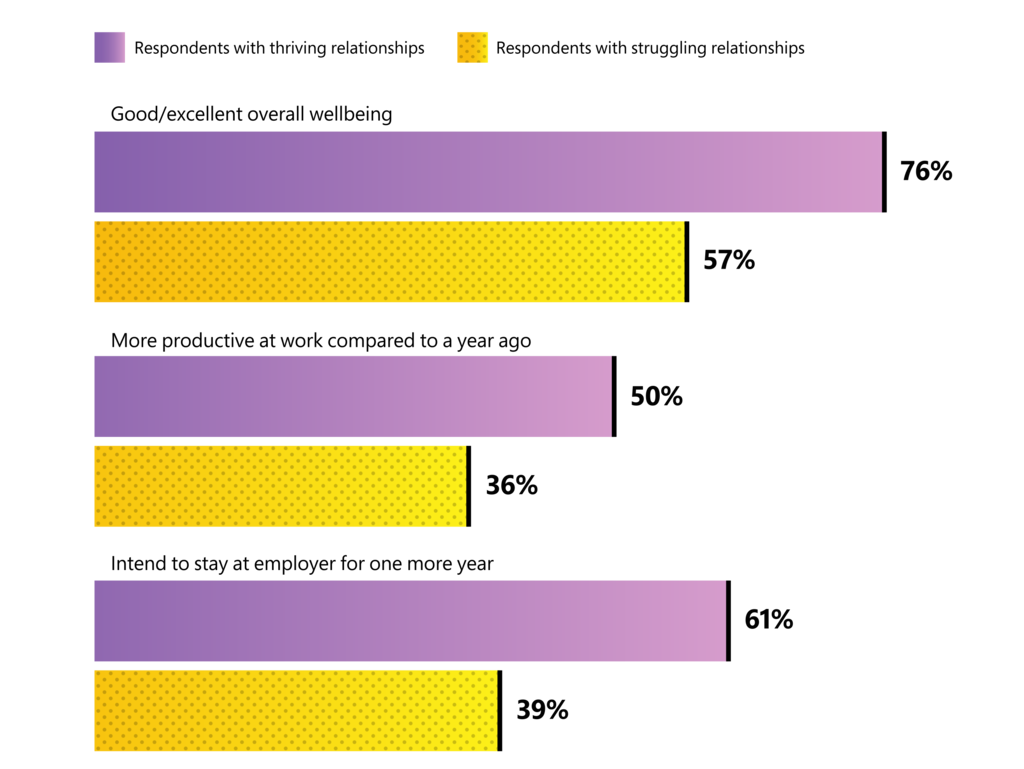
Those work relationships and the benefits they produce – known as “social capital” – are important for business success, says the report.
“When people trust one another and have [social] capital, you get a willingness to take risks, you get more innovation and creativity and less groupthink,” says Nancy Baym, Principal Researcher at Microsoft Research.
As such, managers need to give staff time to build better relationships with their colleagues, the report notes.
Making work better for all
“It’s a messy, muddled time right now, but if we do this right, it will create a future that’s better for employees and employers,” Microsoft’s Corporate Vice-President of Modern Work, Jared Spataro, told UK newspaper The Times.
The future of work after the pandemic was also scrutinized at the World Economic Forum’s Annual Meeting in Davos this year. While flexible working might allow more women to participate in the workforce, the sessions also highlighted increased inequality due to underinvestment in education, healthcare and care.
More spending in those three areas would improve social mobility and drive growth, according to the Forum’s Jobs of Tomorrow whitepaper.
Every dollar of investment would deliver a multiplier effect of 2.3 times the initial spending, modelling based on the United States’ economy showed. This means that $1 million of investment would boost GDP by $2.3 million, partly by creating more jobs.
How is the World Economic Forum promoting equality in the workplace?
The Future of Jobs Report 2023 found that 75% of companies surveyed expect to adopt AI, big data and cloud technologies in the next five years.
The Centre for the New Economy and Society provides a platform for leaders to share insights on the adoption and efficacy of new technologies, and the readiness of the workforce to use them. Our work includes developing insights and dialogue on growth, jobs, skills, equity and risks.
Learn more about our impact:
Gender parity: Since 2006, we have annually measured the state and evolution of gender parity in 101 economies, supporting decision-makers to identify the most effective policies to close gender gaps. In Chile, we helped establish gender parity accelerators and benefitted 728,000 women – reducing the gender gap by 37% in the participating companies.
Reskilling Revolution: With our partners, we are helping the global workforce future-proof their careers, working with over 350 organizations to provide 1 billion people with better education, skills and economic opportunities by 2030.
Disability inclusion: Working with the Valuable500, we are collaborating with the largest global network of CEOs committed to closing the disability inclusion gap. Members are making progress by increasing the adoption of digital accessibility best practices and including disability in diversity, equity and inclusion strategies.
Racial justice: We are collaborating with a global coalition of 55 organizations in 13 industries who are committed to building equitable and just workplaces for professionals from under-represented racial and ethnic identities.
Want to know more about our centre’s impact or get involved? Contact us.