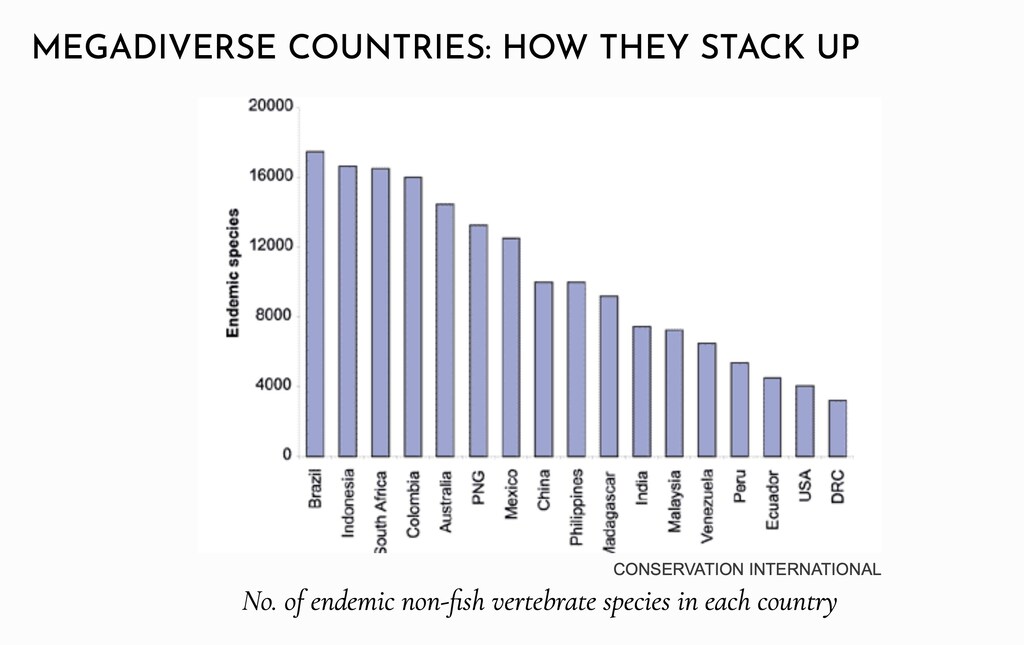
There are 17 megadiverse countries – nations with extreme biodiversity.
The World Economic Forum’s Nature Action Agenda calls for public- and private-sector collaboration to stop biodiversity loss by 2030.
World Environment Day is held every 5 June to encourage action to protect and restore the Earth.
Biodiversity is essential for tackling climate change – it’s the world’s strongest natural defence against greenhouse gases.
But, without action to protect and restore the Earth, global biodiversity is at risk. This year's World Environment Day focuses on land restoration, desertification and drought resilience. It takes place under the slogan 'Our land. Our future. We are #GenerationRestoration'.
So what is biodiversity?
It’s all the different kinds of life in one area, from animals to plants to bacteria, and each one of these species and organisms works together in ecosystems to support what we need to survive – food, clean water, shelter and medicine.
Biodiverse ecosystems are natural carbon sinks, absorbing the harmful gas from the atmosphere.
At the United Nations’ 2022 Biodiversity Conference (COP 15) in Montreal, Canada, governments from around the world agreed on a Global Biodiversity Framework to guide global action through 2030 to halt and reverse nature loss.
The World Economic Forum’s Nature Action Agenda initiative calls for multi-sector collaboration to achieve the objectives of the Global Biodiversity Framework.

What is megadiversity?
It’s a term for a country or region with a high level of biodiversity or different species, including a significant percentage of endemic species.
To be classified as megadiverse, a nation must have at least 5,000 plants that occur naturally only within its borders, as well as a marine ecosystem.
The 17 megadiverse countries comprise approximately 70% of the world’s biodiversity and have their own organization, the Like-Minded Megadiverse Countries.
Here’s the full list of countries in alphabetical order, along with some of the statistics that qualify them for megadiverse status.
Australia
First in the world for endemic species, such as kangaroos, koalas and dingos
378 mammal species
828 types of bird
300 different lizards
140 species of snake
600,000-700,000 different plants and animals
Brazil
Contains 20% of the planet’s freshwater
Home to the largest wetland, woodlands, open fields, savannahs, and the rainforest
43,893 plant species
712 types of mammal
1,900 different birds
751 types of reptile
978 species of amphibian
Endemic animals include Ashy Black Titi Monkey, the Brazil-nut Poison Frog, and the Apoclada Bamboo Plant
China
1,244 bird species – one of the biggest bird populations in the world
667 endemic vertebrate species, including Giant pandas, South China tigers and Tibetan antelopes
581 mammal species
376 types of reptile
284 species of amphibian
Colombia
Has almost 10% of global biodiversity within its borders
Second in the world for the most plant and amphibian species
1,800 species of bird, 73 of which are endemic
456 mammal species
Endemic birds include Tolima Dove, Chestnut-winged Chachalaca and Sooty-capped Puffbird.
Democratic Republic Of Congo
Home to half of all African freshwater, with a wide range of flora and fauna
3,000 endemic plant species
280 species of reptile
400 types of mammal
216 amphibian species
900 species of butterflies
Endemic animals include the okapi and pygmy chimpanzee (Bonobo)
Ecuador
The highly biodiverse Galapagos Islands are within Ecuador’s borders
4,173 endemic plant species
52 endemic types of bird
394 reptile species
415 species of amphibian
369 mammal types
Native creatures include the Tanti Rocket Frog, the Ecuadorian Sac-winged Bat, and the El Oro Parakeet
India
Home to two of the world’s bio-diverse hotspots: The Eastern Himalayas and Western Ghats
One of the most megadiverse nations in the world
410 mammal species
408 types of reptile
197 species of amphibian
1,250 bird species.
Endemic animals include the Nicobar Tree Shrew, Black-footed Gray Langur, Malabar Civet and Jungle Striped Squirrel
Indonesia
Second-highest number of bird species in the world at 1,592
781 species of reptile
270 types of amphibian
515 different mammals
25,000 flowering plants, of which 55% are endemic.
The archipelago is home to endemic species the Bawean Deer, Rock Island Snake-necked Turtle and Proboscis Monkey
Madagascar
13,700 plant species, most of which are endemic
389 species of reptile
278 amphibian species, all of which are endemic
282 types of bird
220 mammal species
The Cuckoo-roller bird, Fossa and the African Helmeted Turtle can only be found in Madagascar
Malaysia
210 mammal species
620 types of bird
250 species of reptile
150 different frogs
14,500 plant species
Native animals include the Leonard’s Pipe snake, Hose’s Pygmy Flying Squirrel, and the Woolly-Stalked Begonia
Mexico
Home to the second largest number of ecosystems in the world
536 species of mammals, of which 30% are endemic.
290 amphibian species, with 47% of them endemic
704 types of reptile, and more than half are endemic
1,054 bird species
Over 25,000 flora species
Native wildlife includes the Cozumel Thrasher, Alamos Mud Turtle and the Chinanteco Deer Mouse
Papua New Guinea
Has the third largest rainforest in the world
Approximately 730 species of bird
Over 320 amphibian species
More than 300 types of reptile
Endemic wildlife includes carnivorous mice, tree-climbing kangaroos, and giant rats
Peru
Over 500 species of mammals, of which 70 are endemic
More than 1,800 bird species
Over 300 species of reptiles
Above 380 types of amphibian
Approximately 13,000 plant species
Native animals include the Yellow-tailed Woolly Monkey
Philippines
612 species of birds, of which 194 are endemic.
111 amphibian species
270 types of reptile
More than 9,250 vernacular plants and 33% are endemic
South Africa
858 species of birds
299 mammal species
110 endemic frogs
Native creatures include the long-nosed Golden Mole and the Riverine Rabbit
United States
432 mammal species,
800 species of bird
311 types of reptile
295 species of amphibian
More than 17,000 plant species
Endemic animals include the Channel Islands Spotted Skunk
Venezuela
Approximately 21,000 plant species, of which an estimated 38% are endemic
8,000 endemic animal species
1,417 bird species
351 types of mammal
315 species of amphibians
341 different reptiles
Native creatures include the Sira Poison Frog, Sucre Spiny Rat and Fiery Squirrel