When shaping policy on issues such as urban development and climate action, the needs of our natural environment are critical.
Yet it is up to humans to make the decisions that determine whether our environment has a fighting chance against climate collapse.
Local governments are increasingly taking a 'more than human' perspective by considering nature's 'voice' when making policy decisions.
“Giving a voice to the voiceless” is a well-intentioned but somewhat patronizing phrase. After all, most humans have some level of voice and agency; it’s marginalizing systems favouring those with access, resources and privilege that stand in the way of others being heard.
But what about our non-human neighbours – the animals, plants, rivers and mountains that share our planet?
When shaping policy on issues like urban development and the climate, the needs of our natural environment are critical. And yet it is up to humans to make the decisions that determine whether our environment has a fighting chance against climate collapse.
That’s why a growing number of civic participation initiatives are considering the voices of other species when making policy decisions. They call this the “more than human” perspective.
Taking a ‘more-than-human’ perspective
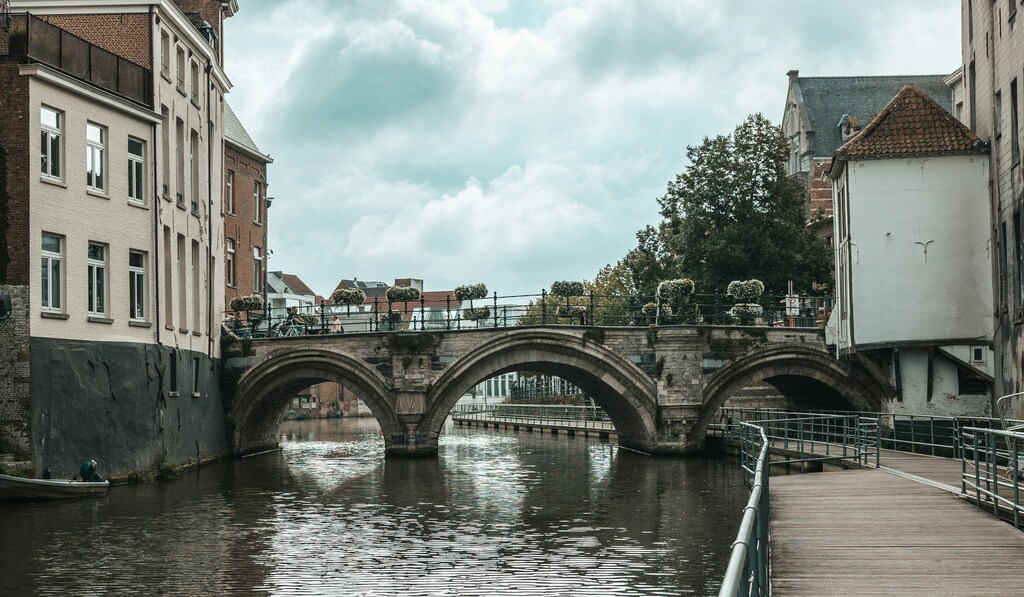
Here in Belgium, the city of Mechelen recently hosted a citizens’ assembly on reconnecting the city with its main river, the Dyle (or Dijle in Dutch).
After an initial round of deliberation, participants were each invited to represent a non-human species. They were assigned a persona (a specific plant, bird, or animal) and taken on a boat tour along the river, to help get into the head of their new more-than-human identity.
The assembly resulted in the development of 15 principles to ensure that all of Mechelen’s inhabitants – human and non-human – can enjoy a positive relationship with the river at the heart of their city.
These included recommendations to rewild 30% of the river’s banks, plant strategically for maximum benefit to wildlife, measure water quality and make the river and surrounds waste-free, all primarily in service of its non-human inhabitants.
And this delightful activity isn't a one-off – it speaks to a growing movement for ecological democracy. In the UK, the Royal Society for the Prevention of Cruelty to Animals, commonly known as the RSPCA, recently ran Animal Futures: the Big Conversation, a public engagement project to canvas opinions on the future needs of pets, farmed animals and those in the wild, considering the roles of technology and climate change.
Participants raised issues like whether animals should be used in sport, and whether farming is the best use of land, as well as coming up with paths forward. In a discussion about the use of new technology for the protection of animals, lab-grown meat was suggested as an alternative to farming.
This input will enable the UK’s largest animal welfare charity to better advocate for our furry neighbours at a political level. Having collected hundreds of online responses, the project will soon move to a citizens’ assembly, for a more in-depth, nuanced conversation on the future of the UK’s animals.
Legal personhood applied to natural entities
Elsewhere, the concept of legal personhood has been applied to a number of geographical features, giving direct legal representation to natural elements.
In 2017, New Zealand’s Whanganui River became the first natural entity granted legal personhood, after campaigning from local Māori.
The resulting legislation recognizes the river as a “living and indivisible whole”, appointing guardians from both the Māori community and the government to defend its rights to flow freely, sustain biodiversity and remain free from pollution.

While the health of the river is still vulnerable to the effects of farming and forestry, the reconceptualising of the river as a living being, along with the heft of its legal status, has helped add weight to its need for protection.
And these measures aren’t merely symbolic. In Spain, the legal personhood status of Mar Menor lagoon enabled lawsuits against agricultural polluters last year, resulting in €2 million in fines and subsequently attracting €20 million in recovery funding from the European Commission.
Nature getting a greater voice in policy-making
The voice of nature in policy-making is being given increasing heft all over the globe.
But, of course, this still depends on human representation. We may never truly know what it’s like to be a tree, or a bird, or a river. But genuine attempts to put ourselves in their “shoes” already shifts the power dynamic when shaping policy decisions.
What is the World Economic Forum doing about nature?
The Centre for Nature and Climate helps leaders make sense of the interconnections between climate, nature and economic development. It provides a platform to explore pathways that support resilience and prosperity within planetary boundaries.
By enabling cooperation across sectors and regions, the Centre supports partners in translating shared understanding into practical climate and nature solutions.
Researchers are also exploring how to use artificial intelligence (AI) to embody non-human perspectives. Belgium’s National Park Bosland has been given an AI avatar, Bosland, which uses habitat maps from satellite imagery, as well as policy documents and news clippings, to monitor and advocate for the park’s biodiversity. In this case, AI’s ability to process data and nuance at a more-than-human rate is being harnessed to the benefit of the natural environment.
These examples challenge conventional ideas of citizenship and agency, offering new pathways for justice and ecological stewardship in the 21st century. As the climate emergency accelerates, civic innovations like these will prove vital to building democracies resilient enough to safeguard all life.