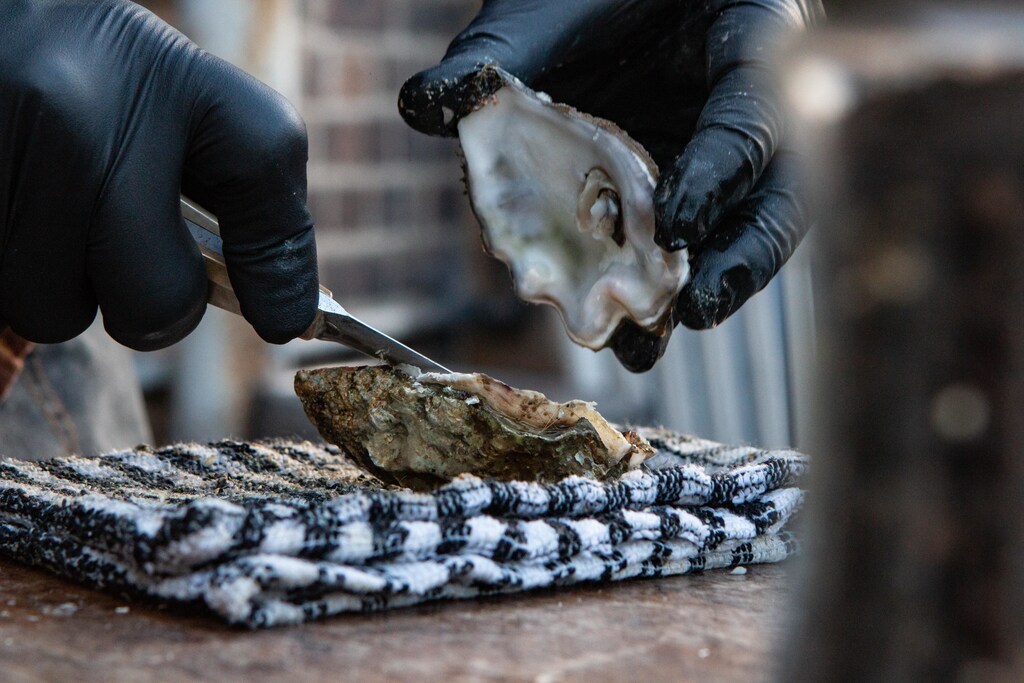
A lot can be learned from the architectural complexity of a pearl, created by certain mollusks.
These pearls have the ultradurable structures with a level of symmetry like nothing else in the natural world.
Developing understanding of these structures can help inform our own complex design practices.
Researchers have uncovered for the first time how mollusks build ultradurable structures with a level of symmetry that outstrips everything else in the natural world, with the exception of individual atoms. Research that could inform future high-performance nanomaterials.
“We humans, with all our access to technology, can’t make something with a nanoscale architecture as intricate as a pearl,” says Robert Hovden, an assistant professor of materials science and engineering at the University of Michigan and an author of the paper. “So we can learn a lot by studying how pearls go from disordered nothingness to this remarkably symmetrical structure.”
The analysis was done in collaboration with researchers at the Australian National University, Lawrence Berkeley National Laboratory, Western Norway University, and Cornell University.
Published in the Proceedings of the National Academy of Sciences, the study found that a pearl’s symmetry becomes more and more precise as it builds, answering centuries-old questions about how the disorder at its center becomes a sort of perfection.
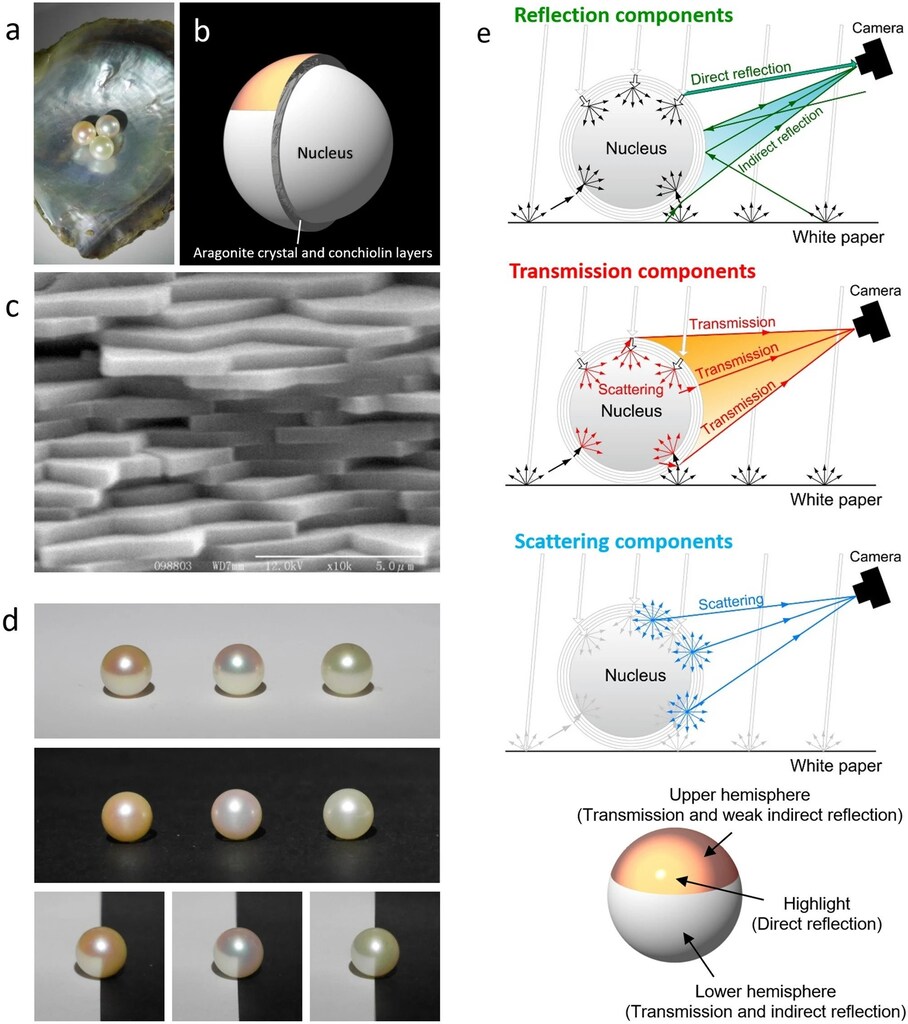
Layers of nacre, the iridescent and extremely durable organic-inorganic composite that also makes up the shells of oysters and other mollusks, build on a shard of aragonite that surrounds an organic center. The layers, which make up more than 90% of a pearl’s volume, become progressively thinner and more closely matched as they build outward from the center.
What is the World Economic Forum doing about nature?
The Centre for Nature and Climate helps leaders make sense of the interconnections between climate, nature and economic development. It provides a platform to explore pathways that support resilience and prosperity within planetary boundaries.
By enabling cooperation across sectors and regions, the Centre supports partners in translating shared understanding into practical climate and nature solutions.
“When we build something like a brick building, we can build in periodicity through careful planning and measuring and templating,” he says. “Mollusks can achieve similar results on the nanoscale by using a different strategy. So we have a lot to learn from them, and that knowledge could help us make stronger, lighter materials in the future.”