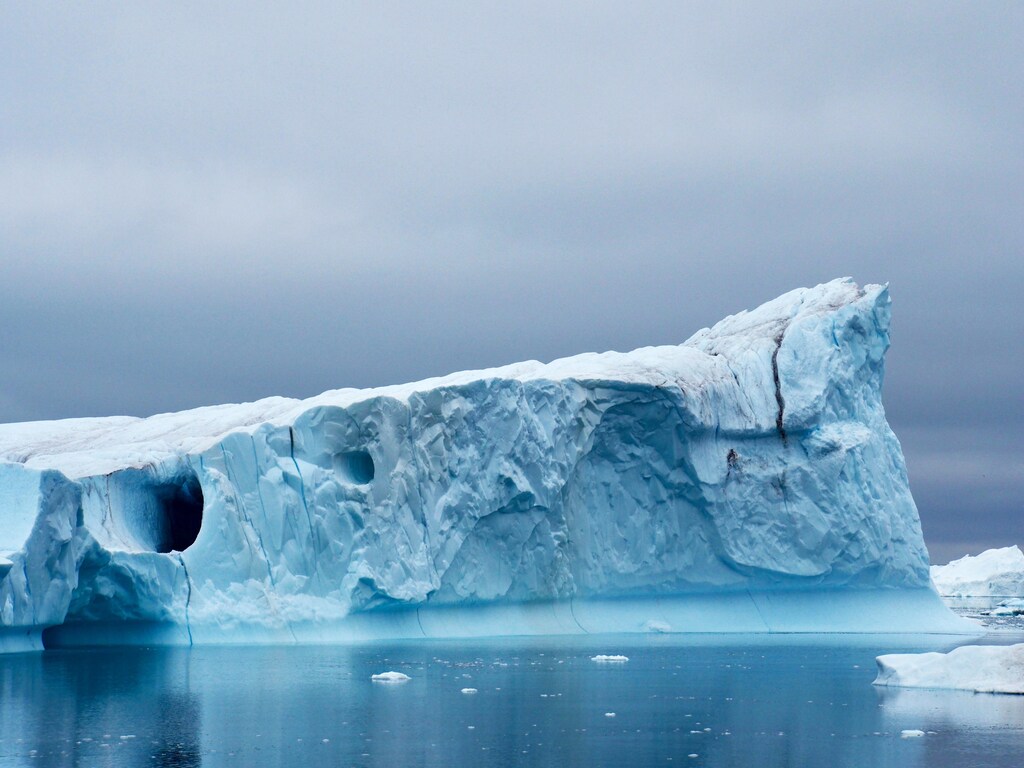
NASA has calculated that Greenland has lost 5 trillion tons of weight since the early 2000s.
While glaciers are now melting six or seven times faster today than they were 25 years ago, it says.
In order to mitigate sea level rises, there are a number of measures individuals and governments can take.
Greenland has lost 5 trillion tons of weight since the early 2000s, NASA has discovered. This equates to an average of 277 gigatons (a gigaton is 1 billion tons) mass loss a year.
NASA used two satellites. called Grace and Grace Follow-On, which have been observing Greenland since 2002, to measure the loss.
Lower-elevation and coastal areas around Greenland experienced over 5 metres of ice mass loss and the largest mass decreases occurred along the West Greenland coast, according to NASA.
Josh Willis, a climate scientist with NASA's Jet Propulsion Laboratory, explained in a recent lecture that the two satellites measure the ice loss as they follow each other.
“Whenever one goes over something heavy the pull of gravity causes it to speed up just a little bit. Then when the second one follows it sort of catches up a little bit,” Willis said. “What we do is we measure the distance between these very, very accurately, and by watching them move apart and together we can actually weigh the land, and we can weigh things like the island of Greenland.”
How Greenland weight loss leads to sea level rise
A NASA project called Oceans Melting Greenland (OMG) also measured sea level rise around the area. The organization carried out an aircraft campaign each year in the summer to deploy 250 expendable temperature and salinity probes along the continental shelf. These measurements were matched with corresponding observations of the ice.
“The rate of rise is also increasing,” Willis said. “If you look at the first 10 years, it's about two millimetres per year. The middle 10 years it’s about three. The last 10 years is four and maybe even four-and-a-half millimetres per year. The rate of rise is increasing, so we're watching the oceans actually rise at a faster and faster rate.”
NASA calculates that glaciers are now melting six or seven times faster today than they were only 25 years ago.
Sea level rise consequences
The Greenland Ice Sheet is the largest ice mass in the Northern Hemisphere. If all of the ice sheet was to melt, global sea levels would rise by about 7.4 metres, according to NASA.
Consequences of dramatically rising sea levels include "increased intensity of storm surges, flooding, and damage to coastal areas … people may become displaced and … life farther inland is threatened because rising seas can contaminate soil and groundwater with salt," National Geographic explains.
Small island nations are disproportionately affected by sea level rises. Last year, at COP26, Simon Kofe, the foreign minister of Tuvalu, warned of the devastating consequences of sea level rises in a speech he streamed while standing knee-deep in water.
"The statement juxtaposes the COP26 setting with the real-life situations faced in Tuvalu due to the impacts of climate change and sea level rise,” he said.
We can expect the ocean to rise between 10 and 30 inches (26 to 77 centimetres) by 2100 with temperatures warming 1.5°C, if current trends continue, a recent special report from the Intergovernmental Panel on Climate Change says.
Actions to mitigate sea level rise
In order to mitigate sea level rises, the organization Clean Ocean Action has listed a number of measures individuals and governments can take, including:
1. Protecting wetlands, which act as natural buffers for coastal areas during rainstorms and hurricanes.
2. Planting and saving trees.
3. Reducing energy consumption.
4. Pushing for a Climate Action Plan.