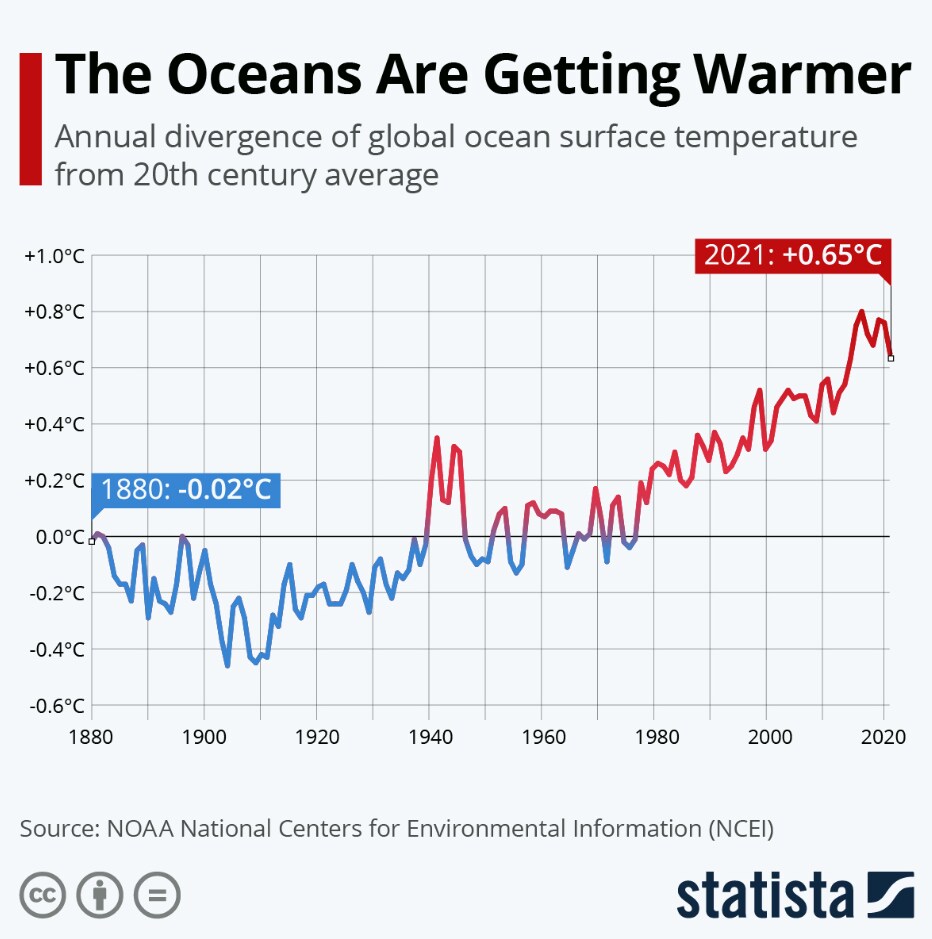
In 2021, global ocean surface temperatures were 0.65 degrees Celsius higher than the 20th century average.
The year with the biggest divergence was 2016 when measured ocean surface temperatures were 0.8 degrees Celsius higher than average.
An increase in the number of years that are warmer on average is expected due to climate change.
Annual average temperatures of the oceans’ surfaces have been diverging from the 20th century (1900-1999) average more and more since the 1980s. In 2021, global ocean surface temperatures were 0.65 degrees Celsius higher than that century’s average, according to the National Oceanic and Atmospheric Administration (NOAA).
Ocean surface temperature is rising fast
While the annual divergence fluctuates (as some years happen to be hotter and others colder), there is still a definite upwards trend visible in the data. The year with the biggest divergence on record was 2016 when measured ocean surface temperatures were 0.8 degrees Celsius higher than the stated average.
The global data for near-surface temperatures come from ships, buoys and satellite measurements of the oceans. While fluctuations are a normal phenomenon, an increase of the number of years that are warmer on average is expected due to climate change, which is the increase in global average and mean land and ocean surface temperatures. According to scientific findings, the continuing global warming will lead to changes in the strength, frequency, spatial extent and duration of extreme weather events.