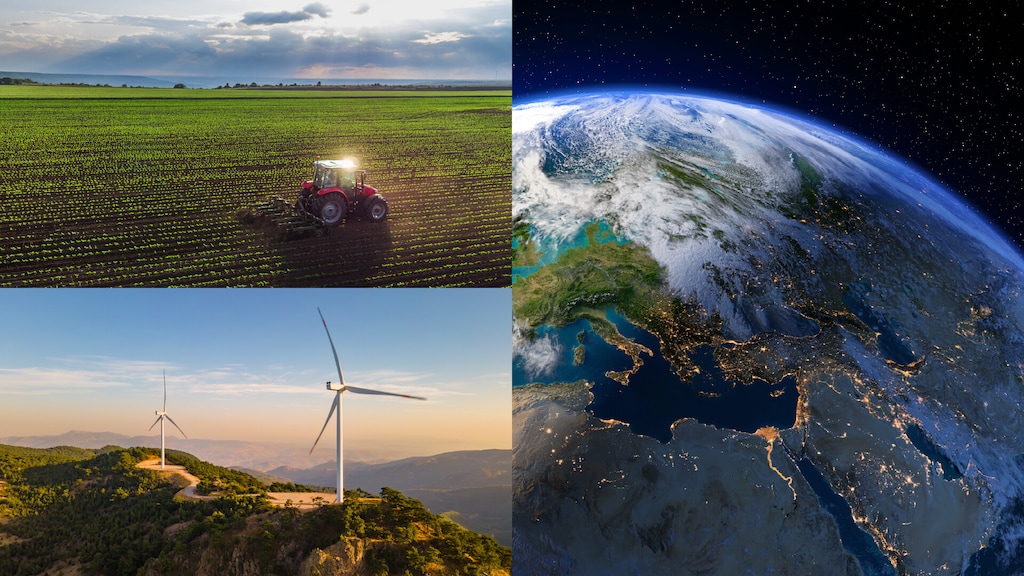
The Industrial Deep Decarbonization Initiative offers Brazil's industries a pathway for a just and equitable transition to net zero through technological innovation, capacity building and policy development.
The Initiative enables Brazil to navigate challenges in sectors such as cement, steel, aluminium and petrochemicals, while prioritizing social safety nets, community engagement and workforce reskilling.
International examples showcase successful models that balance economic growth, environmental sustainability and social fairness, this reinforces the potential impact of the Initiative on Brazil's low-carbon future.
In July 2023, at the Clean Energy Ministerial in India, Brazil announced it's joining the Industrial Deep Decarbonization Initiative. In doing so, Brazil has joined ranks with the largest and most diverse coalition of governments and private sector organizations working to decarbonize heavy industries, starting with the steel, cement and concrete sectors.
As the world grapples with the urgent need to address climate change, countries are increasingly recognizing the importance of transitioning towards low-carbon economies. Brazil, with its rich biodiversity, vast renewable energy potential and significant industrial base, stands at a critical juncture in its efforts to achieve a just and equitable transition. This Initiative emerges as a promising avenue to support Brazil's transition, ensuring that economic growth aligns with environmental sustainability and social justice.
Understanding the Industrial Deep Decarbonization Initiative
The Industrial Deep Decarbonization Initiative is a global effort aimed at transforming industries, particularly heavy-emitting sectors, to significantly reduce their carbon emissions. The Initiative focuses on the development and implementation of innovative technologies, policies and strategies that enable industries to decarbonize while maintaining competitiveness and fostering sustainable growth.
The Brazilian context
Brazil's economy is characterized by a diverse range of industries, including agriculture, manufacturing and energy production. The addition of Brazil to the Industrial Deep Decarbonization Initiative means it now represents 19% of total global steel production. While the country has made significant strides in renewable energy generation, challenges remain in reducing emissions from industries such as steel, cement and petrochemicals. Moreover, the transition must prioritize social equity to ensure that vulnerable communities and workers are not left behind.
What is the World Economic Forum doing to promote sustainable urban development?
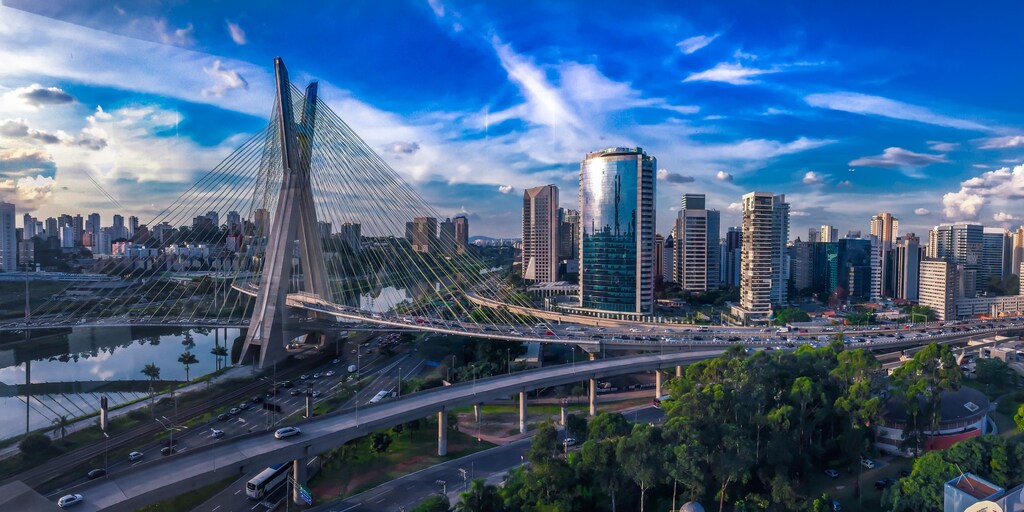
Cities are responsible for 75% of global greenhouse gas emissions and are home to over half of the world’s population—a number that will grow to two-thirds by 2050. By prioritizing cleaner energy, cities could contribute more than half of the emissions cuts needed to keep global warming to less than 2°c, which would be in line with the Paris Agreement.

To achieve net-zero and nature-positive cities and communities by 2050, the World Economic Forum is partnering with public and private sector stakeholders on initiatives that drive global ambition through local action. Here are just a few:
Davos Baukultur Alliance: Advancing high-quality planning, construction and management of buildings, infrastructure, and public spaces using principles based on climate resilience, sustainability and circularity in the built environment. Learn more.
Global New Mobility Coalition: Exploring new solutions to reduce congestion and emissions, enhance EV infrastructure and transform urban mobility and deliveries. Learn more.
Alliance for Urban Innovation: Connecting innovators and entrepreneurs to new markets and opportunities that reimagine and reshape quality of life and local economies. Learn more.
G20 Global Smart Cities Alliance: Accelerating intelligent, practical solutions to build climate resilience, enhance public well-being and tackle the most pressing challenges facing cities and local communities. Learn more.
Future of Travel and Tourism: Driving inclusive and sustainable economic growth while preserving cultural heritage and protecting natural ecosystems. Learn more..
Discover how you can be a part of our efforts to create more sustainable and livable cities and communities. Contact us here.
How the Industrial Deep Decarbonization Initiative supports Brazil’s just and equitable transition
1. Technological innovation
The Industrial Deep Decarbonization Initiative facilitates technology transfer and collaboration, enabling Brazilian industries to adopt cleaner and more efficient processes. The implementation of carbon capture and storage technologies in cement production, for example, can substantially reduce emissions while preserving jobs in the sector. This could include collaboration with relevant innovation projects in Brazil’s more than 80 (20 of which are state-run) technology parks. The Initiative's Industrial Decarbonization Accelerator network convenes and builds on existing work undertaken by various local and international organizations. This includes co-funded blended finance schemes and the provision of seed funding for entrepreneurs who are attempting to develop viable low-carbon technologies.
2. Capacity building
The Industrial Deep Decarbonization Initiative offers opportunities for knowledge exchange and capacity building. This includes the ISO 50001 training programmes; tailored support to micro, small and medium-sized enterprises; digitalization that facilitates better data collection; and, demonstration pilot projects that empower local stakeholders to participate effectively in the transition. By partnering with Brazilian research institutions and universities, the Initiative enhances the country's expertise in sustainable industrial practices via training, research and pilot projects.
3. Policy development
The Initiative collaborates with governments to strengthen existing incentives via technical advice and facilitation of multi-stakeholder dialogue among key stakeholders. This could aid Brazil in advancing inclusive and robust policy frameworks that incentivize emission reductions and support financing a just transition. Creating carbon pricing mechanisms and establishing clear emission reduction targets for industries, for instance, could help drive investments in cleaner technologies.
4. Social safety nets
A crucial aspect of a just transition is safeguarding the livelihoods of workers affected by industry shifts. The Industrial Deep Decarbonization Initiative supports the creation of social safety nets. It does this by designing and offering retraining and reskilling programmes tailored to the domestic context to ensure that the workforce remains adaptable and competitive.
4. Community engagement
To ensure equity, local communities must be engaged in the transition process. The scheme, through its Industrial Decarbonization Accelerator network, facilitates dialogue between industries, government agencies and communities, ensuring that the concerns and aspirations of all stakeholders are considered.
Case studies and successful models
Germany’s Energiewende
Germany's energy transition offers valuable lessons in managing a just transition. The country's commitment to retraining workers and investing in renewable energy infrastructure has led to a fall in emissions without sacrificing economic growth as reported by the German Federal Foreign Office and GIZ.
Also a member of the Industrial Deep Decarbonization Initiative, Germany has expressed interest in supporting the Brazilian government in its just transition. Any such collaboration should be adopted by Brazil in its developing country context and, according to a report by Schiffer and Truby (2018), should incorporate a holistic approach that includes pathways to decarbonize other sectors in parallel.
South Africa’s just transition
Supported by the United States, South Africa's coal-dependent economy has developed a Just Transition Framework with a focus on job creation and social equity. By involving labour unions, industry representatives and local communities, the country is striving to balance economic and environmental priorities.
The potential exists for Brazil to explore support towards a cleaner energy future through the Industrial Deep Decarbonization Initiative together with the US, another Initiative member, and with South Africa, which is one of the Industrial Decarbonization Accelerator network’s programme countries looking at industrial energy efficiency.

The Industrial Deep Decarbonization Initiative presents a unique opportunity for Brazil to navigate the complex terrain of transitioning its industries toward sustainability while ensuring justice and equity. By harnessing technological innovation, policy expertise and community engagement, the Industrial Deep Decarbonization Initiative can facilitate a seamless shift that benefits the environment and the people.
As Brazil takes bold steps towards a low-carbon future, collaboration with the Industrial Deep Decarbonization Initiative can be a catalyst for lasting change, demonstrating that economic prosperity and social fairness are not mutually exclusive in the fight against climate change.